


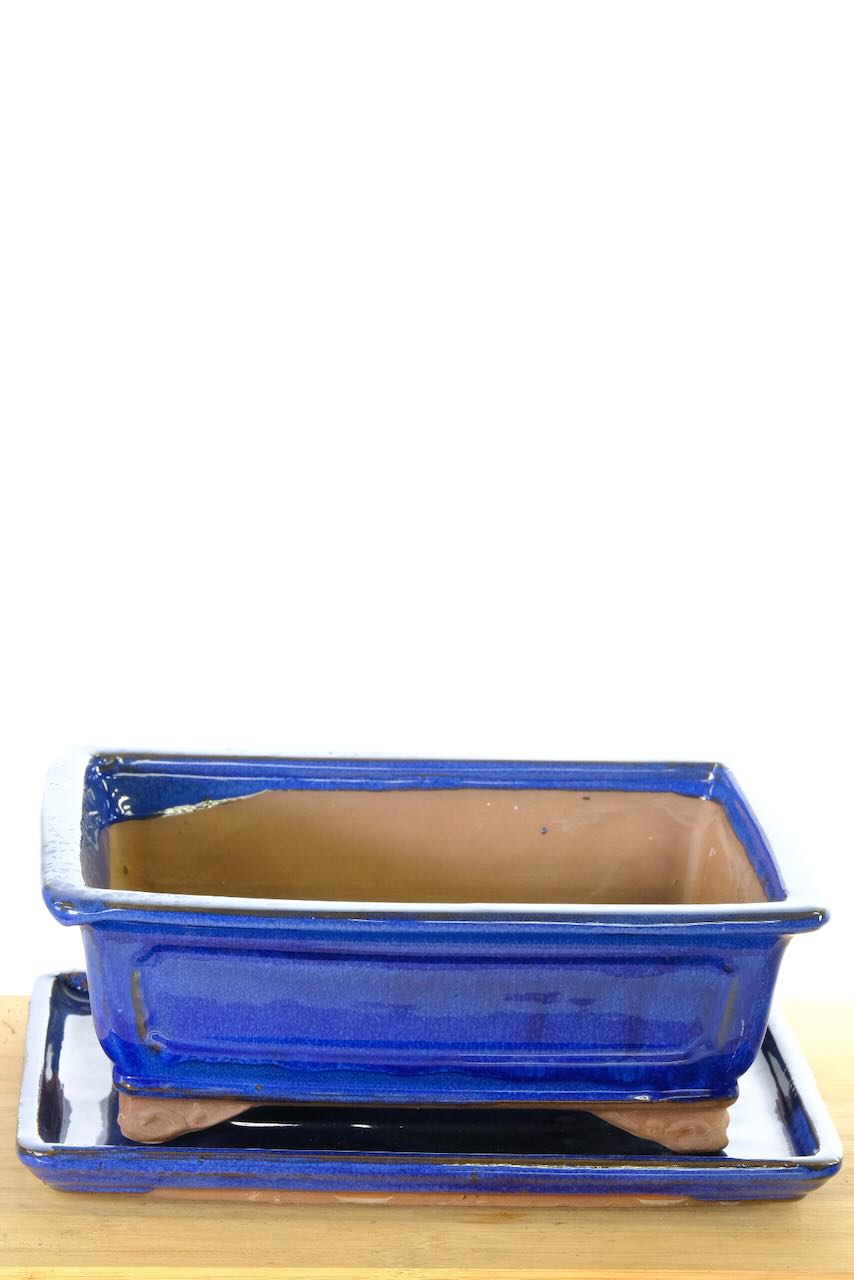


A Stylish 10 inch/27cm Bonsai Pot for Sale with Matching Ceramic Drip Tray in A Vibrant Royal Blue
Elevate Your Bonsai Display with Contemporary Sophistication with this Blue Bonsai Pot & matching Tray
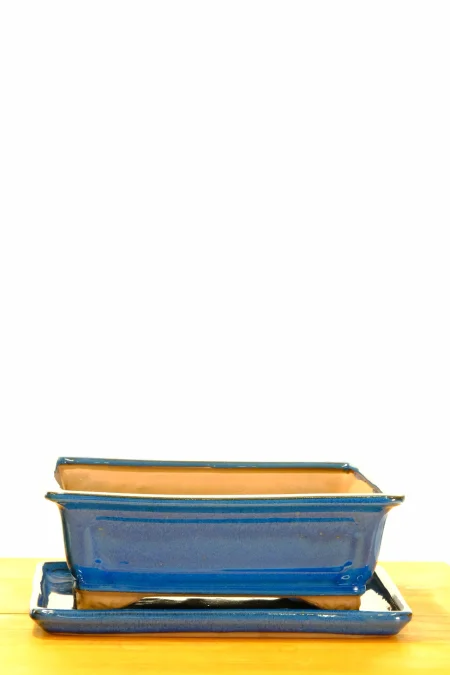
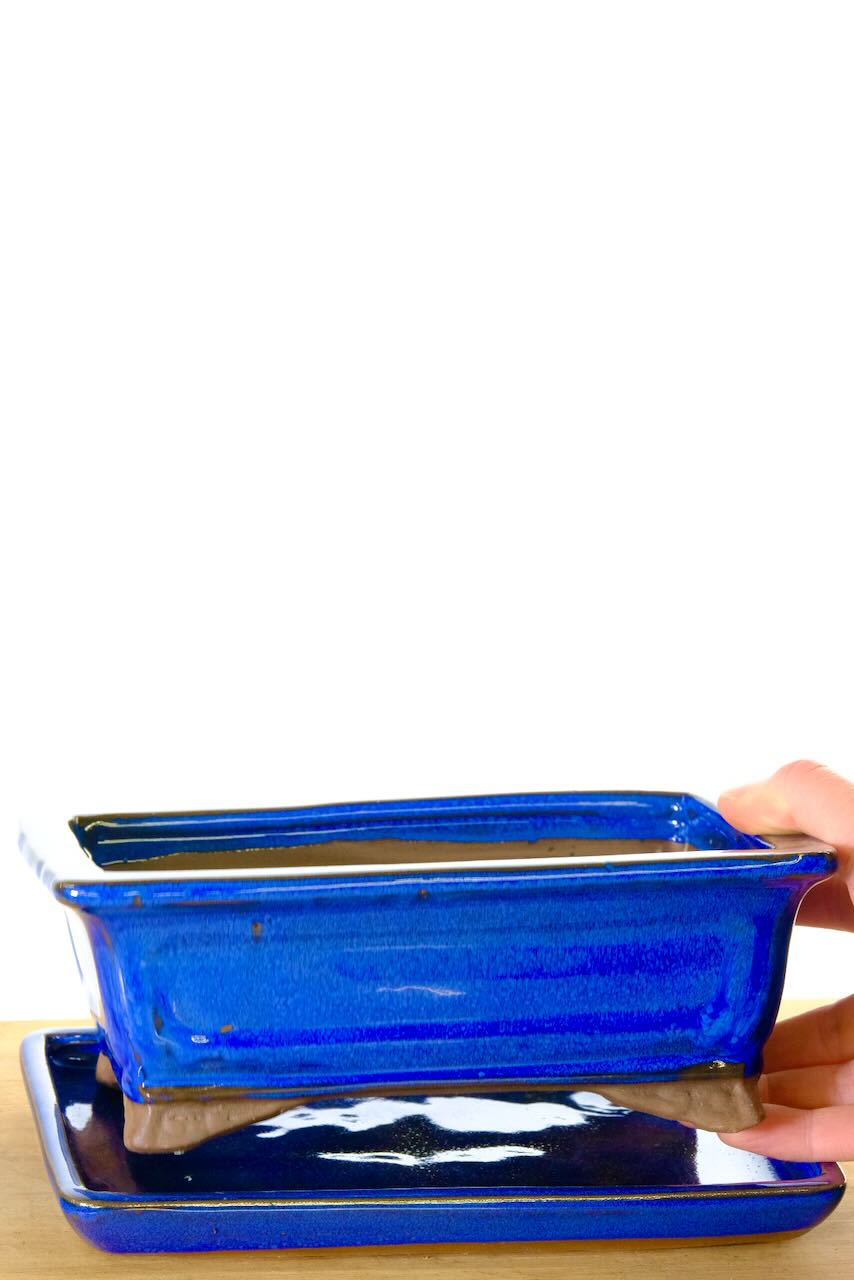
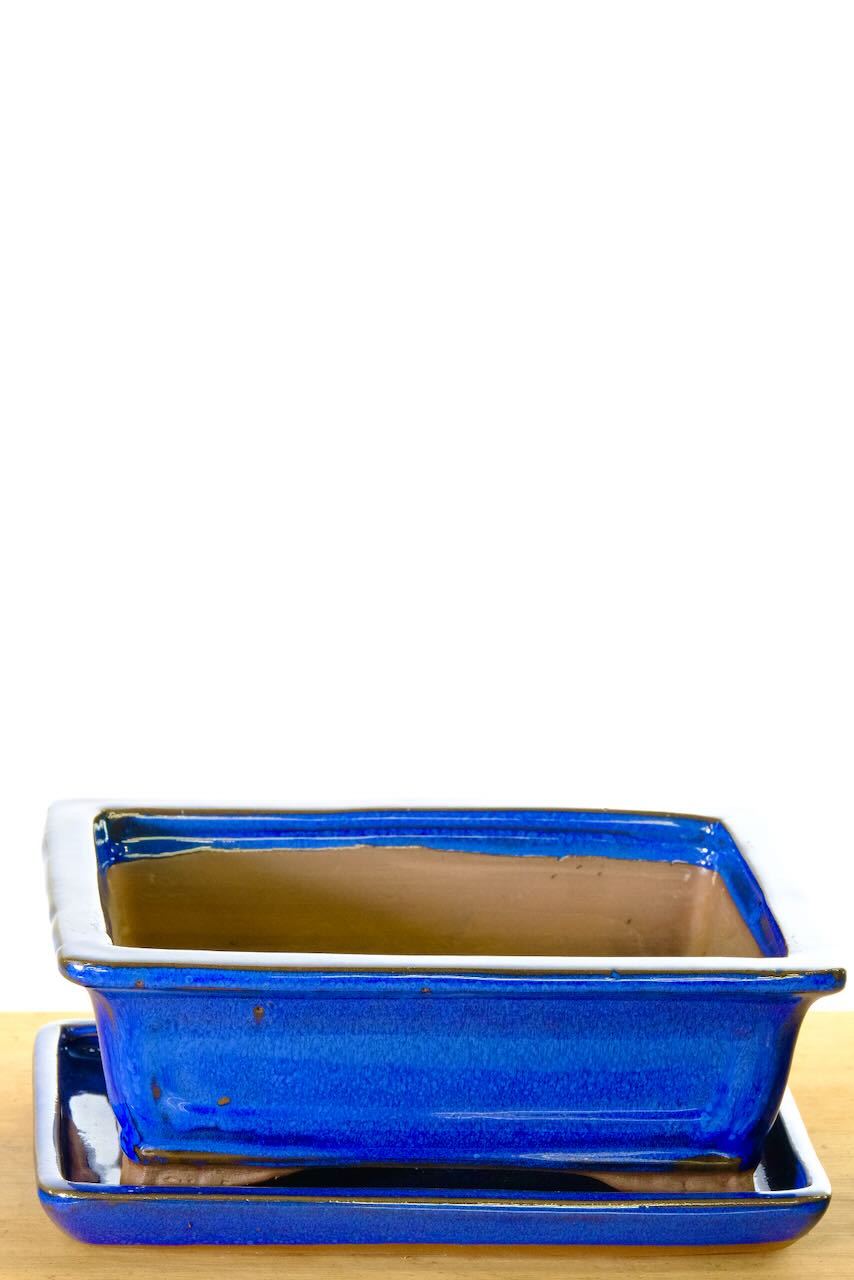
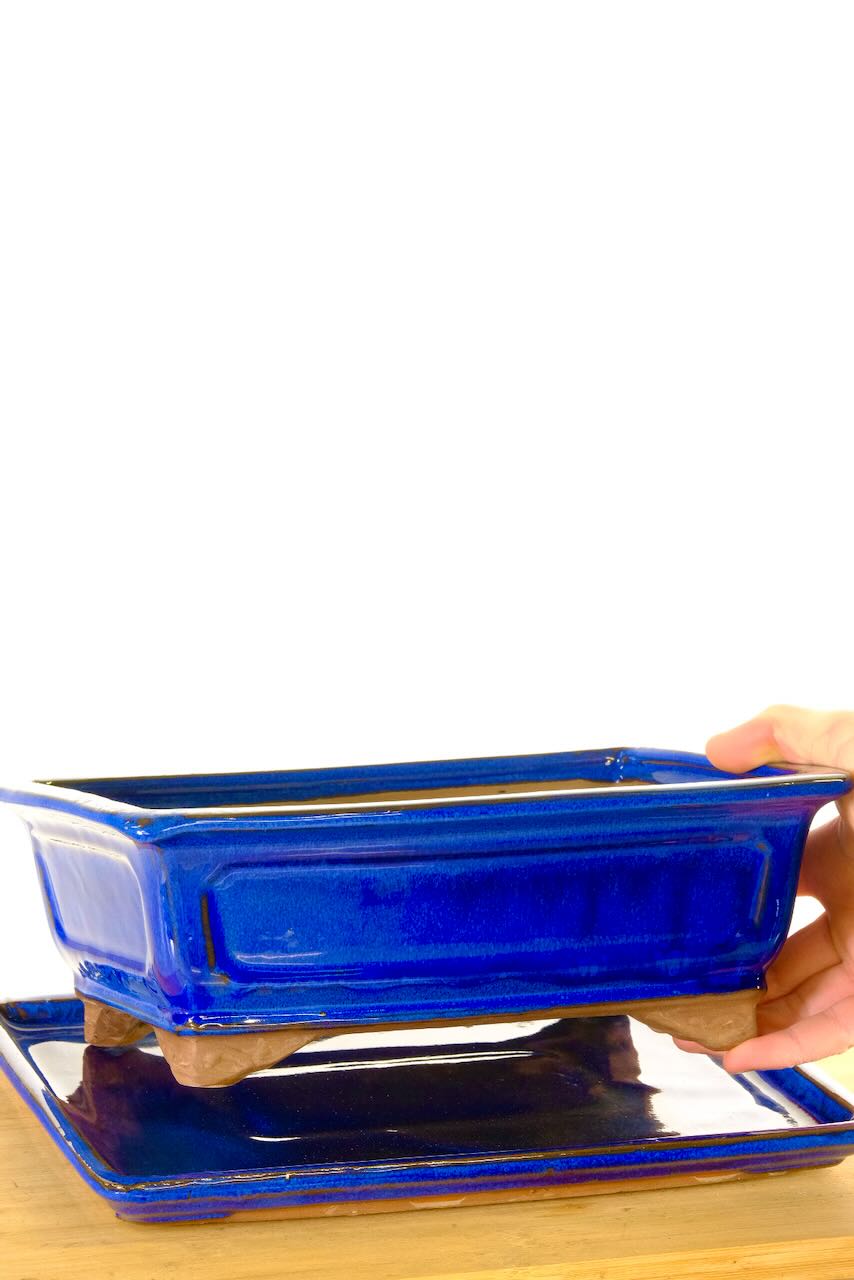
Introducing our Rectangular Blue Ceramic Bonsai Pot & Matching Drip Tray – a beautiful addition to your bonsai collection. With its beautifully styled and elegant design, this pot enhances the overall aesthetic appeal of your bonsai tree.
Internal Dimensions: 23.5 x 18 x 7.5 (cm)
External Dimensions: 26.5 x 21 x 9.5 (cm)
Contemporary Rectangular Shape for Modern Appeal
This pot benefits from a rectangular shape. Whether displayed indoors or outdoors, this shape adds modernity to your bonsai display, capturing attention with its sleek and stylish lines.
Rich Royal Blue Glaze for a Cheerful Finish
The rich Royal Blue glaze finish adds sophistication to this pot; it beautifully highlights the bonsai leaves and adds a cheerful contemporary design. Its glossy sheen complements the lush green foliage of your bonsai, creating a captivating display that stands out in any setting.
Thoughtful Design for Optimal Growth
Crafted with careful consideration, this pot provides the perfect environment for your bonsai tree to flourish. The spacious interior offers room for the tree’s roots to spread and develop, promoting healthy growth. The rectangular shape ensures even root distribution, preventing tangling and ensuring your bonsai’s overall well-being.
Matching Drip Tray: Functional Elegance
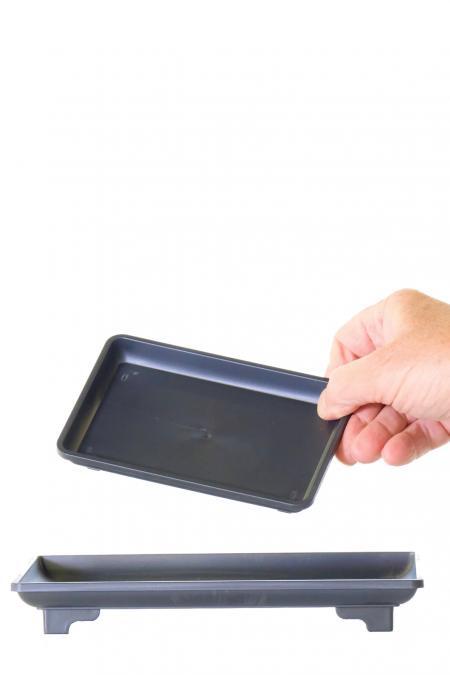
The included matching drip tray serves a dual purpose of functionality and aesthetics. It captures excess water, protecting your surfaces from damage and keeping your bonsai area neat and organised. The drip tray complements the pot’s design, creating a harmonious display.
Versatile and Durable for Indoor and Outdoor Use
Crafted from high-quality ceramic materials, this bonsai pot and matching drip tray are built to withstand varying weather conditions. Their durability ensures longevity, making them suitable for both indoor and outdoor use. Whether displayed on your desk, patio, or garden, they add sophistication and beauty to any environment.
FREE delivery – on the date you choose!
We offer FREE next working day to most areas of the UK. This includes delivery address throughout England, Wales and Glasgow and Edinburgh postcodes of Scotland. Other areas take a minimum of two working days. You can choose your delivery date on the calendar at the checkout.
A Guide to Repotting Bonsai Trees
Why Do We Repot Bonsai Trees:
Repotting a bonsai tree serves various purposes. Sometimes, it’s simply to refresh its appearance, providing a new aesthetic appeal. Other times, it’s a rejuvenation process for a bonsai whose pot has received some wear and tear, giving it a fresh start. However, the primary reason for repotting is to accommodate the bonsai’s growth; when it outgrows its current pot or becomes pot-bound, indicating that its roots are densely packed and require more space to thrive. A new pot not only enhances the bonsai’s appearance but also encourages healthier, more vigorous growth, especially if moving to a slightly larger size.
How to Detect if Your Bonsai is Pot-Bound:
Over time, all potted plants, including bonsai trees, can become pot-bound, where the soil is densely packed with roots, restricting any further growth. When this occurs, the bonsai may cease to grow and could even deteriorate. Healthy root growth is crucial for the bonsai’s well-being, ensuring it has ample room to flourish.
To determine if your bonsai is pot-bound, gently remove it from its pot, you may find you need to remove any securing wire first. If the soil appears compacted and filled with roots, it’s likely time for a root prune or a larger pot. However, the frequency of repotting varies depending on the species. Some, like the Carmona (Fukien Tea Tree), have finer roots and don’t benefit from frequent repotting, while fast-growing species like the Ulmus parvifolia (Chinese Elm) may require repotting every other year for optimal growth. Generally, older, larger bonsai should be repotted every 3-5 years, while young starters may need annual repotting if they grow quickly.
Best Time for Repotting:
For indoor bonsai, repotting is typically done during the warmer months from May to September. Outdoor deciduous bonsai are best repotted in March, before buds begin to swell, though weather conditions may influence the exact timing. Hardy outdoor evergreens like pines and junipers are usually repotted around March, in early spring. Young junipers, under 20 years old, can be repotted at any time except mid-winter.
What’s Included in Our Bonsai Pot Packages:
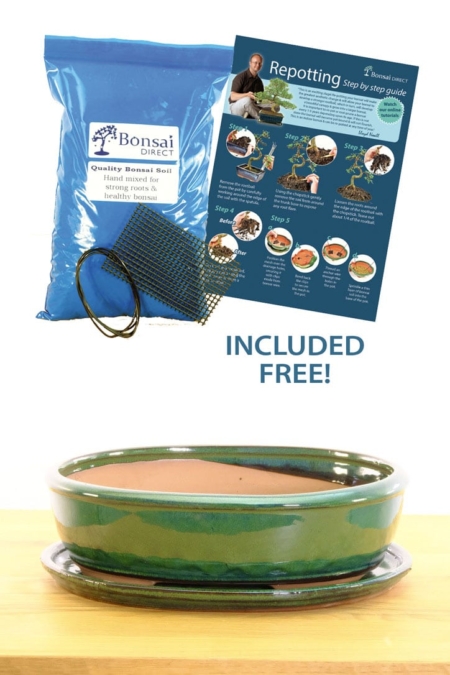
Our premium bonsai pots come with everything you need for repotting. Each kit includes a comprehensive repotting guide, potting mesh to cover drainage holes, wire for anchoring the bonsai, a chopstick to help work in the soil, and soil for the root ball. These items are provided free of charge to ensure your repotting process is seamless and successful.
Lastly, check out the short video below for a visual guide on how to repot or root prune your bonsai tree, including pot preparation. We hope it serves as a valuable resource for your bonsai care journey.
Make sure you sign up for our newsletter (at the bottom of the page). You will gain priority access to new products and exclusive offers. You can also find us on Facebook, Instagram, Twitter, TikTok , YouTube and Pinterest for behind the scenes, tutorials and lots of other care advice!