

By bonsai expert Lloyd Noall — nearly 40 years of bonsai-growing experience at Bonsai Direct
🌿 What Is a Bonsai Forest?
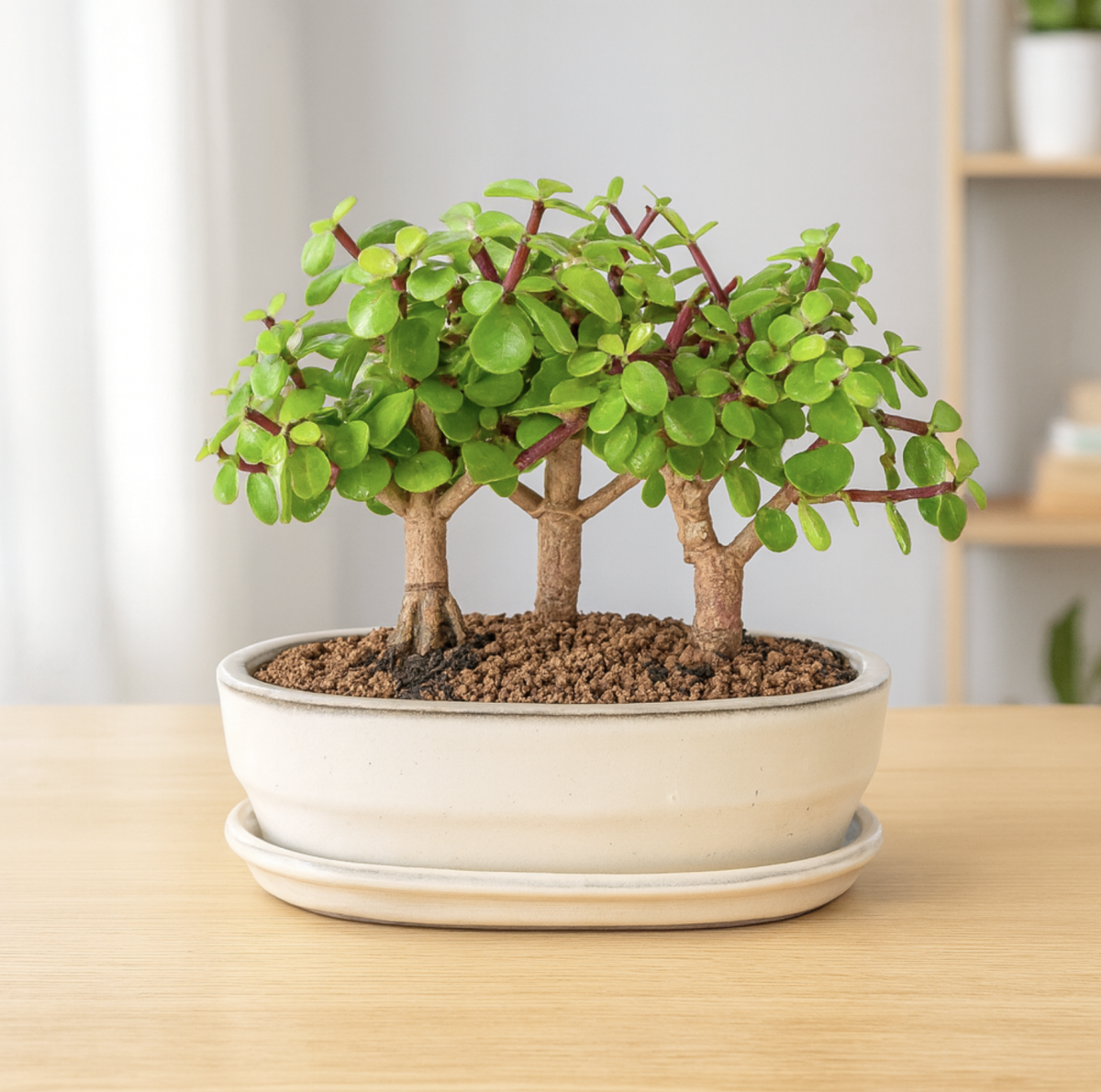
A bonsai forest (known in Japanese as Yose-ue) is one of the most natural and enchanting forms of bonsai artistry. While a single bonsai captures the beauty of an individual tree, a bonsai forest captures the soul of an entire landscape. A living woodland in miniature.
Instead of one focal point, a bonsai forest features multiple trees of the same species, arranged together in harmony to resemble a natural grove. When done well, you can almost imagine tiny birds darting through the branches and sunlight filtering through the leaves. A complete world in a single pot.
🌳 Why Bonsai Forests Are So Captivating
There’s something timeless about a forest. Even in miniature form, it stirs a feeling of calm and connection. That quiet peace you find when walking beneath tall trees. A beautifully composed bonsai forest does the same on a smaller scale. It invites you to pause, to look closer, and to lose yourself in its gentle balance of height, depth, and space.
People are drawn to bonsai forests because they:
- Capture the natural beauty and realism of a woodland in miniature.
- Express unity and balance, where every tree plays its part.
- Symbolise family, community, and harmony — a living reflection of togetherness.
- Look effortlessly elegant in shallow pots or stone slabs, blending art with nature.
While a single bonsai showcases the character of one tree, a bonsai forest tells a story of cooperation and rhythm — nature’s quiet poetry brought to life.
🌱 How Bonsai Forests Differ from Single Bonsai Trees
A single bonsai tree is all about individuality — its trunk shape, nebari (root flare), and branching define its character.
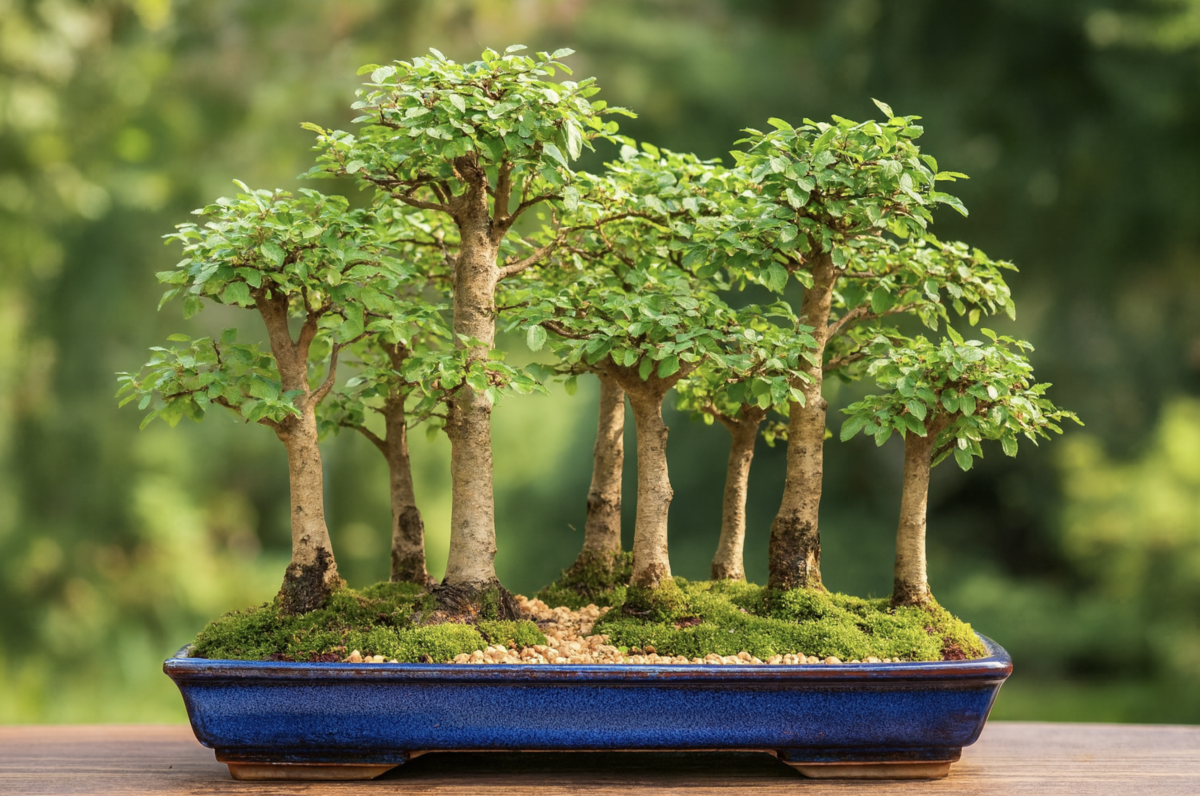
A bonsai forest, by contrast, is about relationship and perspective. Each tree plays a role in the group:
- The tallest tree often represents the oldest or dominant leader.
- Medium trees create balance and depth.
- Smaller trees add perspective, giving the illusion of distance.
Together, they tell a story — a grove standing proudly against the elements, a cluster of young trees around an ancient one, or a natural woodland scene frozen in miniature.
🪴 How to Create a Bonsai Forest
You can make a bonsai forest with almost any tree species, though deciduous and subtropical trees like Chinese Elm, Zelkova, Maple, Beech, and Juniper are most popular for their adaptable growth and visual harmony.
1. Select your trees
Choose trees of varying height and trunk thickness. The tallest tree acts as your “main” or dominant tree, while the smaller ones add balance and realism. Odd numbers (5, 7, 9, 11) are preferred — they create natural asymmetry and rhythm.
2. Choose the right container
A bonsai forest looks best in a wide, shallow pot or stone slab, giving plenty of space to position the trees. Ensure the pot has several drainage holes and anchoring points.
3. Prepare the soil
Use a well-draining bonsai soil mix — for example:
½ Akadama, ¼ pumice, ¼ lava rock.
This ensures healthy root growth and long-term stability for the group planting.
4. Arrange your composition
Place the tallest tree slightly off-centre, then arrange the smaller trees around it. Avoid straight lines or perfect symmetry — in nature, forests grow irregularly. Step back and check the spacing; the trees should feel connected but not crowded.
5. Plant and secure
Gently spread the roots outwards and secure each tree with wire through the drainage holes if necessary. Cover the soil with moss or fine gravel to create a realistic forest floor.
6. Aftercare
Water thoroughly and place your new forest bonsai in partial shade for several weeks. Once settled, move it gradually into a bright, sheltered position.
Spring is the best time to create or repot a bonsai forest, when new growth is just beginning.
🌄 Why Bonsai Forests Look So Natural
A well-made bonsai forest captures depth and realism through clever use of scale, spacing, and texture:
- Varying trunk sizes create the illusion of age differences.
- Diagonal placement suggests movement and perspective.
- Open clearings between trees let the eye wander, enhancing realism.
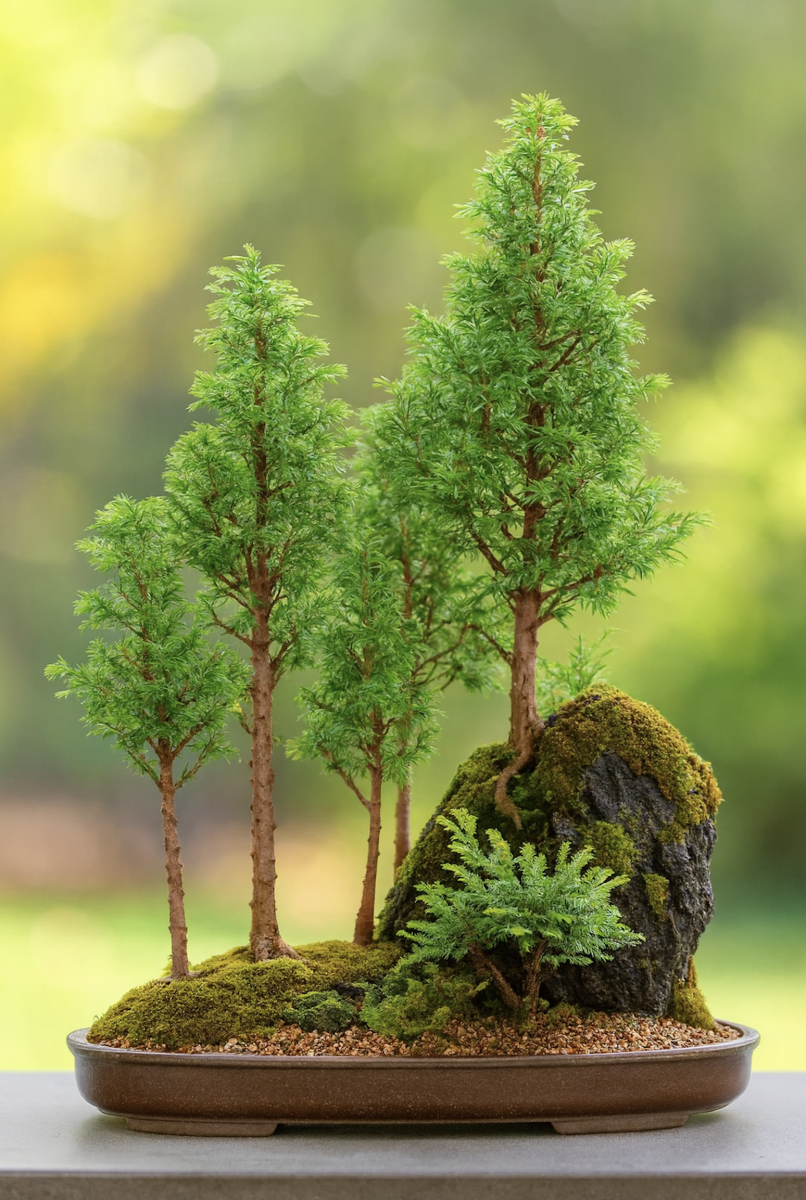
- Natural ground covers like moss or small stones complete the scene.
The result is a landscape that feels alive and ancient — a reminder of the wild beauty found in nature.
🍃 The Symbolism of a Bonsai Forest
Bonsai forests aren’t just visually striking; they carry deep meaning. They represent togetherness, cooperation, and harmony — the idea that every individual contributes to the whole.
They can symbolise family, friendship, or community, making them especially thoughtful gifts. Many enthusiasts find that tending to a forest bonsai feels calming and grounding — a daily connection to the serenity of the natural world.
🌸 Final Thoughts
Creating a bonsai forest is one of the most rewarding experiences in bonsai art. It combines horticulture, composition, and imagination to form a living landscape that changes with the seasons and matures beautifully over time.
Whether you’re a beginner or an experienced grower, designing your own bonsai forest is a deeply satisfying way to express creativity and connect with nature.
A bonsai forest is more than a display — it’s a story in miniature, a reflection of balance, harmony, and the quiet resilience of the natural world.
🌿 Explore More with Bonsai Direct
At Bonsai Direct, we offer a beautiful selection of forest bonsai trees and group plantings, as well as individual species perfect for creating your own miniature woodland.
All bonsai include a printed care guide and are delivered free next working day to most UK addresses — securely packaged and ready to enjoy.


0 replies