

Mastering Larch Bonsai Repotting & Root Care for a Stronger Tree
Welcome back to Part 3 of our deep dive into this remarkable 45-46-year-old Larch bonsai! In this stage of its refinement, we focus on Larch bonsai repotting and root care—an essential process that shapes the tree’s future health and stability.
Repotting isn’t just about giving the bonsai a fresh home; it’s an opportunity to inspect, refine, and strengthen the root system. Proper root work ensures that nutrients are efficiently absorbed, the tree remains stable, and its overall form continues to develop beautifully over time.
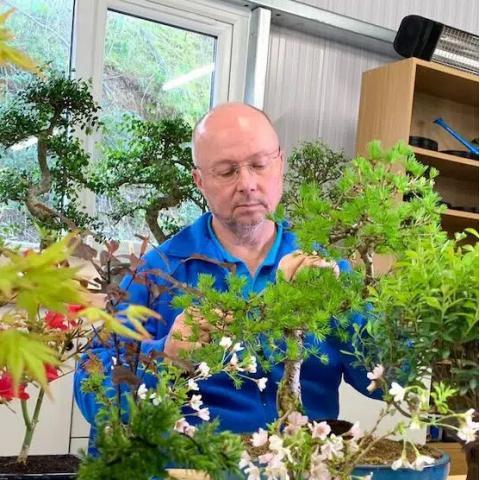
Bonsai expert Lloyd Noall walks you through the process, covering:
🌱 How to safely remove the tree from its pot
🌿 The best techniques for refining root structure
🔗 Securing roots with wiring for long-term balance
✨ Why a simplified base enhances the overall design
“Root work is like uncovering buried treasure—each layer reveals something new!”
If you missed Parts 1 & 2, be sure to catch up on the full series here. And don’t forget—Part 4 will be all about Spring Growth & Fine-Tuning, so stay tuned! 🌿
Larch Bonsai Repotting: Root Refinement & Potting Techniques
Welcome Back to Part 3: Repotting & Root Care
Welcome back to Part 3 of our series on this magnificent 45-46-year-old Larch bonsai! In this episode, we focus on Larch bonsai repotting, refining the root structure, and ensuring the tree is set for long-term health and stability.
Repotting is a crucial step in bonsai care—it not only refreshes the soil but also allows us to inspect and refine the root system to enhance growth and overall aesthetics.
Removing the Bonsai from Its Pot
Before we start, we check the stability of the tree in its pot. Giving it a slight wobble, I can tell that it’s firmly rooted. Once we cut the anchor wire, we carefully remove the tree.
Luckily, this one comes out quite easily, but that’s not always the case! Now, we take a closer look at the root system to determine our next steps.
Refining the Root Structure for Balance & Health
Exposing the Surface Roots
First, we work our way down the soil surface using a chopstick to carefully expose and examine the surface roots. This is an essential step because it reveals what lies beneath and helps us determine how to refine and reposition the roots.
The base of the tree has a lot of character, with lumps, bumps, and interesting formations. However, to improve its aesthetics, we need to simplify the structure and remove anything unnecessary.
Identifying Dead or Problematic Roots
One particular dead root is interfering with the natural structure. It crosses over a healthy root and disrupts the overall balance. Removing it will help create a cleaner, more elegant look.
Adjusting Root Positioning
Some roots need reshaping to improve balance. We pull one down and anchor it carefully. Another still sticks up slightly, so we need to bring it further down. To achieve this, we continue teasing out the root ball to check for anchor points below the soil.
Anchoring the Roots with Wiring
Why Wiring is Important
Wiring is crucial to maintain the correct root placement. Without it, newly positioned roots could shift as the tree settles into its pot.
We use a 3.5mm bonsai wire, bending it into a hook to anchor a root in place. By threading the wire under the root ball and securing it on the other side, we firmly position the root without damaging it. This method ensures a strong and stable foundation for the bonsai.
Preparing the Pot & Replanting the Bonsai
Testing the Fit
Before adding fresh soil, we test the tree’s position in the pot. It must sit at the right height—not too deep and not too high. Given the straight trunk, it’s crucial that the tree remains upright and balanced.
Securing with Anchor Wires
We use anchor wires to firmly secure the bonsai in place. This prevents movement and ensures proper root development in the new soil. To guide the wire through the root ball, we use a chopstick to create holes, making threading easier.
Why Larch Bonsai Make Fantastic Trees
Larch bonsai are a great choice for both beginners and experienced enthusiasts. They are easy to care for, grow relatively quickly, and respond well to shaping and pruning.
- Beautiful Bark & Fine Twigs – Adds natural character to the bonsai.
- Fast Growth Rate – Allows for quicker development and training.
- Versatile Styling Options – Can be shaped into various bonsai styles.
- Seasonal Beauty – The fresh green buds in spring are always a delight to see!
Bonsai Tools Used in This Process
Throughout the video, we used various bonsai tools, including:
- Concave Cutters – Create clean cuts that heal smoothly.
- Wood Gouge – Helps deepen cuts for better healing.
- Root Shears & Long Scissors – Essential for fine root trimming.
- Chopsticks & Brushes – Used to tease out and clean roots.
- Wire Cutters & Jin Pliers – For securing roots and removing excess wire.
If you’d like to learn more about these tools, drop a comment, and we’ll cover them in a future video!
What’s Next? Part 4 – Spring Growth & Fine-Tuning
That wraps up Part 3 on Larch bonsai repotting! But we’re not done yet—Part 4 will focus on the springtime growth phase, where we’ll take a close look at new buds and refine any developing shoots.
Make sure to subscribe and turn on notifications so you don’t miss it!
📌 Missed Part 1 or 2? Watch the full series here: Larch Bonsai Playlist
🎥 See you in the next episode!


0 replies