

Introduction by Lloyd Noall from Bonsai Direct
Bonsai cultivation is a true art form, and few trees embody the beauty and character of this practice like a well-aged Japanese Black Pine. In this video, bonsai expert Lloyd Noall from Bonsai Direct takes us on a journey through the intricate details of a stunning 60-year-old Black Pine bonsai. From its powerful trunk to its delicate surface roots, every element of this tree tells a story of patience, dedication, and careful craftsmanship. Join Lloyd as he explores the unique features of this bonsai, uncovers hidden roots, and discusses future plans for its refinement. Whether you’re a seasoned bonsai enthusiast or new to the art, this video provides valuable insights into the delicate balance of structure, aesthetics, and long-term growth strategies.
What is a nebari?
The nebari of a bonsai tree refers to the visible surface roots (or root flare) that spread out from the base of the trunk. It plays a crucial role in the tree’s overall aesthetics. Creating a sense of age, stability, and natural beauty. A well-developed nebari enhances the artistic design of a mature tree in miniature, by giving the impression that the tree is firmly anchored in the soil.
Nebari development is particularly important in bonsai cultivation and can be improved through techniques such as root pruning, air layering, and careful positioning of roots during repotting. Trees like Japanese maples and pines are especially valued for their ability to develop strong, radial nebari over time.
Japanese Black Pine Bonsai Tree (Pinus thunbergii) – Key Attributes
The Japanese Black Pine (Pinus thunbergii) is a highly prized bonsai species known for its resilience, rugged beauty, and distinctive character. Native to coastal regions of Japan and Korea, this conifer thrives in challenging environments, making it an excellent choice for bonsai cultivation. Here are its main attributes:
🌿 Striking Bark Texture – As it matures, the Japanese Black Pine develops a rough, cracked bark that adds a sense of age and character, enhancing its visual appeal.
🌲 Graceful, Twisting Trunk and Branches – With time, its trunk thickens and may develop unique curves, often styled in dramatic shapes to reflect the look of wind-swept coastal trees.
🌱 Strong, Radial Nebari (Surface Roots) – A well-developed nebari gives this bonsai a solid, anchored appearance, emphasising its stability and age.
🍃 Dark Green, Stiff Needles – The tree produces sharp, deep-green needles that grow in pairs. Regular pruning and candle-pinching help maintain a compact, balanced form.
☀️ Sun-Loving and Hardy – Thrives in full sun, making it an excellent outdoor bonsai. It is highly resistant to wind, salt, and poor soil conditions.
🪴 Long-Term Development – With proper care, it can live for decades—sometimes even centuries—becoming a truly timeless bonsai masterpiece.
The Beauty and Character of a 60-Year-Old Japanese Black Pine Bonsai
Admiring the Strength and Elegance of the Trunk
I really love the smell of pine trees—it’s one of those smells that is just so evocative. There’s a lovely Black Pine here that I think we should take a closer look at. The trunk and root structure are magnificent. The trunk is just beautiful—really powerful! Let’s have a close-up of what’s going on in this area. We have this lovely root creeping out, creating a beautiful shape with undulating lines. Look at this! All around here, there are fantastic smaller roots emerging, forming an intricate network. These details are what make bonsai so captivating.
Such magnificent shapes! The character of this bonsai is evolving beautifully. I’ve been growing it for many years, allowing the trunk to develop its gnarled, lumpy, and bumpy texture—qualities that make really old trees so special, especially pines. Just look at this bark! It’s stunning. Before making any adjustments to the upper part of the tree, I need to examine what’s happening at the base. The rugged texture of the bark adds so much character. I also love the tiny mosses growing in the grooves—they’re lovely! There’s even a bit of dead root sticking out, adding to the tree’s natural character.
Uncovering the Hidden Roots
The next step is to investigate what lies beneath all the moss and weeds. There might be some beautiful roots hidden under the soil that we can’t see yet. Now that I’ve cleared some of the surface, we can see a lot more of what’s going on. Several small roots have started to emerge, creating lovely shapes.
I have an idea—I’ll take the tree outside, give it a rinse with the hose, and then we can come back to examine it more closely.
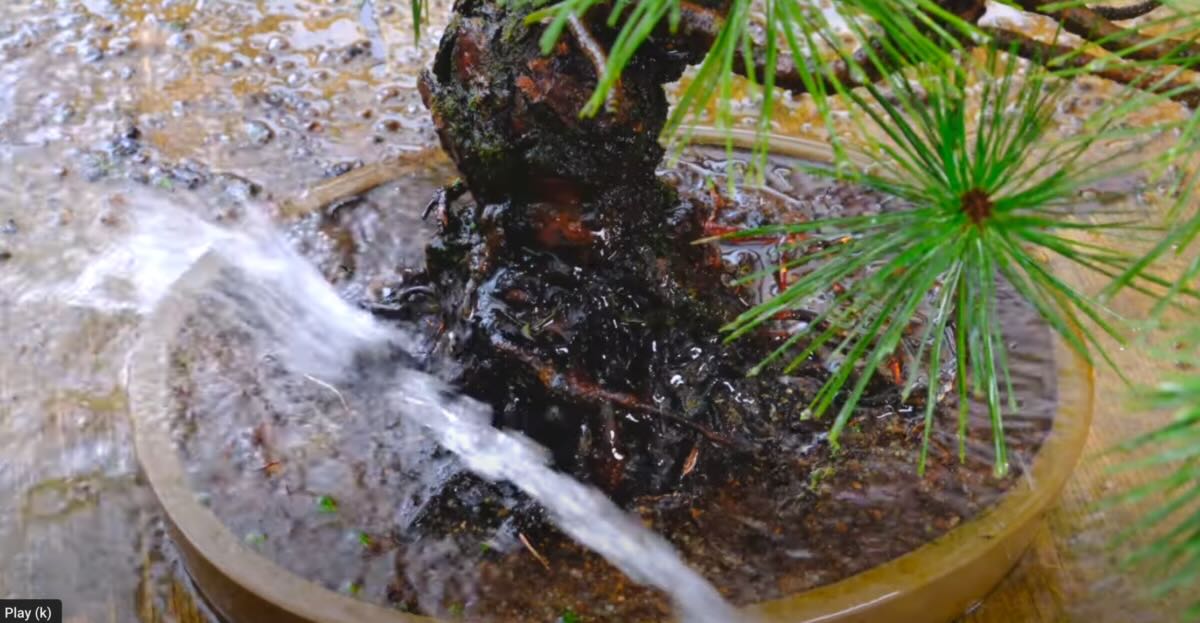
Wow! That is absolutely beautiful! The surface roots we’ve uncovered are fantastic, and they’re at an ideal level. Since the bonsai will start at this point, these roots are perfectly positioned. Some roots extend down the trunk in a flowing pattern, which looks superb. This side of the tree is quite chunky, and we don’t have any significant surface roots there yet. However, in a few years, some of the buried roots might thicken. When we eventually repot the tree, we might be able to reposition some of them to develop a more balanced root structure.
Examining the Bark and Future Growth of This Dramatic Black Pine Bonsai Tree
The colour of the bark is fantastic. There’s even some white fungus—mycorrhiza—growing on it. I mentioned this in a previous video, and someone left a fantastic comment explaining it in detail.
“The fungi are called Mycorrhiza. Basically the Hyphae, the filaments of fungi, wrap around root tips. They then provide the tree with most of it nutrients such as nitrogen ect, as the fungi network is more far reaching and efficient at collecting these nutrients from the soil. They also help protect the tree from disease and environmental stress, such as drought. In return the trees provide the fungi with sugars made through photosynthesis. There is some evidence that the fungi metabolism creates the form of nitrogen and other nutrients that the tree can absorb and use and without that the trees couldn’t feed, in a natural setting at least. Artificial chemical fertilizer can be in forms directly useable by trees but organic or in ground nutrients would not be and so the fungi metabolise these into forms useable by the trees. In the ground there is also good evidence that trees can share nutrients and hormones through the fungi network as the Hyphae on one trees roots in part of an organism that can be 10s or even 100s of meters large, and connected to every tree in its patch. This way a tree being attacked by aphids, for example, can share stress hormones through the fungi to its neighbours. Who can being to create defensive hormones. This part is very cutting edge and not alot is crystal clear at this point. But for sure the massive fungi networks can connect to hundreds of trees and support them in a symbiotic relationship. If you want to know more leave a question and I’ll do my best. I’ve been growing bonsai for a decade and half and have far too many trees lol”.
@Stimm002 on Youtube
The reply was spot on! In future videos, we’ll discuss the fungus, roots, and soil composition in more detail. Each video will build upon the last, so stay tuned for more information.
For now, I’ll take a look around the back of the tree to see what’s happening there. Yes, it looks fantastic! There’s a lot going on in this area, which is exciting. Now, I need to think about the next steps for shaping the tree. Some of the foliage may need to be reduced, and certain branches might need to be repositioned. This process takes time, but there’s no need to rush.
Planning the Next Steps
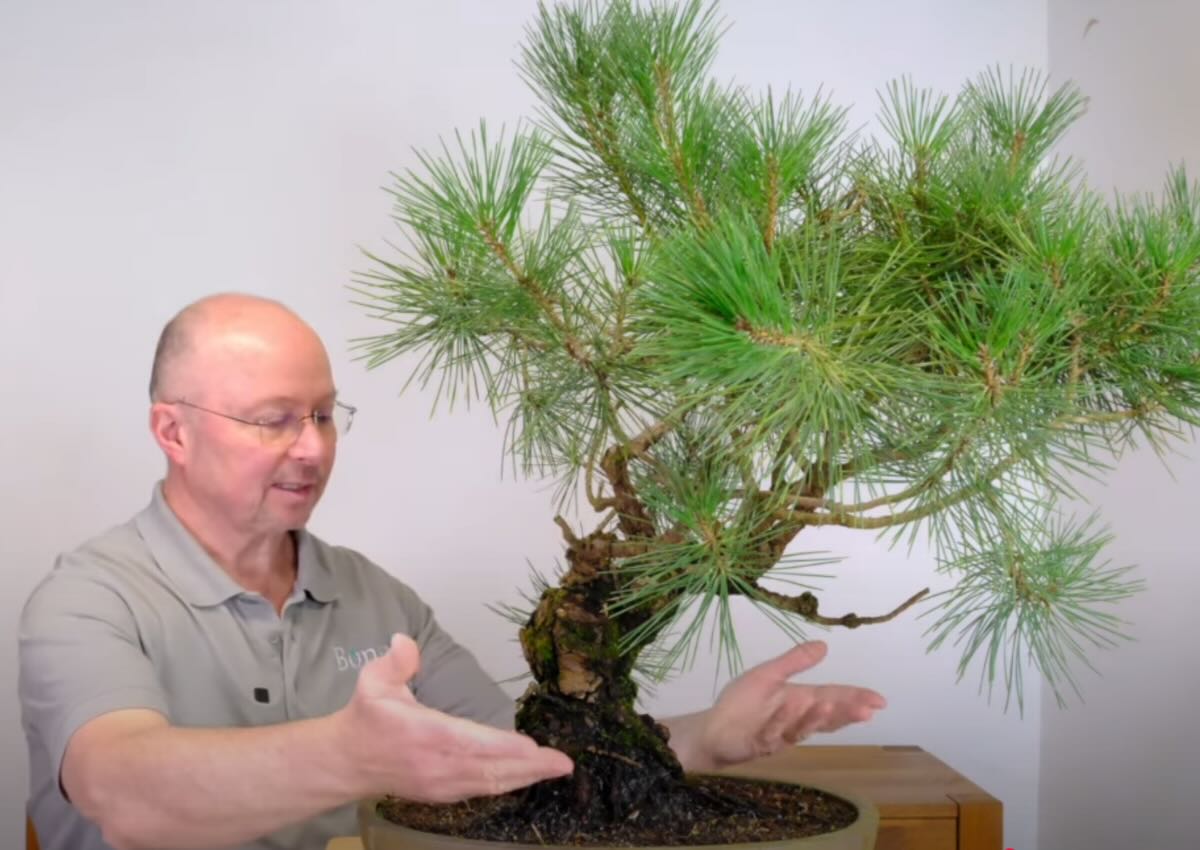
We don’t have to keep the tree in its current orientation—we can adjust the angle if needed. However, that would alter the tree’s starting point and affect the surface roots we’ve uncovered. I’d prefer to maintain the current angle since it already has a strong foundation. Instead, I’ll focus on refining the upper structure to harmonise with the existing trunk and roots.
The trunk has a beautiful curve with a slight twist. As I rotate the tree, you can see how well this shape flows. I love this natural movement! The upper branches are quite long and leggy, so they will need some work to bring them back into shape. This will take a few years, but that’s part of the fun—bonsai cultivation is a long-term process with no need to hurry.
I won’t be able to make all the adjustments in this video since it has been a very busy week. We’re entering a hectic period with lots of potting work ahead. I have many bonsai trees to tend to, and I plan to make more videos along the way.
I’ll take some time to think about the next steps for this tree, and we’ll discuss them in the next video, which will hopefully be out next week. Don’t miss it if you want to see how this lovely Black Pine progresses! If you haven’t already, please subscribe and turn on notifications so you don’t miss any updates.
I’m going to leave it there for now—see you next time. Take care! I love this—it’s really great!
If you are interested in Japanese Black Pine Bonsai please view another video with Lloyd 👉 Japanese Black Pine Bonsai Tree – Cleaning, Styling & Wiring | 55 years old


0 replies