

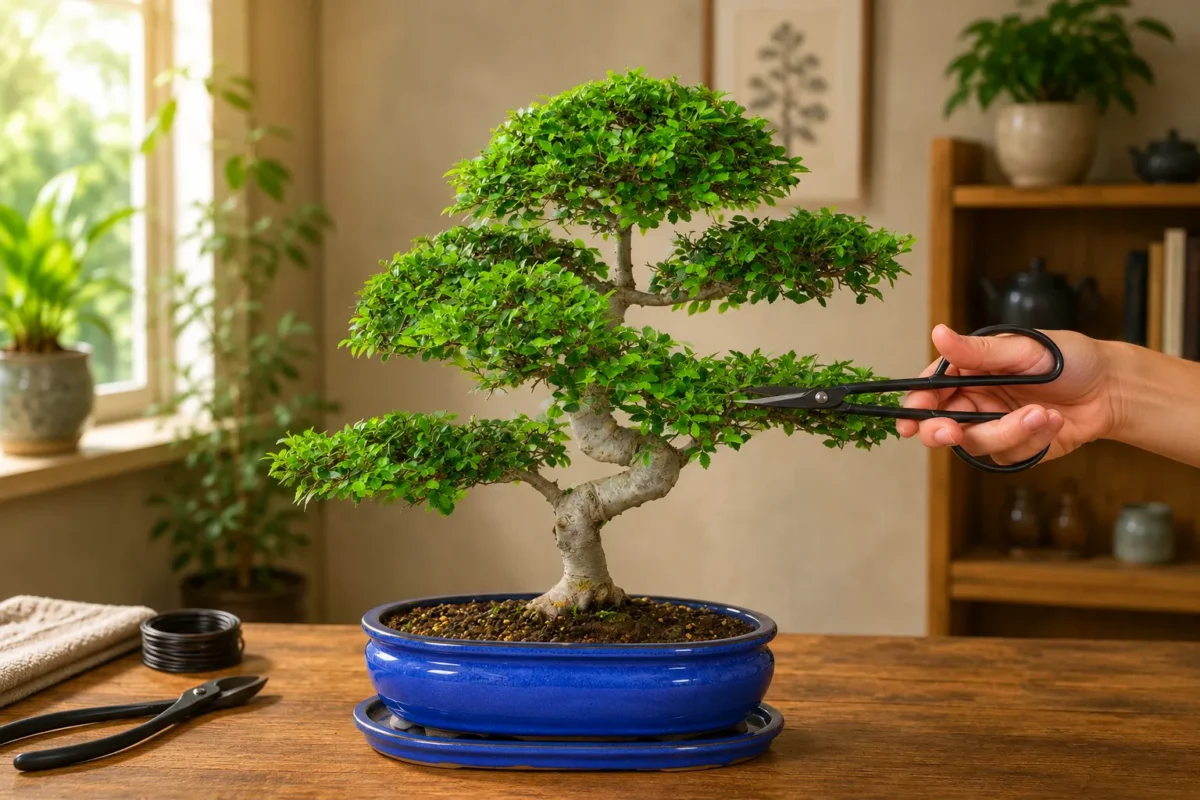
Pruning is one of the most rewarding parts of bonsai care. It keeps your tree healthy, encourages compact growth and helps create the beautiful shape that makes bonsai so captivating. While pruning can seem intimidating at first, it’s actually much simpler than many beginners expect.
At Bonsai Direct, we have over 40 years growing and styling bonsai trees. Whether you’re caring for a Chinese Elm, Ficus, Juniper or Japanese Maple, the same core pruning principles apply. Once you understand when and where to make your cuts, you’ll soon gain the confidence to shape your bonsai yourself.
In this guide, we’ll explain everything you need to know about pruning a bonsai tree, from choosing the right tools to avoiding common mistakes.
Why Is Pruning Important?
In nature, trees continue growing larger every year. A bonsai, however, is deliberately kept small while maintaining the appearance of a mature tree.
Regular pruning helps to:
- Maintain your bonsai’s shape
- Encourage dense, compact foliage
- Improve branch structure
- Allow more light and airflow into the canopy
- Remove weak, damaged or crossing branches
- Keep your tree healthy throughout the growing season
Without pruning, branches become long and untidy, eventually spoiling the overall appearance of the tree.
The Two Types of Bonsai Pruning
Understanding the difference between structural and maintenance pruning makes bonsai much easier to learn.
Maintenance Pruning
This is the type of pruning most bonsai owners carry out.
Maintenance pruning involves trimming new shoots throughout the growing season to maintain the tree’s silhouette and encourage finer branching.
You’ll normally perform this several times between spring and early autumn.
Structural Pruning
Structural pruning involves removing larger branches to improve the overall design of the tree.
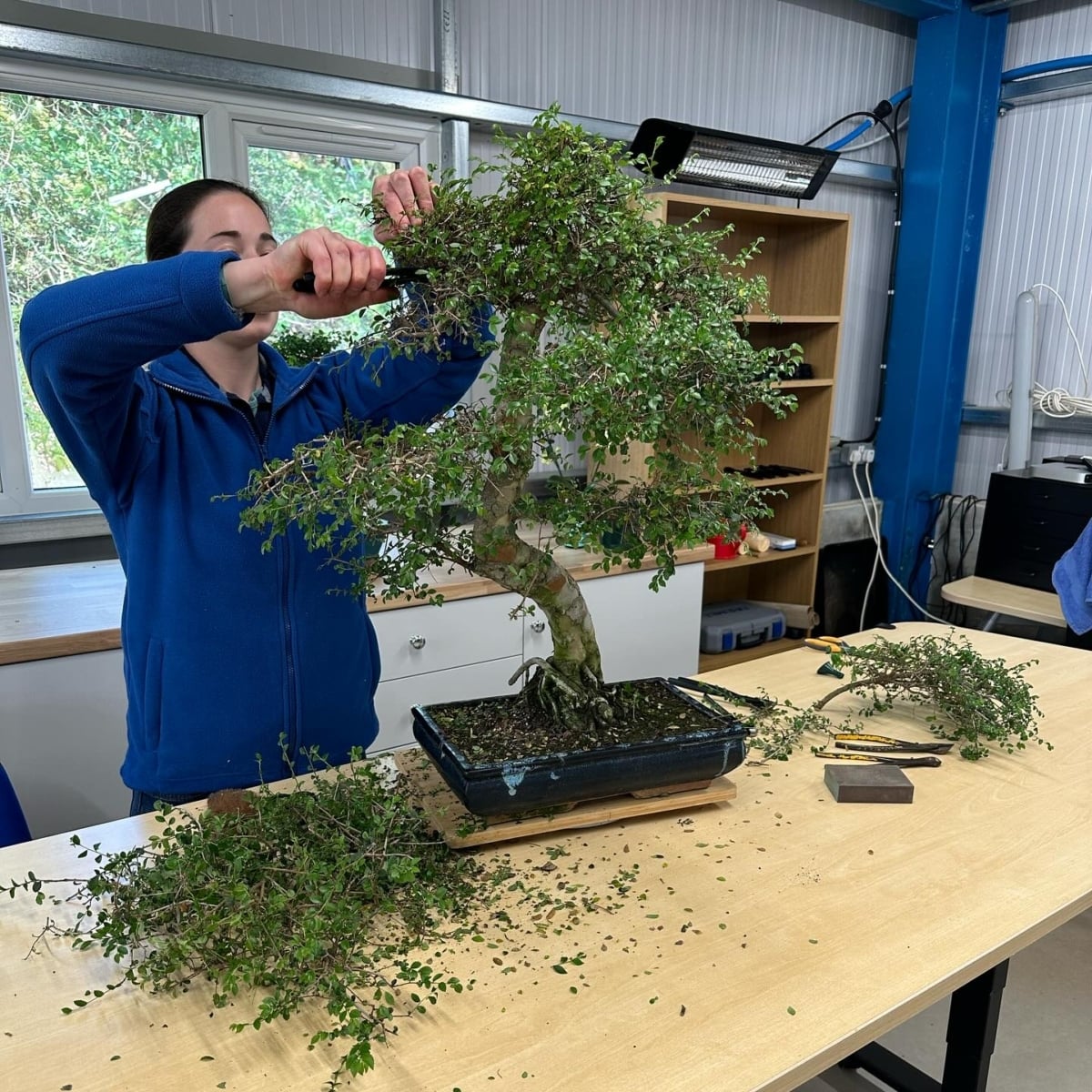
Examples include:
- Removing crossing branches
- Eliminating branches growing directly upwards
- Removing branches growing towards the viewer
- Improving taper and branch spacing
This type of pruning is usually carried out during dormancy for deciduous species or at specific times depending on the species.
When Should You Prune a Bonsai?
The best time depends on both the species and the type of pruning you’re carrying out.
Spring
Ideal for:
- Maintenance pruning
- Pinching new growth
- Deciduous trees
Summer
Continue light trimming to maintain shape.
Avoid heavy pruning during prolonged heatwaves.
Autumn
Only light pruning should be carried out.
Allow the tree to begin storing energy for winter.
Winter
Many deciduous trees can be structurally pruned while dormant.
Avoid heavy pruning tropical species during cold weather.
Tools You’ll Need
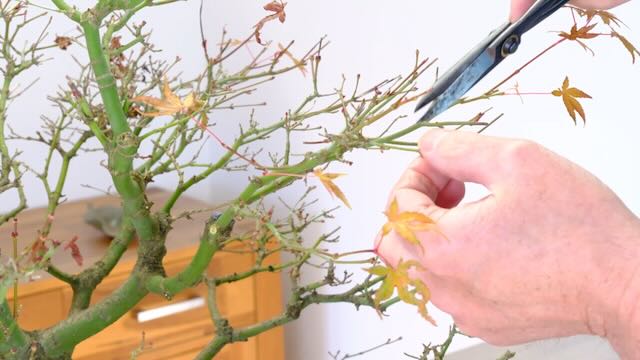
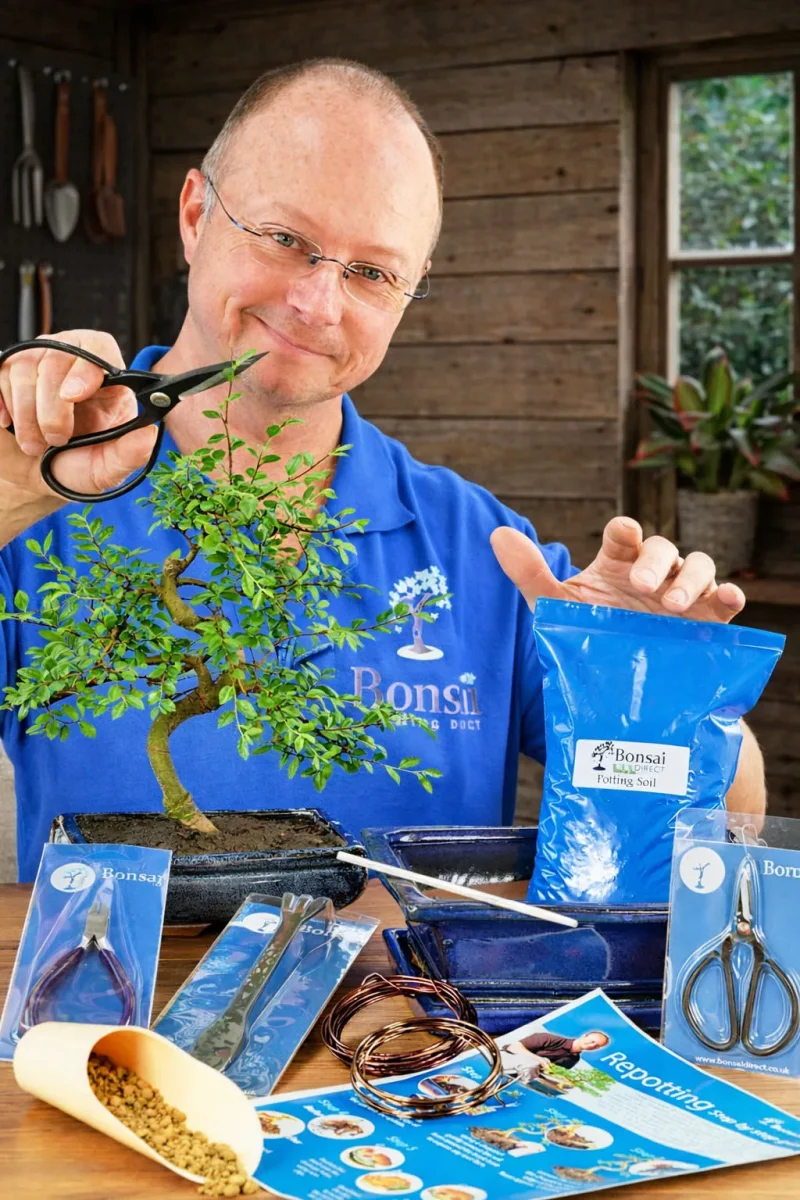
Using clean, sharp tools produces healthier cuts that heal more quickly.
Essential bonsai pruning tools include:
- Bonsai scissors
- Twig shears
- Concave branch cutters
- Fine pruning scissors
- Cut paste for larger wounds
Always disinfect your tools before moving between trees.
Step-by-Step: How to Prune a Bonsai Tree
Beginner Bonsai Pruning
If you’re new to bonsai, don’t worry about creating the perfect design straight away. Your main goal is simply to keep your tree neat, healthy and balanced.
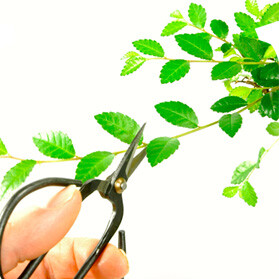
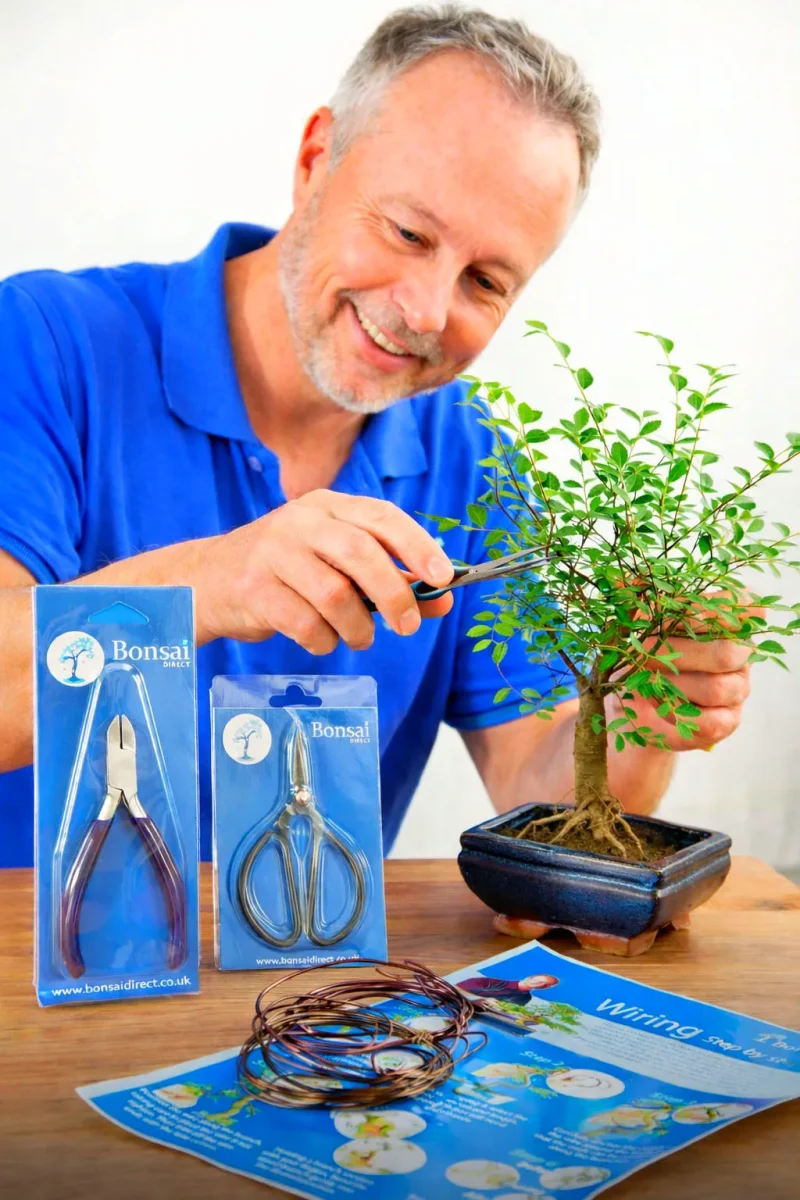
Start by removing any dead leaves, damaged twigs or weak branches. Then look for any long shoots that extend beyond the natural outline of the tree. Trim these back using a sharp pair of bonsai scissors, cutting just above a pair of healthy leaves or buds. This encourages the tree to produce new side shoots, creating a fuller and more compact canopy over time.
Avoid removing thick branches or making major design changes until you’ve gained more confidence. Small, regular trims throughout the growing season are far better than one heavy pruning session. Remember, bonsai is an art that’s developed over many years, so there’s no need to rush.
As a simple rule, if you’re unsure whether to remove a branch, leave it for now. You can always prune it later, but once it’s gone, it can’t be put back.
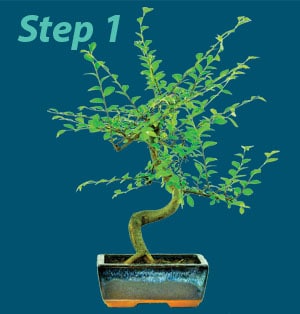


Intermediate Pruning Guide
Step 1 – Study the Tree
Before making any cuts, take a few minutes to examine your bonsai.
Look for:
- Dead branches
- Crossing branches
- Branches growing straight upwards
- Branches pointing directly downwards
- Shoots extending beyond the overall silhouette
Planning first usually leads to a much better result.
Step 2 – Remove Dead Growth
Dead leaves, dead twigs and damaged branches should always be removed first.
This improves airflow and allows you to clearly see the tree’s structure.
Step 3 – Remove Unwanted Branches
Remove any branches that:
- Cross over one another
- Grow towards the trunk
- Grow directly upwards
- Grow straight down
- Spoil the overall design
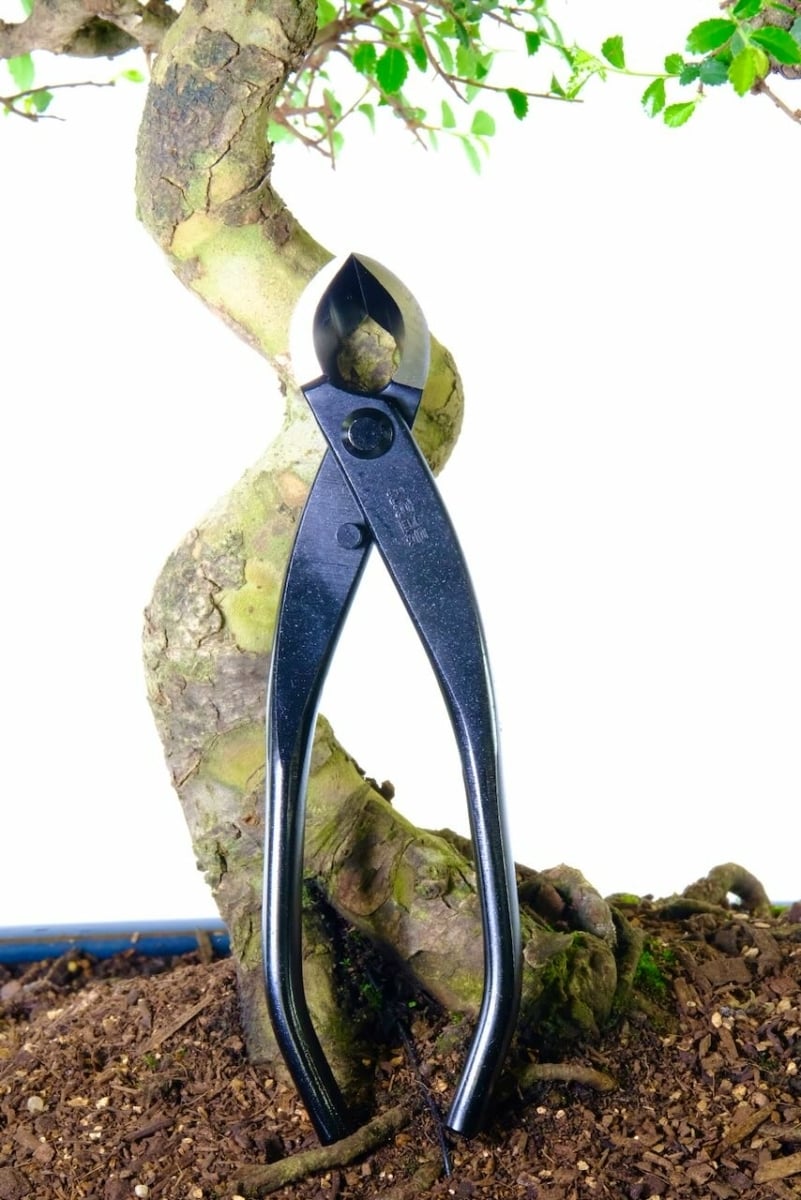
Make clean cuts close to the branch collar.
Step 4 – Trim New Shoots
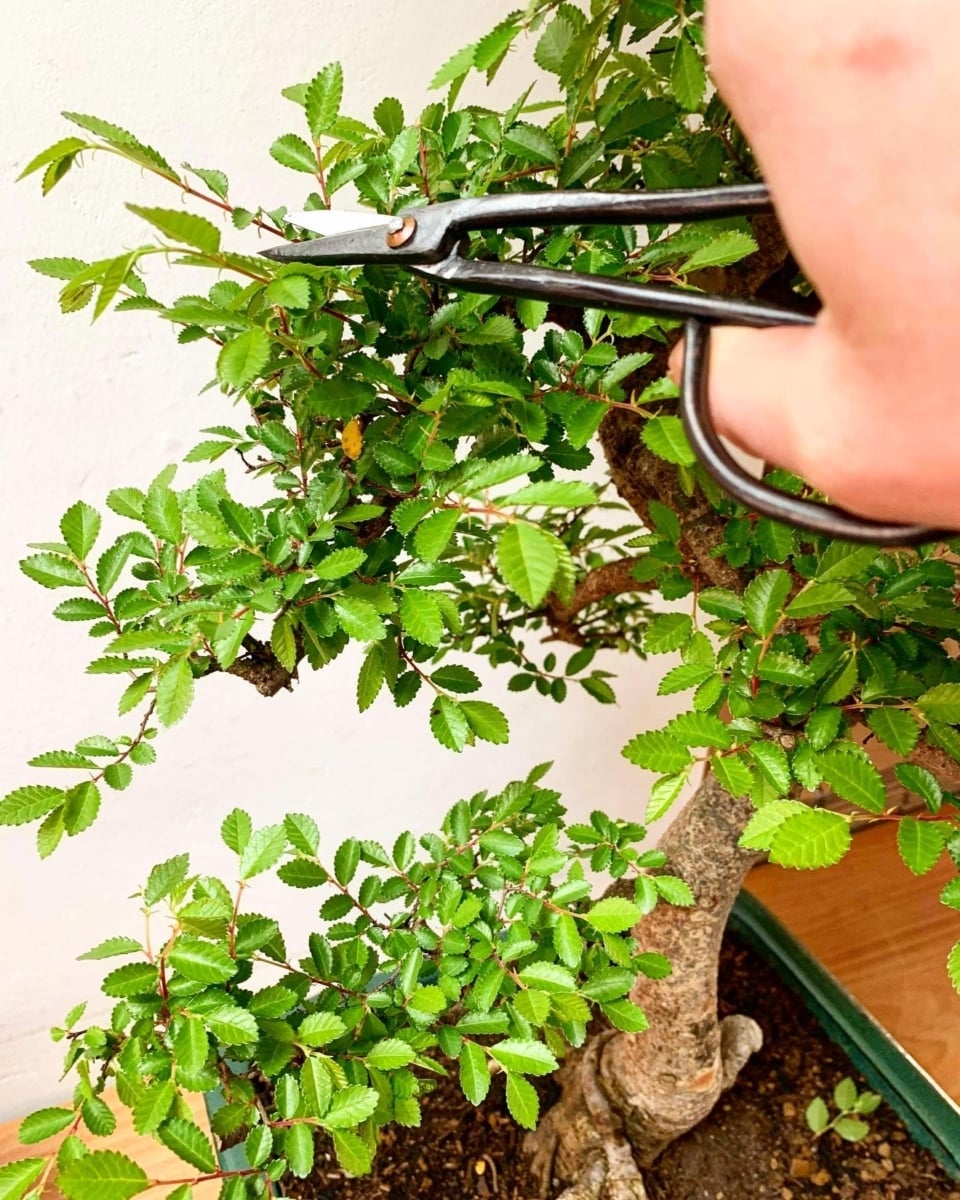
Once the structure looks balanced, trim back long shoots.
For many deciduous species, allow a shoot to grow to around six to eight leaves before cutting it back to two or three leaves.
This encourages shorter internodes and finer ramification.
Step 5 – Step Back Frequently
One of the biggest beginner mistakes is continually trimming without checking the overall shape.
Every few cuts, place the tree back on the bench and look at it from every angle.
It’s much easier to remove another branch later than replace one you’ve already cut.
Species-Specific Pruning Tips
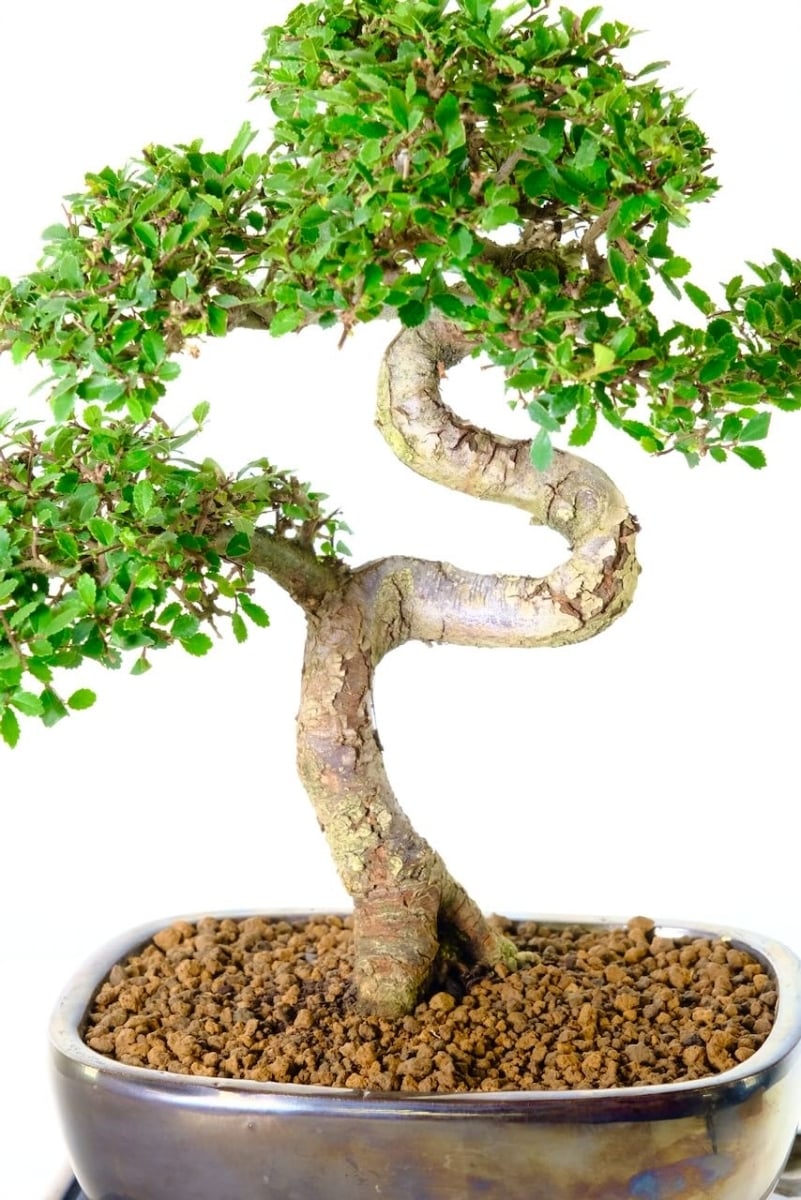
Chinese Elm
Chinese Elms respond exceptionally well to regular pruning.
Trim new shoots throughout the growing season to maintain a compact canopy.
Ficus Bonsai
Ficus are vigorous growers and can tolerate relatively hard pruning during active growth.
They quickly produce new buds from old wood.
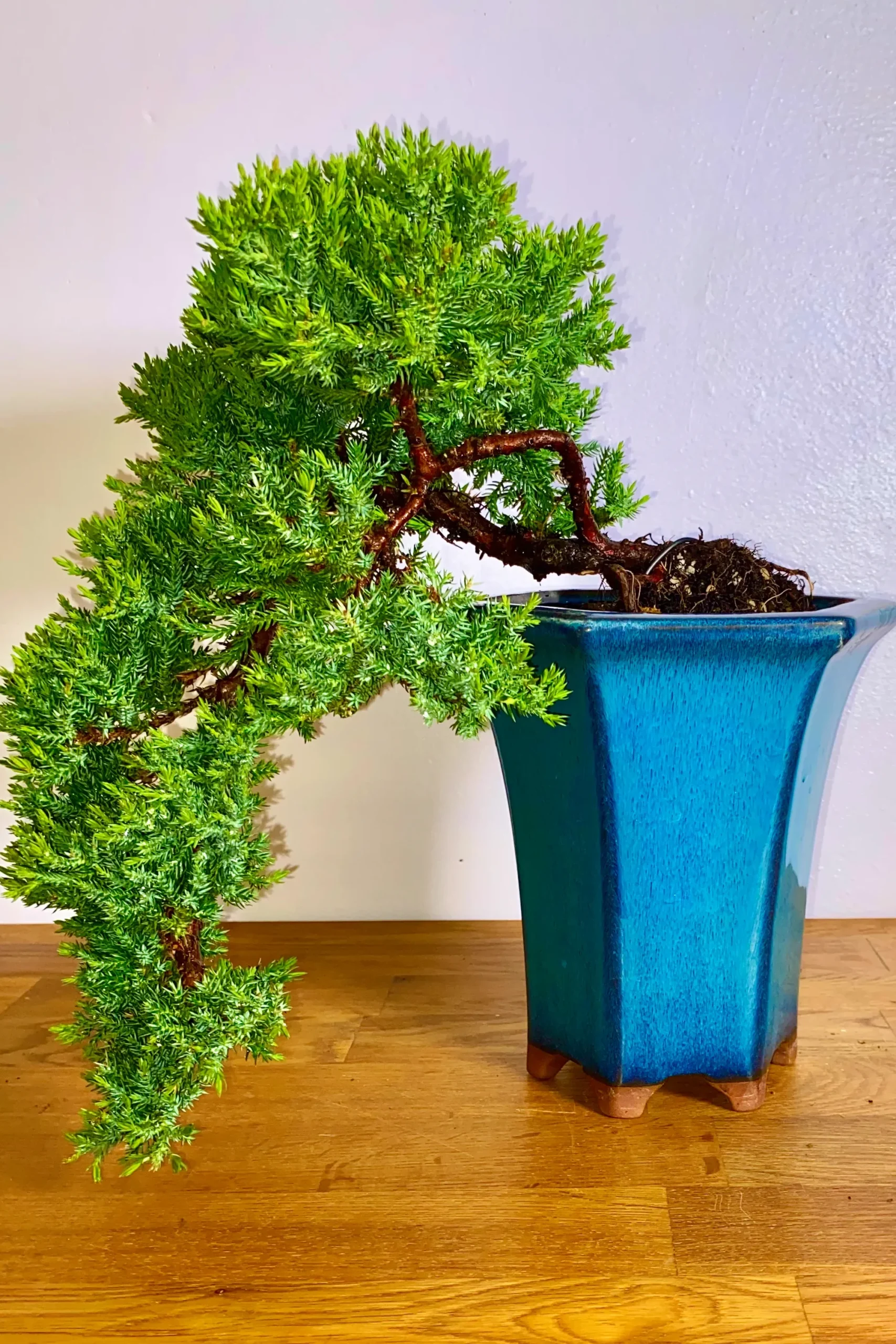
Juniper Bonsai
Never cut all the foliage back with scissors.
Instead, pinch or selectively trim growing tips while preserving healthy green foliage.
Avoid cutting into bare wood.
Japanese Maple
Japanese Maples benefit from careful thinning rather than excessive trimming.
Remove congested growth to improve light penetration while preserving the elegant branch structure.
Pine Bonsai
Pines require specialist techniques such as candle pruning and needle thinning rather than ordinary trimming.
If you’re new to bonsai, research your specific pine variety before pruning.
Common Bonsai Pruning Mistakes
Pruning Too Much
Never remove more than around one-third of the foliage during routine pruning.
Removing excessive growth can weaken the tree.
Using Blunt Tools
Blunt blades crush stems rather than making clean cuts.
Sharp tools heal much more quickly.
Pruning at the Wrong Time
Heavy pruning immediately before winter or during periods of extreme heat can stress the tree unnecessarily.
Ignoring the Overall Shape
Always work towards a balanced silhouette rather than trimming randomly.
Aftercare
Once pruning is complete:
- Water thoroughly if required.
- Keep the tree in its usual growing position.
- Continue feeding during the growing season unless you’ve carried out major structural pruning.
- Watch for strong new shoots over the following weeks.
Healthy bonsai usually respond quickly with fresh growth.
Looking to Get Started? Why not try one of our bonsai kits?
Frequently Asked Questions
Can I prune my bonsai all year round?
Light maintenance pruning can often be carried out throughout the growing season, but heavier structural pruning should be timed according to the species.
Will pruning hurt my bonsai?
No. When carried out correctly using clean, sharp tools, pruning improves the health and appearance of your bonsai.
How often should I prune my bonsai?
Fast-growing trees may need trimming every two to four weeks during spring and summer, while slower-growing species require much less frequent attention.
What happens if I don’t prune my bonsai?
Without regular pruning, your bonsai will gradually lose its compact shape, develop long shoots and become less refined.
Should beginners prune their bonsai?
Absolutely. Maintenance pruning is one of the easiest bonsai skills to learn and is an important part of keeping your tree healthy.
Final Thoughts
Pruning is what transforms a small tree into a true bonsai. With regular maintenance, clean cuts and a little patience, you’ll soon develop the confidence to shape your tree while keeping it healthy and vigorous.
Every bonsai grows at its own pace, so take your time, step back often and remember that bonsai is a long-term art. Small, thoughtful improvements made over many years produce the most beautiful results.


0 replies