

When people first encounter bonsai, they often focus on the shape of the tree or the elegance of the foliage pads. But one of the most powerful storytelling tools in bonsai design is deadwood.
Two classic deadwood techniques — bonsai jin and bonsai shari — help create the illusion of age, hardship, and survival. These features mimic what happens to trees in nature after lightning strikes, drought, wind damage, or heavy snow.
Understanding how bonsai jin and bonsai shari work will help you appreciate the artistry behind mature bonsai and may inspire you to incorporate them into your own trees.
What Is a Bonsai Jin?
A bonsai jin is a dead branch that has been intentionally stripped of bark, leaving exposed wood that has weathered and bleached over time.
In nature, branches often die due to:
- Lightning strikes
- Storm damage
- Heavy snow load
- Shade competition
The branch dies but remains attached to the tree, gradually drying, cracking, and whitening from sun exposure.
Bonsai artists recreate this natural process by removing the bark and carving the wood to create a dramatic dead branch feature.
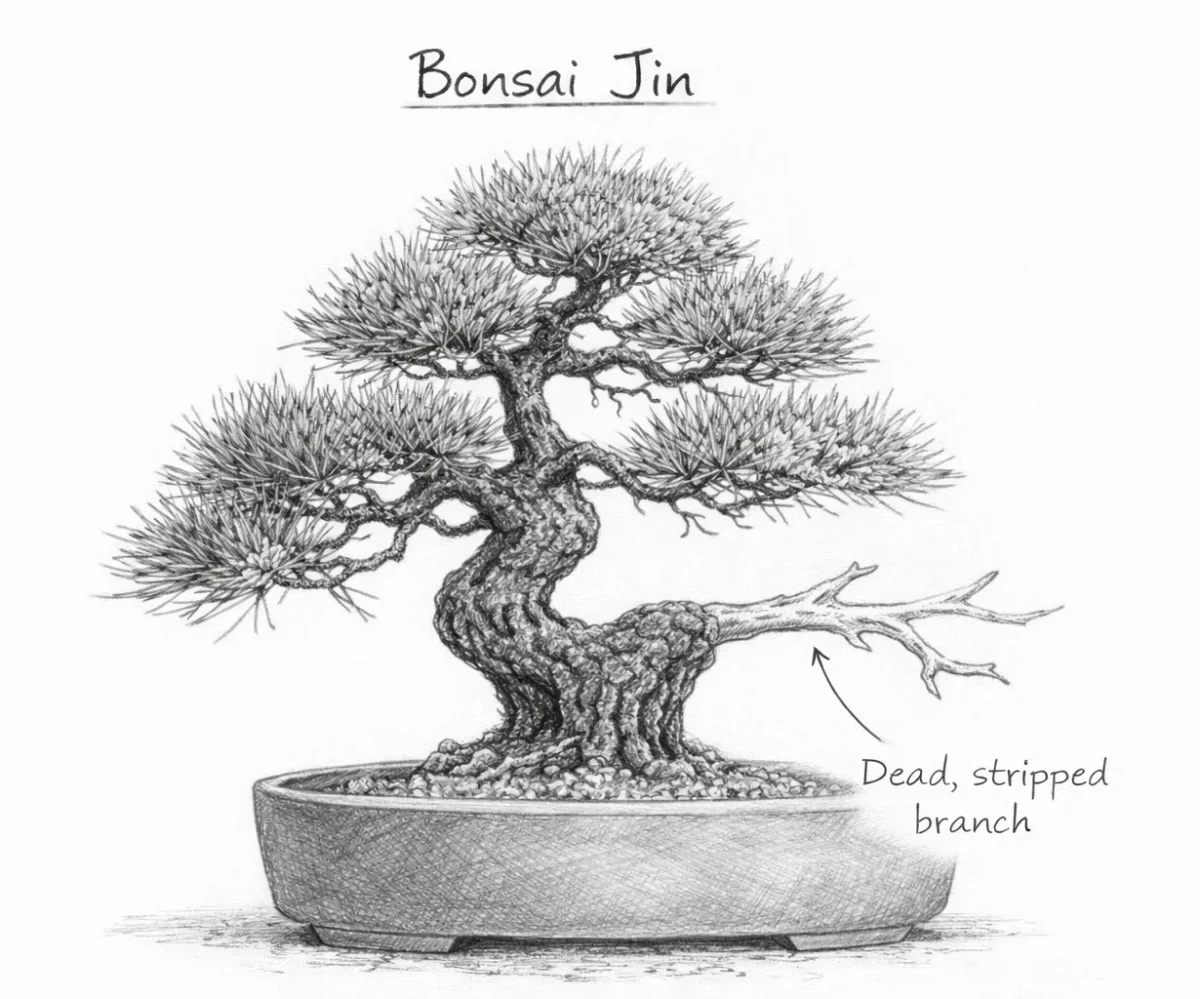
What Jin Adds to a Bonsai Tree
A well-placed bonsai jin adds several important qualities:
Age
Deadwood suggests a tree that has survived decades or even centuries.
Drama
It introduces asymmetry and tension in the design.
Natural storytelling
The tree appears to have endured harsh environmental conditions.
Movement and contrast
The pale deadwood contrasts strongly with the darker living bark.
Junipers and pines are the species most commonly used for jin because their deadwood can last many years without rotting.
What Is a Bonsai Shari?
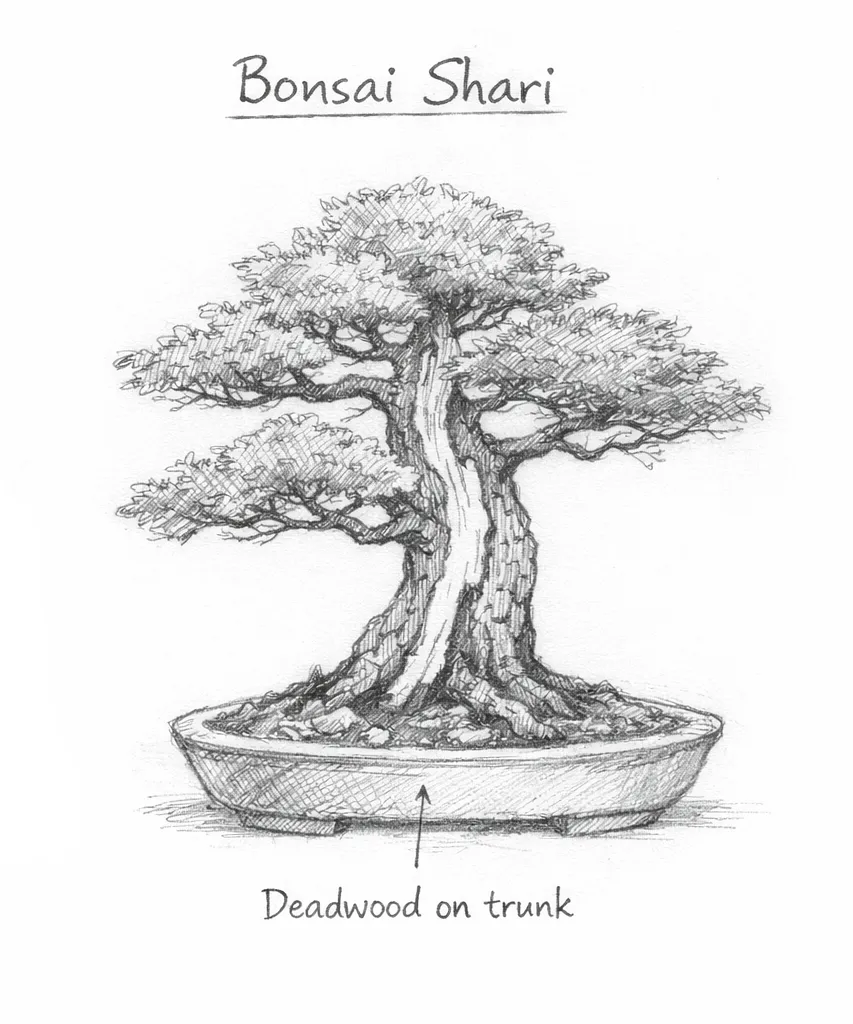
While a jin affects a branch, a bonsai shari affects the trunk.
A shari is a strip of deadwood running along the trunk where the bark has been removed.
This technique replicates damage from natural causes such as:
- Lightning scars
- Animal damage
- Severe drought
- Branch tear-off
Over time, the exposed wood hardens and bleaches while the living veins of the tree continue to transport nutrients around the dead section.
What Shari Adds to a Bonsai Tree
A bonsai shari dramatically enhances the sense of age and hardship.
It creates:
Visual age
Ancient trees often show trunk scars from centuries of environmental stress.
Dynamic trunk movement
Shari can accentuate twists and bends in the trunk.
Contrast between life and death
The living vein becomes more visually obvious when surrounded by deadwood.
Naturalistic realism
It mimics the survival patterns seen in alpine and coastal trees.
Many famous juniper bonsai rely heavily on shari and jin combinations to create dramatic and believable designs.
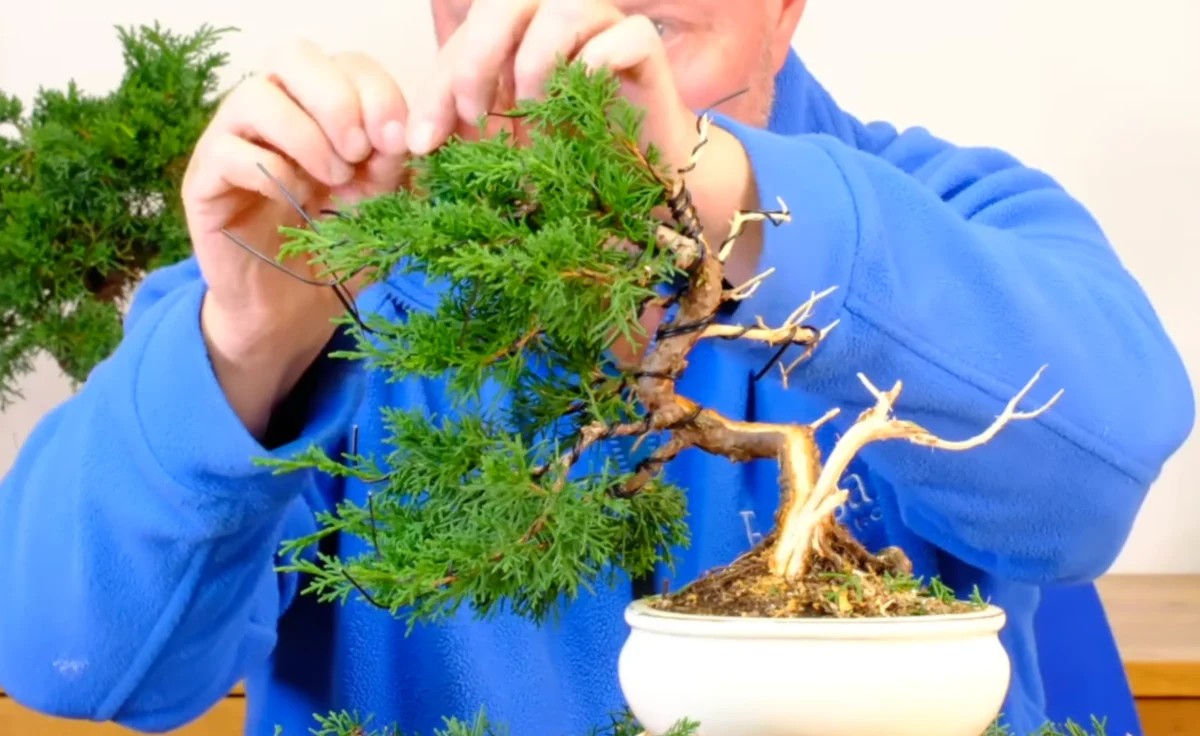
Jin and Shari Juniper Styling | Creating Natural Deadwood Features on a Chinese Juniper Bonsai with Lloyd Noall from Bonsai Direct
Jin vs Shari: The Key Difference
| Feature | Jin | Shari |
|---|---|---|
| Location | Dead branch | Deadwood on trunk |
| Appearance | Stub or stripped branch | Vertical strip of exposed wood |
| Purpose | Shows branch death | Shows trunk damage |
| Visual impact | Adds drama and asymmetry | Adds age and trunk character |
Most advanced bonsai use both techniques together to create a cohesive story of survival.
Why Bonsai Artists Use Deadwood
Deadwood is not just decoration. In bonsai design it serves three artistic purposes:
- Creating the illusion of age
Old trees in nature rarely look perfect. - Telling a story
A tree with jin and shari appears to have endured storms, drought, and harsh conditions. - Enhancing composition
Deadwood helps guide the viewer’s eye through the structure of the tree.
Without these features, many bonsai would look too young or too perfect.
Final Thoughts
A bonsai jin and bonsai shari are powerful techniques that transform a small tree into a living sculpture. By carefully introducing deadwood, bonsai artists recreate the scars of nature and give their trees the character of ancient survivors.
Once you begin noticing jin and shari, you will see them everywhere — from dramatic junipers in exhibitions to subtle features on refined pine bonsai.
They remind us that the beauty of bonsai is not perfection, but resilience.



0 replies