

Going on holiday should feel relaxing. However, worrying about your bonsai tree while you’re away can quickly spoil that feeling. Because bonsai grow in shallow pots with limited compost, they dry out far faster than most houseplants. As a result, bonsai holiday watering requires proper planning.
A common question we hear is: Can a bonsai tree survive two weeks without water?
In most cases, the answer is no. Fortunately, there are reliable ways to protect your tree while you’re away — including tested bonsai watering systems.
Why Bonsai Trees Need Careful Holiday Planning
Bonsai trees differ from standard potted plants for three main reasons:
- They grow in shallow containers with minimal soil volume
- They respond quickly to temperature and light changes
- They suffer stress rapidly if watering becomes inconsistent
Because of this, even a few missed days in warm weather can cause serious damage. Therefore, planning your bonsai holiday watering strategy is essential.
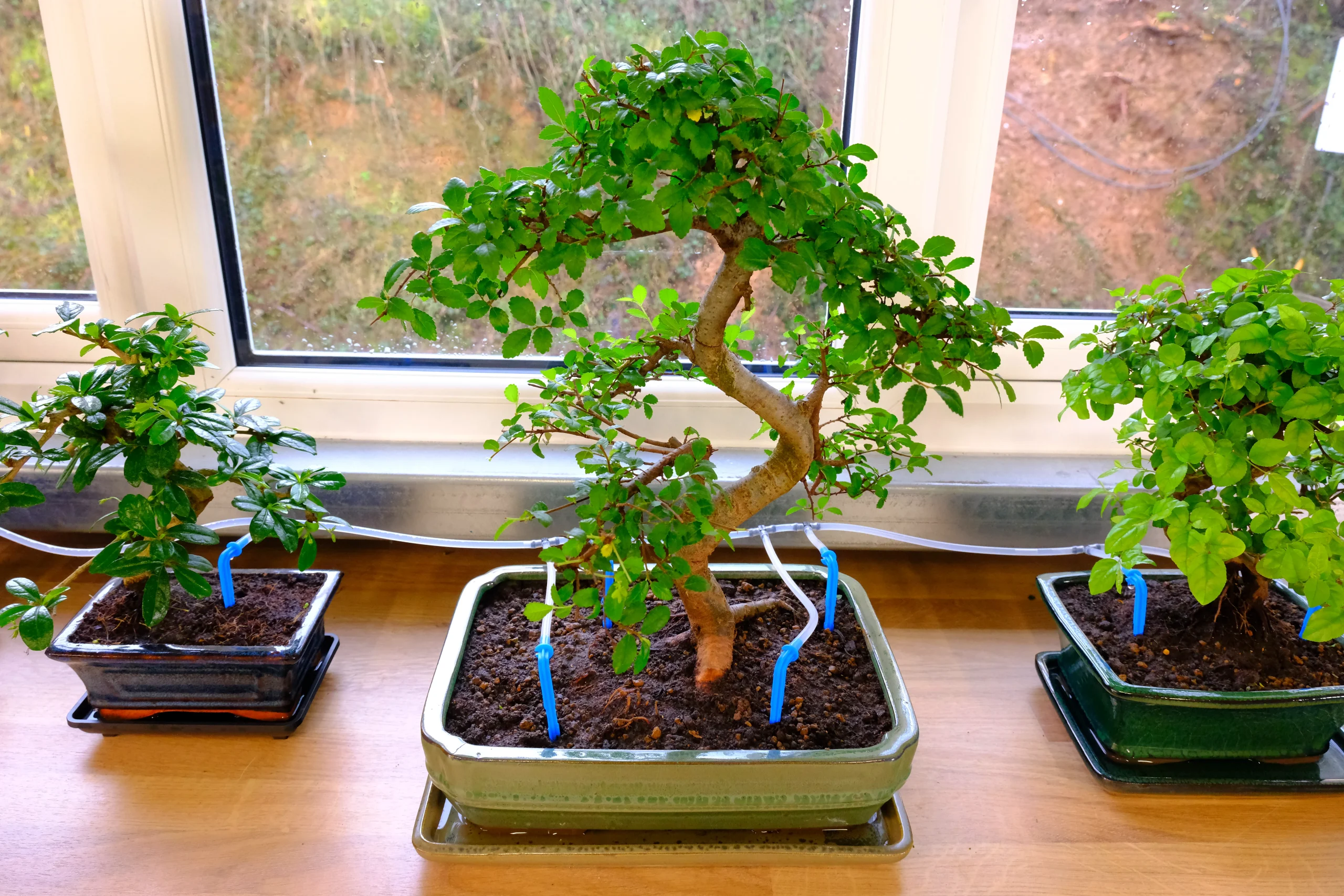
Indoor Bonsai Tree Watering System Trial
Can a Bonsai Survive 2 Weeks Without Water?
Realistically, most bonsai will not survive two weeks completely dry. In fact, some species can decline within days.
Survival depends on:
- Species (for example, juniper vs ficus)
- Indoor or outdoor placement
- Time of year
- Ambient temperature and humidity
Consequently, leaving a bonsai unattended without a watering plan is rarely advisable.
Holiday Watering Options: What Actually Works?
1. Ask a Friend or Neighbour (Most Reliable)
Without question, this remains the safest option. A simple watering every 1–3 days usually keeps a bonsai healthy.
To make this easier:
- Leave clear written instructions
- Demonstrate watering once
- Explain how the soil should feel
Even so, many people still prefer backup support. That’s where bonsai watering systems come in.
Using a Bonsai Watering System for Holiday Cover
Automatic plant watering systems have become increasingly popular for bonsai holiday watering. These systems typically include:
- A programmable control unit
- Drip lines or small distribution tubes
- A water reservoir
- Adjustable watering intervals
The appeal is obvious: you can programme watering frequency and duration while you’re away.
However, the real question is — can you trust one completely?
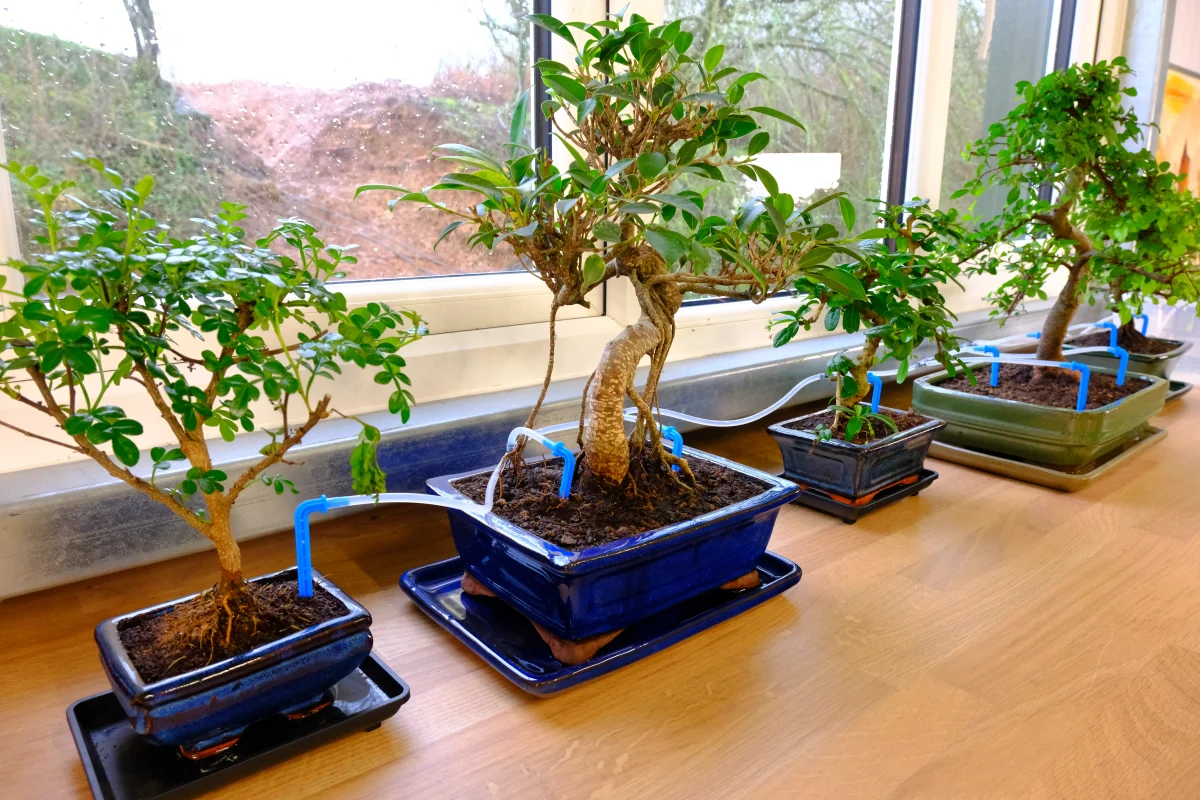
This photograph shows the automatic irrigation trial set up by Lloyd to test the Bonsai watering system.
Lloyd Noall Trials an Automatic Bonsai Watering System
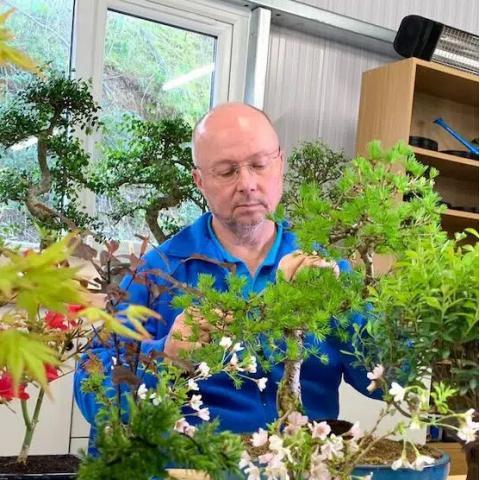
At Bonsai Direct, nearly 40-year bonsai professional Lloyd Noall recently tested a programmable automatic houseplant watering system to see whether it could genuinely solve the holiday problem.
Importantly, this was not a sponsored trial. Lloyd sourced the system independently and tested it over a full two-week period — the typical length of a holiday.
Initial Setup
The unit included:
- A programmable timer
- Tubing and connectors
- A filter
- Wall fixings
- A water feed line
Encouragingly, Lloyd found the system straightforward to assemble. In fact, the programming interface proved intuitive and well-designed. After installation, he ran a full two-week trial under normal conditions.
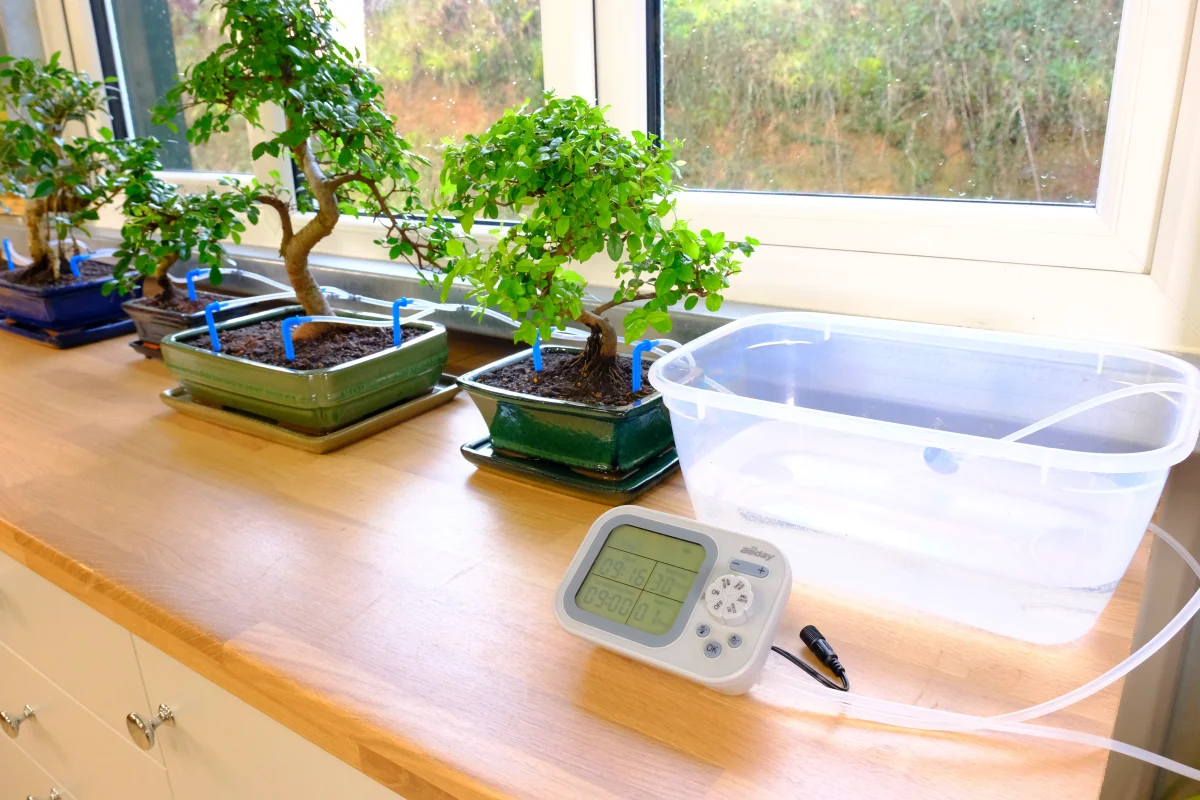
Showing the controller and reservoir used in the automatic bonsai watering system, trialed by Lloyd.
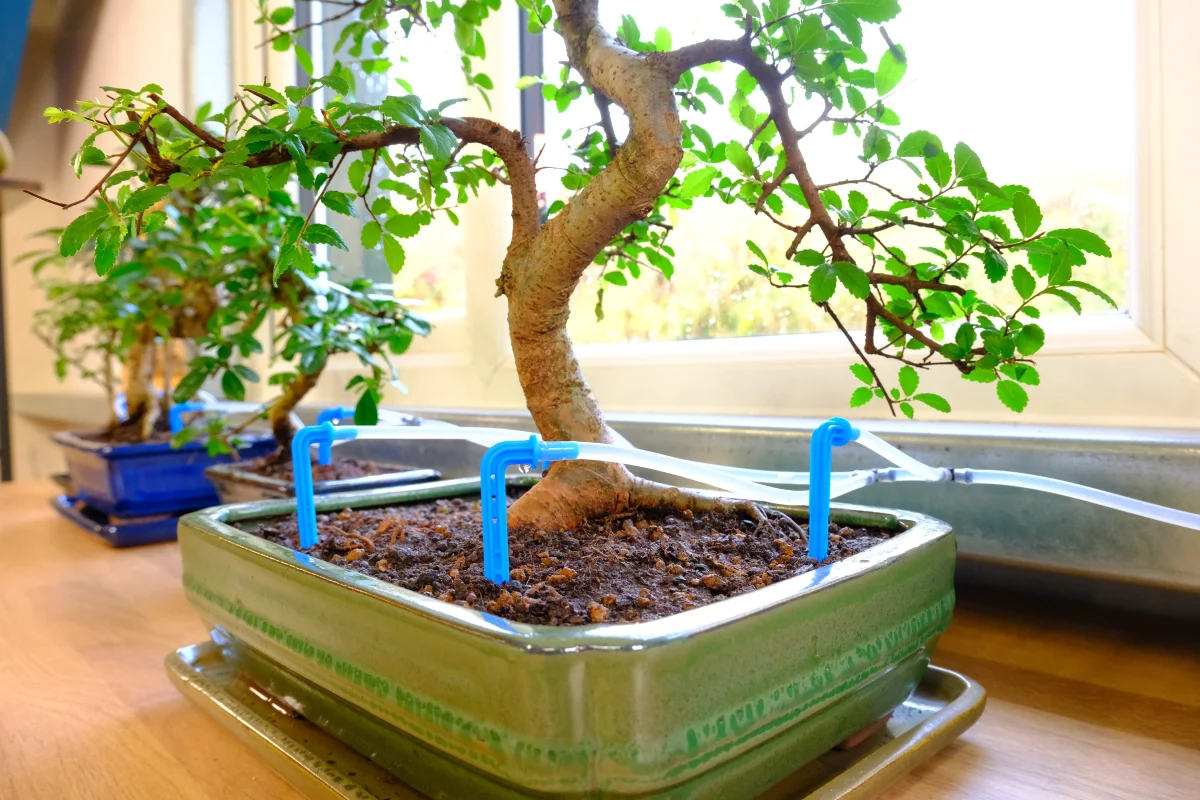
You can clearly see how the tubing is linked together and staked into the soil of the bonsai tree.
The Results: Can You Rely on a Bonsai Watering System Alone?
After two weeks, the results were surprisingly positive — but not perfect.
What Worked Well
- The system delivered water consistently
- Programming proved accurate
- It tended to overwater slightly rather than underwater
Interestingly, the system used more water than expected. Therefore, reservoir size matters. If the tank runs dry, the system becomes useless.
The Critical Limitation
Despite solid performance, Lloyd would not rely on the system alone.
Instead, he recommends using a bonsai watering system in combination with a person checking in. For example, ask a friend or neighbour to:
- Ensure the soil remains damp
- Check that tubes haven’t disconnected
- Confirm batteries still function
- Refill the water reservoir if necessary
In other words, treat the watering system as support — not a complete replacement.
Key Advice for Using Bonsai Holiday Watering Systems
If you decide to use a bonsai watering system, follow these best practices:
- Buy and install it at least one month before travel
- Test different timing settings
- Adjust watering duration carefully
- Monitor how your specific species responds
- Keep trees out of intense direct summer sun
For instance, move indoor bonsai away from south-facing windows. East or west-facing light works better during summer holidays. This simple adjustment reduces evaporation and system strain.
Standing a Bonsai in a Container of Water: Our Ongoing Experiment
A common suggestion is to place the bonsai pot in a shallow container of water so it can “drink” as needed. This sounds logical, but it comes with risks.
We are currently running an experiment to determine whether a bonsai will be alright stood in a container of water for 2 weeks. When it comes to bonsai, overwatering for a short period of time carries far fewer risks than underwatering, providing the bonsai has time to drain afterwards. Overwatering for long periods of time can be fatal. The goal is to observe:
- Root health over time
- Signs of rot or fungal issues
- Overall tree vitality after the two-week period
Early concerns include oxygen deprivation to the roots and potential root rot, as bonsai soil is designed to drain freely — not remain submerged.
We’ll be sharing the full results once the experiment concludes, but for now, this method should be approached with caution and ideally tested on a less valuable tree first.
Final Thoughts on Bonsai Holiday Watering
Bonsai reward consistency. They do not tolerate guesswork.
While automatic bonsai watering systems offer genuine support, they work best alongside human oversight. Therefore, combine technology with a trusted friend whenever possible.
With proper preparation, you can enjoy your holiday knowing your bonsai has reliable care in place.
After all, the goal is simple: return home to a healthy tree — not a horticultural emergency.
Safe travels, and happy growing.


0 replies