

Bonsai is often described as the perfect balance of art and horticulture. While pruning and wiring techniques are vital, the design principles behind bonsai are what truly make these miniature trees look like natural, majestic giants. One of the most fundamental design principles is the Rule of 3.
So, what exactly is the Rule of 3 in bonsai, and why does it matter? Let’s explore.
The Rule of 3 Explained
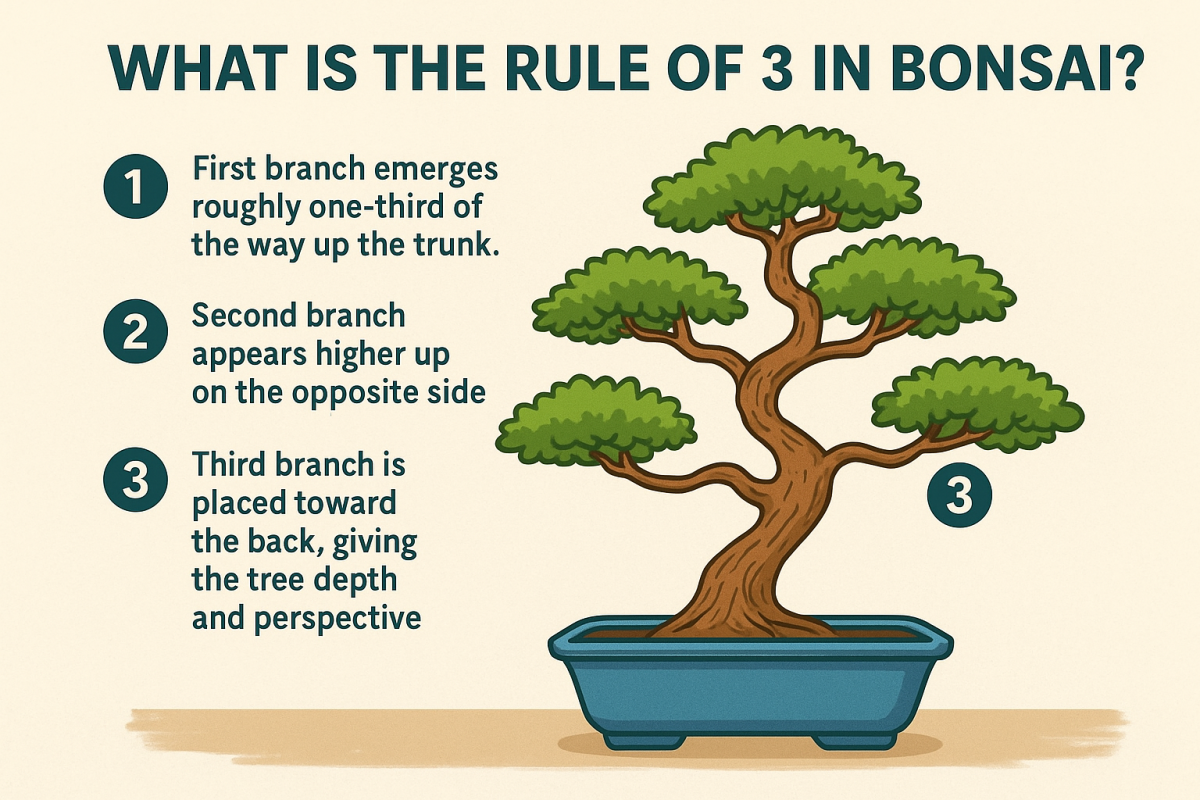
The Rule of 3 in bonsai refers to the way branches are placed along the trunk to create harmony, balance, and natural realism. Traditionally:
- The first branch emerges roughly one-third of the way up the trunk.
- The second branch appears higher up on the opposite side.
- The third branch is placed toward the back, giving the tree depth and perspective.
This arrangement provides structure and balance, preventing the tree from looking flat or artificial. It also mimics how trees grow in nature, with branches spiralling around the trunk to reach the light.
Why the Rule of 3 Works
The Rule of 3 is rooted in visual design as much as it is in horticulture. In many forms of art and architecture, odd numbers — particularly three — create more pleasing, natural compositions.
In bonsai, this principle ensures:
- Balance without symmetry – The tree feels stable but not rigid.
- Natural depth – A back branch draws the eye inward, creating a 3D effect.
- Flow and movement – The staggered arrangement leads the viewer’s gaze upward, following the tree’s story from base to apex.
How to Apply the Rule of 3 in Bonsai Design
Whether you’re styling a Chinese Elm, Ficus, or Juniper, the Rule of 3 can guide you:
- Start with a strong front view of the tree.
- Place the first branch about one-third up the trunk, leaning slightly forward.
- Add the second branch on the opposite side, a little higher.
- Create the third branch toward the back to add depth.
Continue alternating branches, following this flow as you move up toward the apex.
Remember: this isn’t about rigid measurement but about creating a tree that feels balanced and alive.
Bonsai Master Lloyd Noall’s Rule of 3 in Bonsai
The “Rule of 3” in bonsai — which I call the Guide of Thirds — is a principle that helps bonsai artists create balance, proportion, and harmony in their trees. It’s a guideline used by many growers, but like all bonsai rules, it’s flexible and open to interpretation.
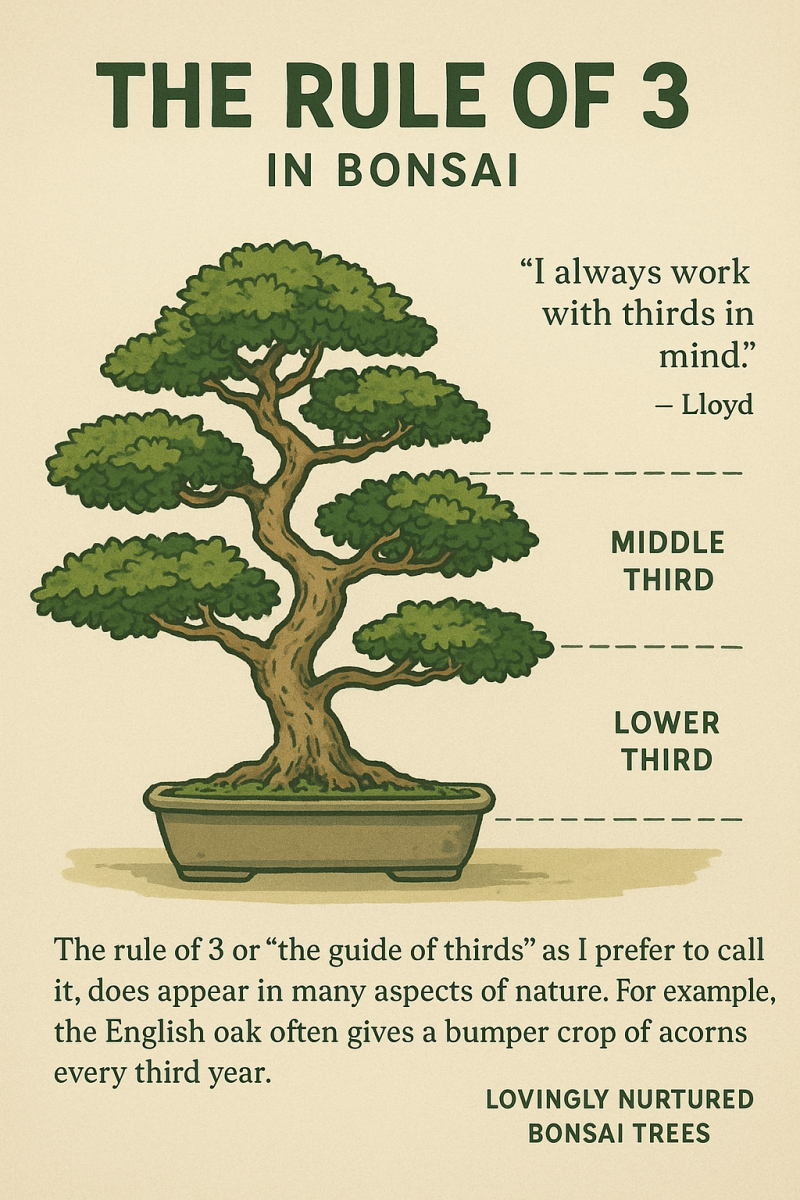
At its core, the rule divides a bonsai tree into three key sections:
- The lower third (the base and roots into the trunk) – representing stability and age.
- The middle third (the branching structure) – forming the heart and body of the tree.
- The upper third (the apex and fine twigs) – creating the finishing touch and sense of maturity.
- By thinking in thirds, you avoid clutter or imbalance. Instead, your bonsai gains a natural rhythm, with each section contributing to a sense of progression — from strong base, to well-shaped middle, to elegant apex.
This division helps achieve a natural, balanced look that mimics the way trees grow in nature.
Lloyd’s Perspective: Working with Thirds
“I always work with thirds in mind. Whether it’s the position of branches or the thickness of the branches relative to the trunk — the branch should ideally be about one-third of the diameter of the trunk it’s attached to. I generally concentrate first on the bottom third of the bonsai, as this is the oldest and most important part of the tree. I need to get this right before moving on to the second third (the middle), and only then to the top third. This process can take many years, but it’s worth it because it helps create balance and excellent proportions.” — Lloyd
This approach reflects the patience and long-term vision required in bonsai artistry. By working section by section, growers can ensure proportion and flow while allowing the tree to develop its own character over time.
The Rule of 3 in Nature
The “thirds principle” isn’t just something used in bonsai design — it also appears in the natural world. For example:
- The English oak often produces a bumper crop of acorns every third year.
- Many plants and flowers naturally grow in patterns of three, such as clover leaves or trillium petals.
- Even in wildlife, some behaviours follow cycles of three — like certain bird species’ three-part mating songs.
This connection to nature reinforces why the rule of thirds can feel so visually pleasing when applied to bonsai — it reflects rhythms and patterns we instinctively recognise.
Where Lloyd Breaks the Rule
“Although I follow the rule of thirds when it comes to branches and structure, I don’t use this rule when choosing a pot or deciding where to position the tree within its pot. Potting is about balance and aesthetic harmony, not strict ratios. For me, the rule of 3 is more of a guide for growth and form rather than container design.” — Lloyd
This is an important reminder that while the Rule of 3 is useful, it’s not universal. Bonsai design is about harmony, creativity, and the story you want your tree to tell.
When to Bend the Rule
Like all bonsai guidelines, the Rule of 3 isn’t a hard-and-fast law. It’s a starting point. Many advanced bonsai artists intentionally break the rule to create unique, character-filled trees. However, for beginners, the Rule of 3 provides a clear, easy-to-follow framework for styling.
Why the Rule of 3 Matters
The Rule of 3 gives beginners and enthusiasts a framework for decision-making when pruning, styling, or evaluating their bonsai. By breaking the tree into manageable thirds, you can focus on one section at a time, ensuring proportion and flow are maintained throughout.
For seasoned growers like Lloyd, this method becomes second nature, a guiding principle that produces bonsai that look refined, balanced, and deeply connected to the natural world.
Final Thoughts on the Rule of 3 in Bonsai
The Rule of 3 is a timeless principle that helps beginners and experts alike create bonsai trees that look natural, balanced, and full of character. By following it, you’re not only shaping branches — you’re shaping perspective, flow, and storytelling within your miniature tree.
Once you master this rule, you’ll have the confidence to experiment, adapt, and even break it as your bonsai artistry grows.


Udaysingh sawant –
Usefull to new bonsai artist.
👌👍
Sarah Noall –
I am so pleased that you find the post helpful. With thanks Bonsai Direct