

The Ficus is one of the most popular and forgiving bonsai trees, making it a perfect choice for beginners and experienced growers alike. With its glossy leaves, adaptable nature, and fascinating aerial roots, the ficus bonsai has become a living symbol of strength, resilience, and balance.
Two of the most loved varieties are the Ficus Retusa and Ficus Ginseng—both beautiful, symbolic, rewarding to grow and interestingly are members of the fig family. Below you’ll find everything you need to know about caring for your ficus bonsai, from placement and watering to pruning and symbolism.
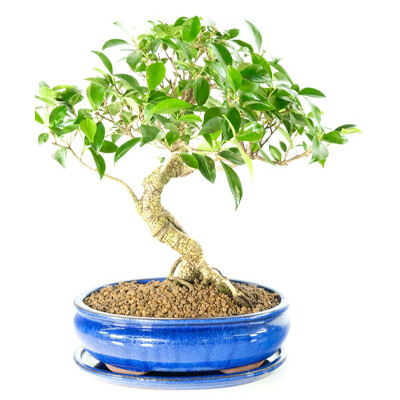
Why I Love the Ficus Bonsai
By Bonsai Expert Lloyd Noall
Of all the bonsai species I’ve worked with over the years, the ficus has always held a special place in my heart. There’s something uniquely captivating about this tree that makes it both approachable for beginners and endlessly fascinating for seasoned growers.
What I love most are the details that set it apart. The bark, for instance, often develops beautiful silvery striations, catching the light and giving the trunk an aged, characterful appearance far beyond its years. Then there are the deep green, glossy leaves—so rich in colour that they almost look polished. They provide a lush canopy that feels full of life, balancing strength with elegance.
And, of course, we can’t forget the aerial roots. Few things in bonsai are as dramatic and awe-inspiring as the sight of those roots descending gracefully from the branches, eventually thickening into new pillars of support. They give the ficus a majestic banyan-like quality, transforming even a small bonsai into a miniature forest scene.
Practicality plays a role in my admiration too. The ficus is evergreen, which means it maintains its beauty all year round, unlike some deciduous trees that leave you with bare branches in winter. It’s also incredibly adaptable, thriving in lower light levels where other species might struggle. That resilience makes it a joy to grow indoors, bringing nature into your living space without demanding constant fuss.
Ficus Bonsai Tree Care
The ficus is primarily an indoor bonsai, as it cannot tolerate frost.
- Keep it in bright, indirect light or full sun for healthy growth.
- It thrives in stable, warm temperatures (above 60°F / 15°C).
- Although ficus trees can handle low humidity thanks to their waxy leaves, they flourish in higher humidity. If you want to encourage aerial roots, you’ll need very high humidity, sometimes achieved with a humidity tray or my regular misting with water.
- The ficus is a species which will tolerate lower light levels, this making is suitable for darker properties.
In summer, you can move your ficus outdoors, but bring it back inside before nights turn cool.





Nano Banana AI –
I’ve recently started a Ficus Bonsai and was struggling with pruning it correctly. The advice on pruning and root care really helps clarify things for me. It’s reassuring to know that as long as I follow the right steps, I can keep it looking good!