

In this blog, we follow bonsai expert Lloyd Noall from Bonsai Direct as he performs a seasonal prune on a stunning 30-year-old English Oak bonsai—grown from an acorn and carefully trained over three decades. With its striking trunk and full canopy, this tree represents the beauty and tradition of native British bonsai.
Lloyd explains how a thoughtful prune helps maintain shape, improve airflow, encourage new growth, and reveal the structure that gives bonsai their character. Whether you’re new to bonsai or a seasoned grower, this step-by-step pruning session offers valuable insight into working with deciduous trees like the mighty Quercus robur.
Initial Assessment: A Beautiful English Oak Bonsai Tree in Need of a Trim
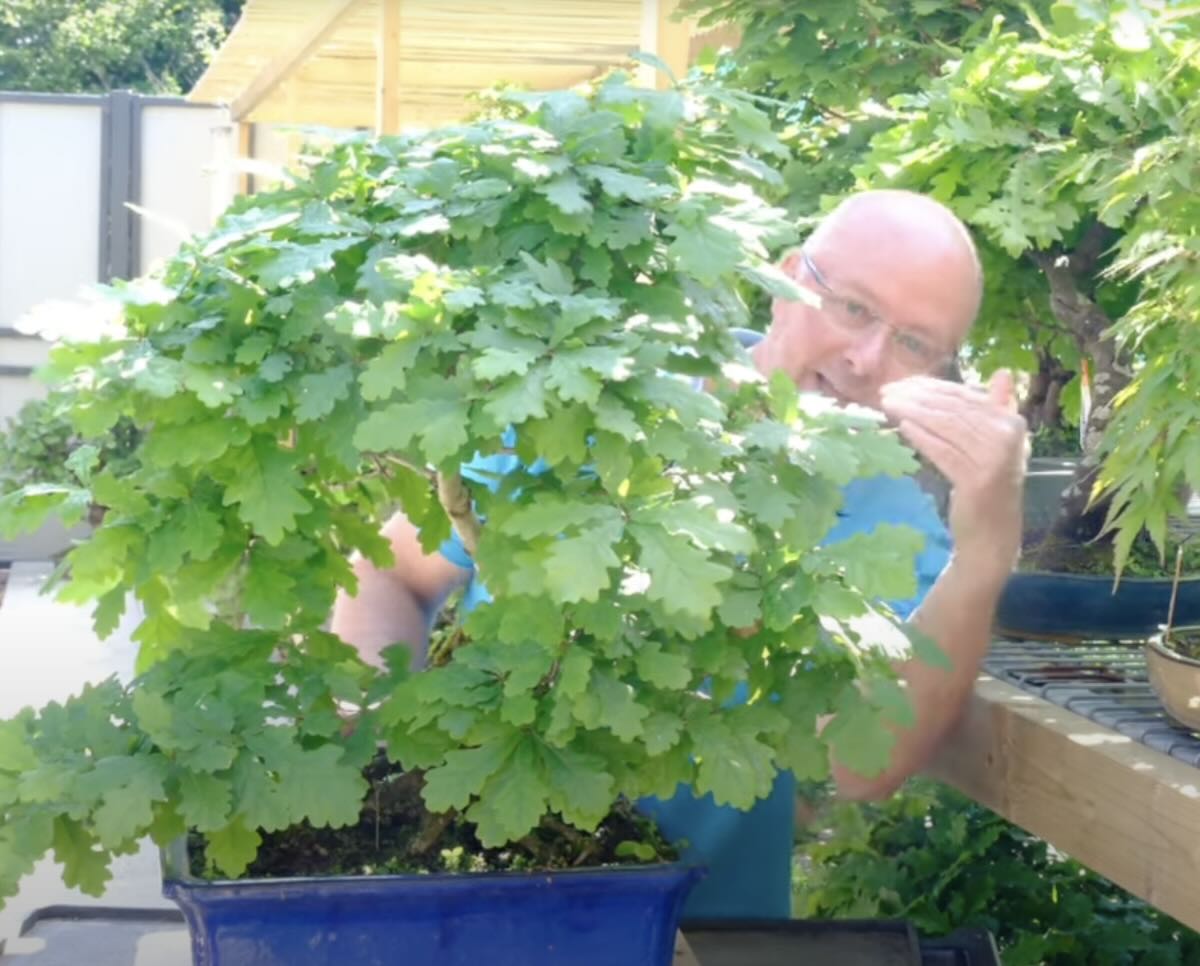
This is a dramatic English Oak bonsai tree which Lloyd has been growing for 30 years.
“I’m doing a bit of pruning on this oak tree. It’s got lovely shape. It’s got a lovely trunk in there. A lovely nebari but it’s got a little bit overgrown. So we can’t actually see inside the tree. I’m going to go through and just open it up a little bit and take off any dominant shoots and get a little bit of shape back into it.”
Lloyd begins by removing obvious heavy shoots at the tips of branches. This not only opens the canopy but allows him to see deeper into the tree and identify further pruning points. Heavy, dominant shoots are pruned first to reduce vigour and encourage back budding on the inner branches.
Understanding Which Branches to Prune First
“That will allow some of the shoots further back inside the tree to then grow out… So very quickly I can see that is a little twig or branch which needs to come back. So I look in there and I prune him back.”
Shoots that are growing straight up—or “sticky-uppy” as Lloyd affectionately calls them—are removed. These upright growths are strong and not in keeping with the desired lateral growth habit of a mature oak bonsai. Quick visual cues and experience help speed the process without compromising detail.
A Two-Stage Pruning Approach
“So by learning little techniques… I can go around again and do the more finer and delicate work.”
Lloyd prunes in two rounds. The first is to remove dominant, misdirected or vigorous growth. The second focuses on refining shape by choosing buds that are growing in the right direction. At this point, finer details are considered, and Lloyd begins shaping branch by branch from the bottom of the tree upwards.
He also notes: “Ignore the weeds…” —a reminder we all need!
Refining the Structure for Better Bud Growth
“Sometimes it might just be the little tips… Sorry about Pogo barking in the background. It’s my daughter’s dog.”
After clearing dominant shoots, Lloyd continues with smaller cuts. Tip pruning is used to halt extension and encourage more compact growth. This maintains the natural size and shape of the bonsai. Every cut is made with purpose, favouring outward-facing buds and eliminating inward-growing branches that clutter the trunk line.
The History of the Tree & Importance of Native Species
“This is an English Oak. It’s one of many which I started growing around about 30 years ago – just from acorns.”
Lloyd shares the origin of the tree. It’s part of a collection of native bonsai started from acorns decades ago. His love of native species is clear, and the experience gained from raising trees from seed allows him to truly understand their growth cycles and habits.
Why We Remove Strong Growth and Big Leaves
“By taking off these more powerful twigs and branches, it helps to send out more shoots… and the foliage will reduce down.”
Heavy pruning encourages new bud growth, increasing the number of shoots and leaves. Over time, leaf size is reduced, making the tree appear more in scale. Lloyd explains how his oak leaves are now a third the size of a typical oak—an impressive result of careful cultivation and timing.
Retaining a Natural Look: Avoiding Over-Stylised Shapes
“I like my oak trees to actually look like oak trees… I tend not to try to make them too ‘bonsai-y.'”
Rather than impose an artificial style, Lloyd prefers to retain the natural, mushroom-shaped silhouette of pollarded oaks. The structure should remain visible—especially the powerful trunk and tapering branches. For him, the leaves are just the “icing on the cake.”
Finishing Touches and Final Observations of this amazing English Oak Bonsai Tree
“Take off the big heavy ones. Encourage the smaller ones further down the branch.”
The final stage involves clearing away small bits of deadwood, vertical shoots, or crowding twigs. By repositioning or removing these, Lloyd improves light penetration and future bud direction. A quick tidy-up of the canopy allows light and air to circulate freely.
A Glimpse Into the Canopy – and the Bonsai’s Future
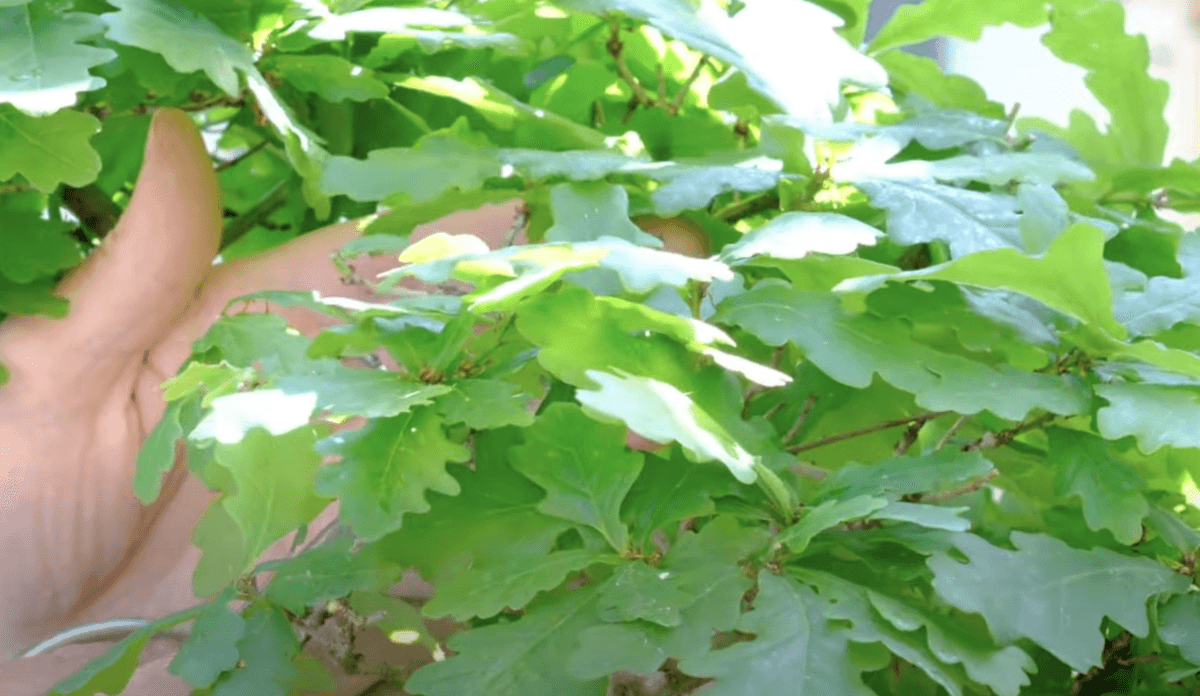
“Now we can see inside… and that gives the bonsai its real character and strength.”
After pruning, Lloyd looks up into the open canopy. The character of the tree is now fully visible, from the nebari to the upper branches. This internal view is what gives bonsai its magic—structure, age, and artistry coming together.
Conclusion: One Tree Finished, Many More to Go
“So, there we go. That’s that one finished. There are many more waiting.”
With the oak tree pruned and shaped, Lloyd moves on to the next in his extensive collection. The job is never-ending—but for someone with deep passion and decades of experience, each tree is a joy to work on.


0 replies