

When anxiety climbs, most of us instinctively reach for nature—walks in the park, a window view of trees, or simply bringing plants indoors. That instinct is spot on. Dozens of studies link everyday contact with plants to lower stress, improved mood, better attention, and stronger feelings of connection.
But not all houseplants support mental wellbeing in the same way. If your goal is to calm an anxious mind, one plant stands out because it combines beauty, routine, mindfulness, and long-term meaning:
The answer is: an indoor bonsai
A bonsai isn’t just a plant—it’s a tiny landscape you collaborate with over time. That “active relationship” is exactly what many people with anxiety benefit from: gentle structure, soothing repetition, and a sense of progress they can see.
Below is a deep dive into how plants help, what makes a plant genuinely anxiety-friendly, and why indoor bonsai (done simply) outperforms the usual list of lavender, jasmine, snake plant, etc.
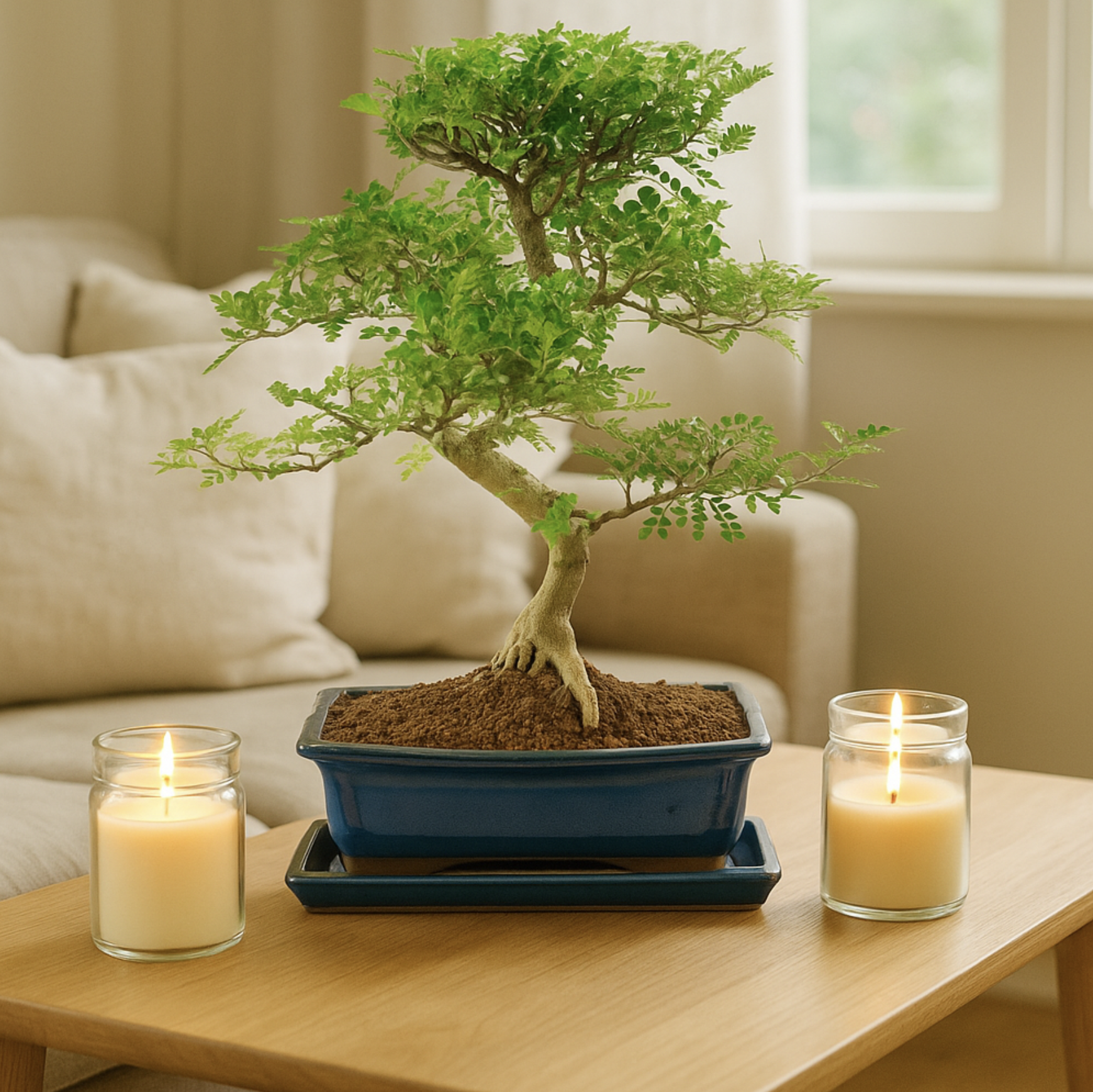
How plants help the mind (quick science you can feel)
- Attention Restoration: Soft, fascinating details (leaf textures, branching patterns, new buds) draw the mind in without demanding effort. Your brain gets a “cognitive exhale,” which improves focus later.
- Stress Physiology: Contact with greenery is associated with lower perceived stress and can nudge heart rate, blood pressure, and muscle tension toward baseline.
- Biophilia & Safety Cues: Natural forms and rhythms signal “you’re safe,” easing hyper-vigilance.
- Ritual & Agency: Small, predictable tasks (water, mist, prune) give a sense of control—powerful when life feels chaotic.
- Micro-learning: Learning names, growth habits, and seasonal cycles builds confidence and curiosity—antidotes to rumination.
Most plants offer some of this. Bonsai offer it all, in one compact, beautiful practice.
What makes a plant good for anxiety?
Use this simple checklist:
- Engaging, not demanding: Invites gentle attention without overwhelming you.
- Predictable routine: Short, consistent care that becomes a grounding ritual.
- Visible progress: You can see that your care matters (new shoots, shaping).
- Sensory comfort: Pleasant textures, fresh scents (optional), clean lines.
- Year-round interest: Something calming to notice in every season.
- Personal meaning: A story you build with the plant over months and years.
Indoor bonsai hits 6/6.
9 reasons indoor bonsai outperforms other “calming” houseplants
- Built-in mindfulness
- Trimming a single shoot, rotating the pot, or misting becomes a 2–5 minute meditation. Micro-rituals reduce mental noise fast.
- Immediate visual feedback
- Your pruning improves shape. New buds reward you within days or weeks—instant reinforcement for your nervous system.
- Right-sized responsibility
- Not a jungle. One small tree = manageable commitment that still feels meaningful.
- Tactile grounding
- Cool ceramic pot, textured bark, soft foliage—safe, soothing sensory input for anxious hands and eyes.
- Narrative & identity
- Bonsai accumulate stories: the first spring flush, the curve you trained, the pot you chose. Meaning buffers stress.
- Aesthetics designed for calm
- Bonsai emphasize balance, negative space, gentle curves—visual principles that calm the sympathetic nervous system.
- Year-round companionship
- Evergreen species stay present through winter; flowering/fruiting types layer seasonal joy.
- Micro-gardening anywhere
- Suits flats, desks, and window ledges—no garden required.
- Skill that grows with you
- Anxiety often shrinks life. Bonsai gently expands it, giving you a craft you can keep improving for decades.
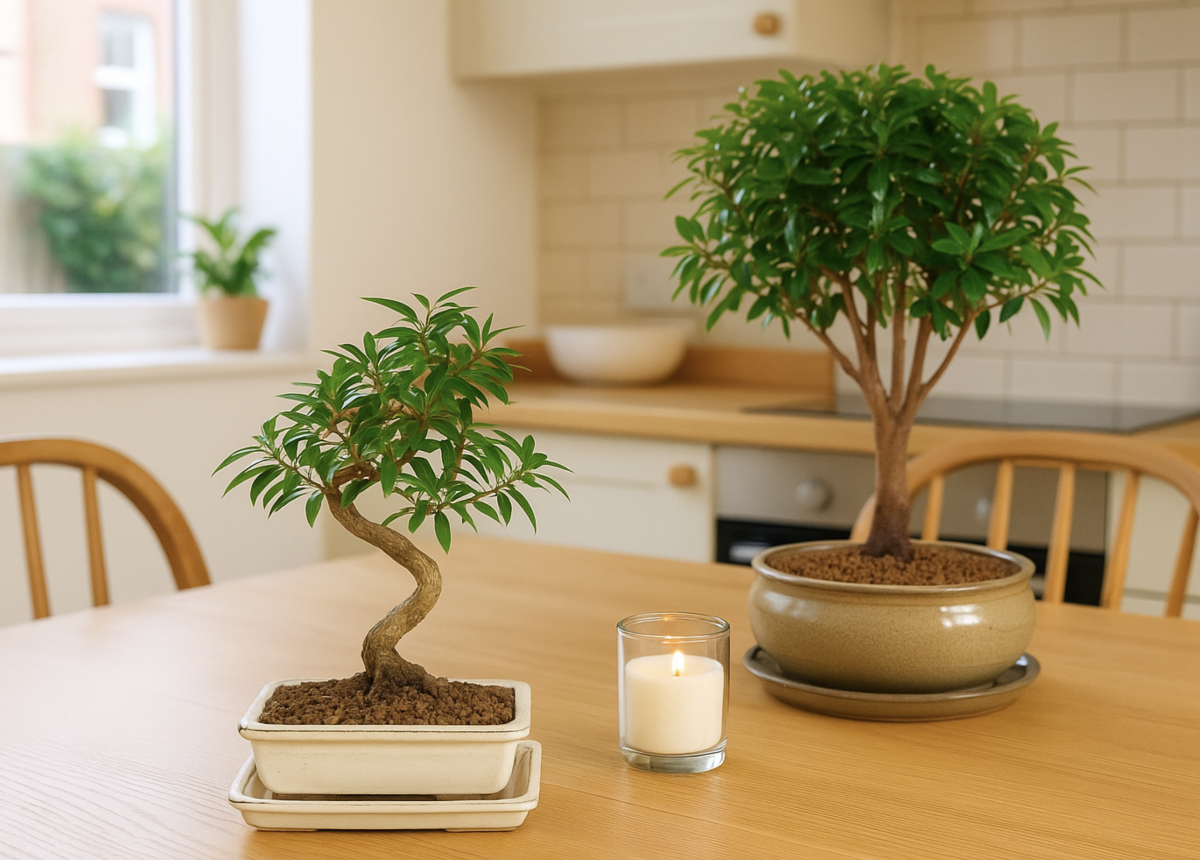
“But aren’t bonsai difficult?”
They don’t have to be. Difficulty comes from treating indoor bonsai like outdoor pines or skipping basic light/watering rules. Choose beginner-friendly species and keep the routine simple.
Beginner-friendly indoor bonsai (great for UK homes)
- Chinese Elm (Ulmus parvifolia): Forgiving, responds well to pruning, classic tree look.
- Ficus microcarpa/retusa: Tolerant of average indoor humidity; thrives in bright light.
- Chinese Sweet Plum (Sageretia): Beautiful colours and small purple plum-like fruits.
- Carmona/Fukien Tea: Attractive, likes bright light and steady warmth. Pretty white star-shaped flowers.
- Aromatic Pepper Tree (Zanthoxylum): Zesty fresh fragrance when pruned. Cleansing.
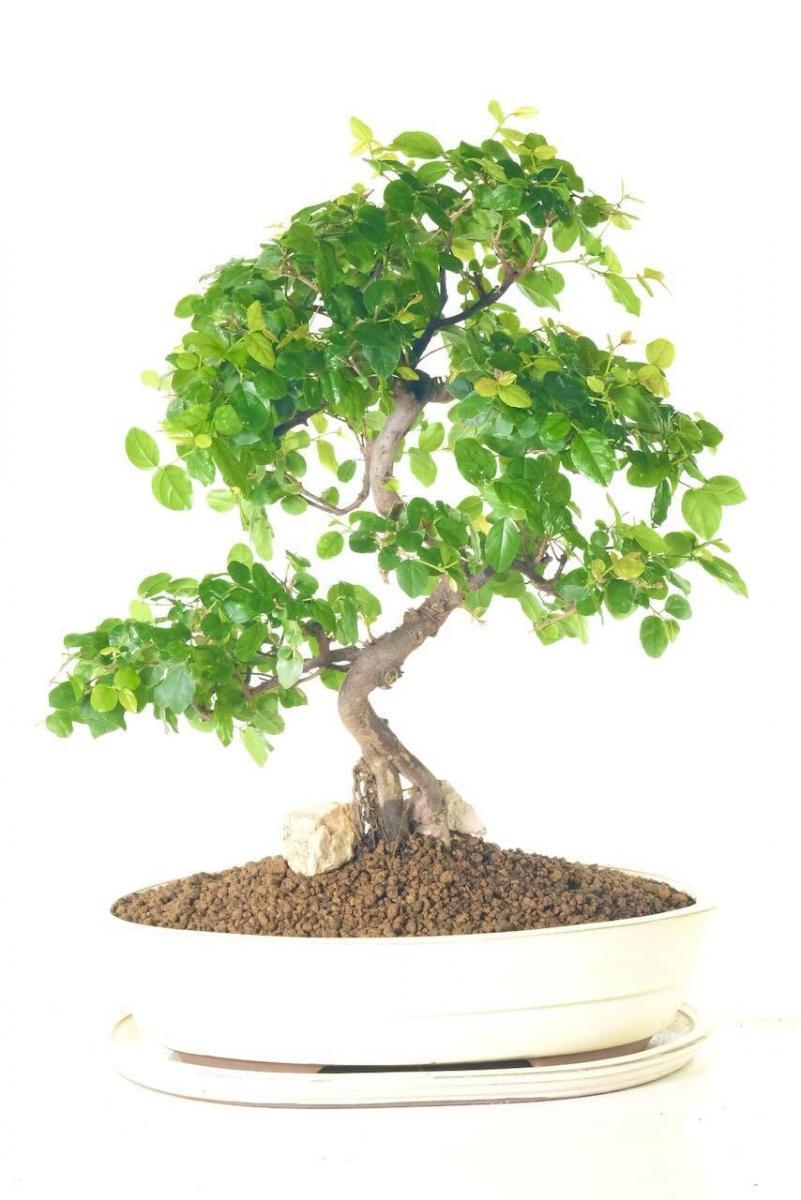
The 7-Minute “Bonsai Break” for anxious moments
- Place & Posture (30s): Sit with feet flat. Put the bonsai at arm’s length.
- Box Breathing (60s): Inhale 4, hold 4, exhale 4, hold 4. Look at the trunk’s curve.
- Five Senses Scan (90s):
- See: 3 leaf shapes or branch angles
- Touch: the rim of the pot
- Hear: the room’s quiet
- Smell: fresh foliage after a light mist
- Taste: a sip of water or tea
- Care Action (90s): Rotate the tree a quarter-turn; pinch back one overlong shoot; remove a yellowing leaf.
- Gratitude Note (60s): One sentence about what changed (a new bud, deeper green).
- Reset (60s): Two slow breaths; return to your day.
Repeat daily or on stressful afternoons. It’s tiny, real, and it works.
Simple setup for success
Light: Bright, indirect light is non-negotiable. A bright windowsill (east/south-east is ideal). If light is poor, use a small grow lamp 10–12 hours/day.
Water: Check soil with your finger. Water thoroughly when the top feels just dry—until water drains freely. Never let the pot sit in water.
Humidity: Light misting in the morning is soothing (for you and the tree).
Feeding: Use a balanced bonsai feed
Pruning cadence:
- Pinch soft tips little and often to keep shape.
- Do a slightly deeper tidy every 6–8 weeks.
Repotting: Typically every 2–3 years in spring with fresh bonsai soil to keep roots healthy.
Ground rule: consistency beats perfection. Small, regular care is better than occasional heroics.
How bonsai compares to popular “calming” plants
| Plant | What it’s great at | Where it falls short vs. bonsai |
|---|---|---|
| Lavender / Jasmine | Lovely fragrance, strong mood cues | Often short-lived indoors; scent fades; less interactive routine |
| Snake Plant / ZZ | Ultra-low maintenance, air-tolerant | Minimal engagement; little visible change = fewer mindfulness cues |
| Ferns / Palms | Soft textures, good for shady corners | Can be fussy about humidity; shaping options limited |
| Flowering daisies/chrysanthemums | Bursts of colour, seasonal cheer | Short bloom windows; less meditative care |
Bonsai uniquely combines: fragrance-optional calm + hands-on micro-ritual + year-round interest + the satisfaction of shaping a tiny tree.
Create an “Anxiety-Friendly Corner”
- One indoor bonsai on a wood or stone tray
- Soft, indirect light (sheer curtain or lamp)
- Mister, small watering can, and scissors within reach
- A small notebook for 1-line observations
This becomes your daily reset space—quick to use, easy to keep tidy, unmistakably calming.
Zen Bonsai Gardens – Calm, Focus, and the Art of Stillness.
Zen Bonsai Gardens make wonderful houseplants for anxiety
If you’d like to take your mindfulness practice even further, a Zen Bonsai Garden offers a deeper level of peace, focus, and contemplation. It’s where horticultural artistry meets meditation — a miniature landscape designed to bring calm and balance to your everyday environment.
A Living Meditation
Caring for an indoor bonsai is already a mindful act, but the addition of a Zen-style garden transforms it into something even more profound. Rooted in centuries-old Japanese tradition, the Zen garden (Karesansui) is a minimalist “dry landscape” that represents nature through simple, symbolic elements — rock for mountains, gravel for flowing water, and bonsai for life and growth. Together, they express stillness, harmony, and a quiet connection to the natural world.
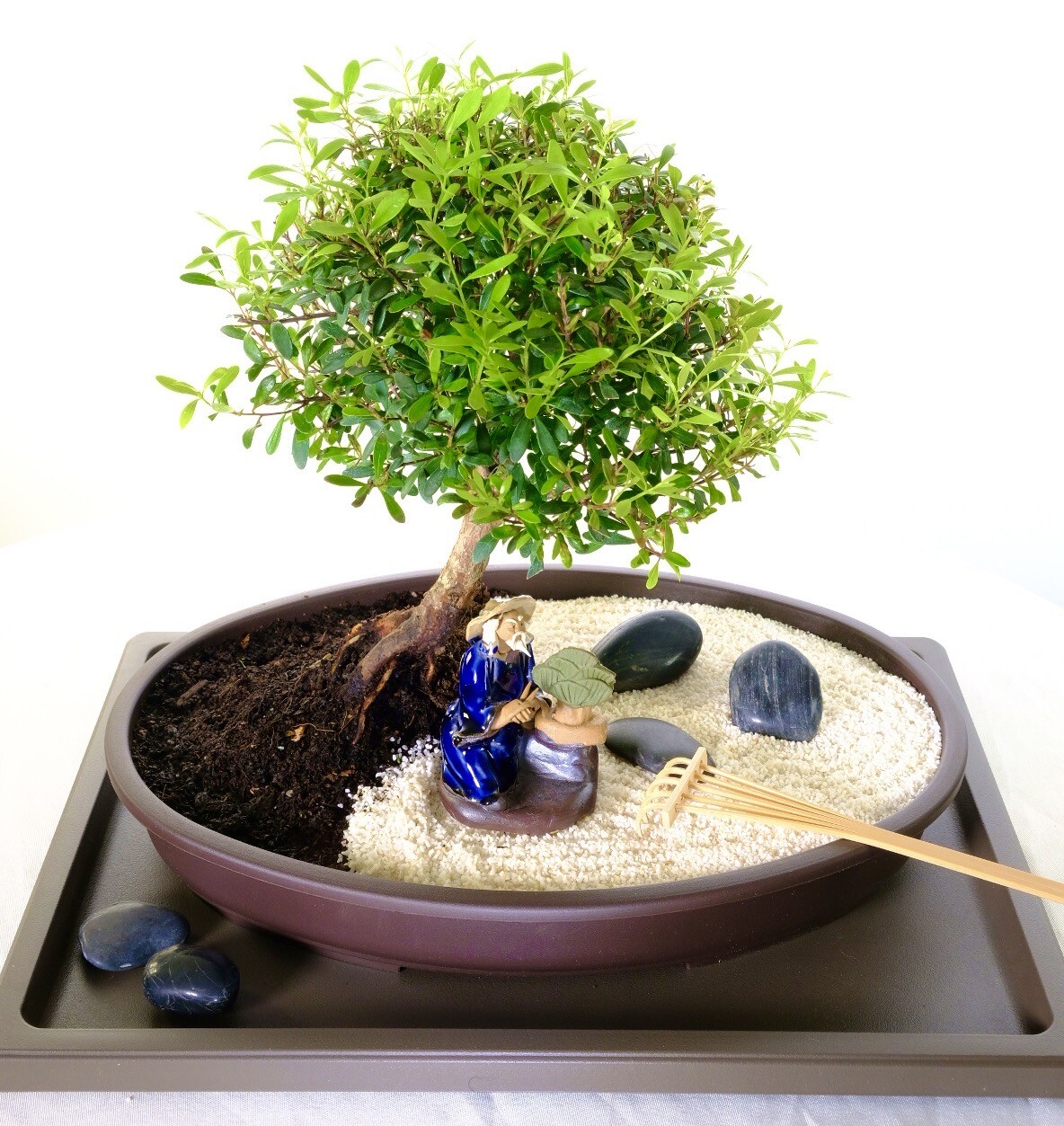
The Ritual of Raking the Gravel
The most distinctive feature of a Zen garden is the raked gravel or sand. Each line or swirl you create represents movement — the ripple of water, the flow of wind, or the rhythm of your breathing. As you draw these patterns around your bonsai, your focus naturally deepens. The act becomes meditative: repetitive, slow, and grounding. It’s mindfulness you can see.
Over time, the garden becomes a reflection of your inner landscape. The patterns you create in the gravel can change with your mood or intention — calm spirals on peaceful days, sweeping lines when your mind feels busy. This quiet, tactile ritual is an excellent way to slow racing thoughts, release tension, and re-centre yourself in the present moment.
Nature in Miniature
Each Zen Bonsai Garden captures the essence of a full-sized landscape in small scale — a mountain scene, a riverside glade, a windswept plain — distilled into a space small enough for your desk or windowsill. It’s a constant reminder that even within limited boundaries, beauty and stillness can flourish.
Designed for Modern Living
In today’s fast-paced, digital world, it’s easy to feel disconnected from nature. A Zen Bonsai Garden brings that missing element back into your home or workspace — a daily invitation to pause, breathe, and simply be. Even a few quiet moments spent misting your bonsai or raking the gravel can have a noticeable effect on anxiety, focus, and mood.
Bonsai Direct Zen Garden Collection
At Bonsai Direct, our Zen Bonsai Garden range was created to capture the essence of this timeless art. Each set combines a carefully trained bonsai tree with natural stone, fine gravel, and an elegant ceramic container. Together, they form a living artwork — perfect for meditation, home décor, or simply bringing a sense of serenity to your space.
While our much-loved Fruiting Sweet Plum (Sageretia) Zen Gardens are currently out of stock, new designs are coming soon — each crafted to embody the same balance of beauty, mindfulness, and tranquillity.
A Zen Bonsai Garden isn’t just something you look at; it’s something you experience. It encourages you to slow down, engage your senses, and reconnect with the quiet, restorative rhythm of nature — one breath, one pattern, one moment at a time.
Troubleshooting anxiety triggers (and bonsai fixes)
- Fear of “killing it” → pick Chinese Elm or Ficus; set a weekly reminder to check, not always water.
- Perfectionism → embrace “a little, often.” One snip is progress.
- Overwatering → lift the pot; if it feels heavy and soil is cool, wait a day.
- Winter blues → add a 10W grow light and keep the micro-ritual going; the continuity helps mood.
Best Houseplant for Anxiety – Making it meaningful (the part that really lasts)
Give your tree a name. Record its first spring flush. Choose a pot that mirrors your décor or a place you love (sea-blue, forest-green, slate). Mark anniversaries with a tiny styling tweak. These tiny acts turn a plant into a personal anchor—a living reminder that growth is incremental and always possible.
Getting started (beginner kit checklist)
- Beginner indoor bonsai (Elm or Ficus)
- Ceramic bonsai pot with drainage tray
- Bonsai soil & feed
- Fine-rose watering can + mister
- Trim scissors
- Printed care guide (keep it nearby)
If you’re in the UK: you can get a hand-selected indoor bonsai with a printed care guide and free next-working-day delivery to most addresses, with the option to choose your preferred date at checkout. Everything arrives ready to display and enjoy.
Final thought
When anxiety narrows life, bonsai widens it—gently. A few minutes a day with a small tree is not escapism; it’s practice for calm attention, patient action, and noticing good things grow under your care. That’s mental health work, disguised as a beautiful hobby.
If you’d like, I can tailor a beginner’s 4-week “bonsai for calm” plan (species choice, placement, and micro-rituals) to your light and room setup.
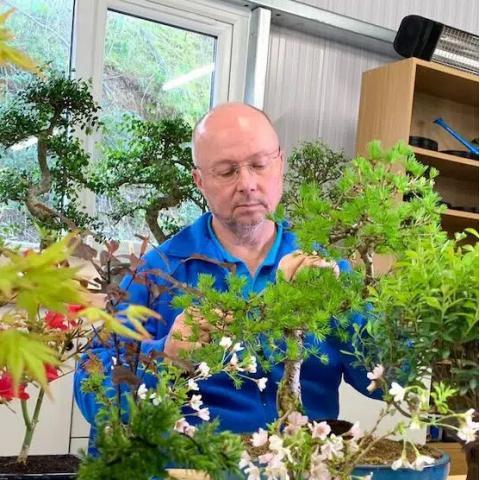


Felix Chandler –
The connection between bonsai and mental wellness really resonates with me. Taking a few minutes to care for a plant with such slow, deliberate growth feels like a built-in mindfulness practice. It’s a nice reminder that small, calming routines can make a real difference in easing daily stress.