

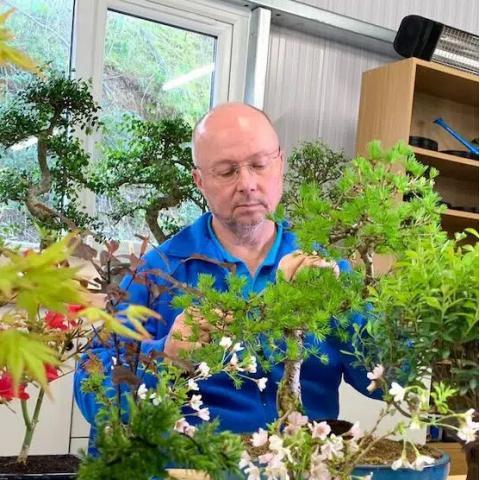
By Lloyd Noall, Bonsai Direct – 40 years of commercial bonsai growing experience
When people first begin their bonsai journey, they often focus on the tree itself — the shape, the foliage, the species. But in reality, one of the most critical components of a healthy bonsai is something far less glamorous:
The bonsai pot.
A bonsai is, at its simplest, a tree grown in a pot — but in practice, it is far more refined than that. The relationship between the tree and its pot is fundamental to the overall composition. A well-chosen bonsai pot should be balanced in colour, shape, and size so that neither element dominates the other. You shouldn’t notice the pot first, nor the tree in isolation — instead, you see the bonsai as a complete, harmonious piece. When this balance is achieved, the pot and tree work together to create a single, unified aesthetic, which is at the very heart of bonsai design.
After four decades of growing bonsai commercially, I can tell you this with certainty — the wrong pot will undo even the best care routine. In this guide, I’ll explain the role of bonsai pots, why drainage is essential, and why we strongly advise against using pot covers.
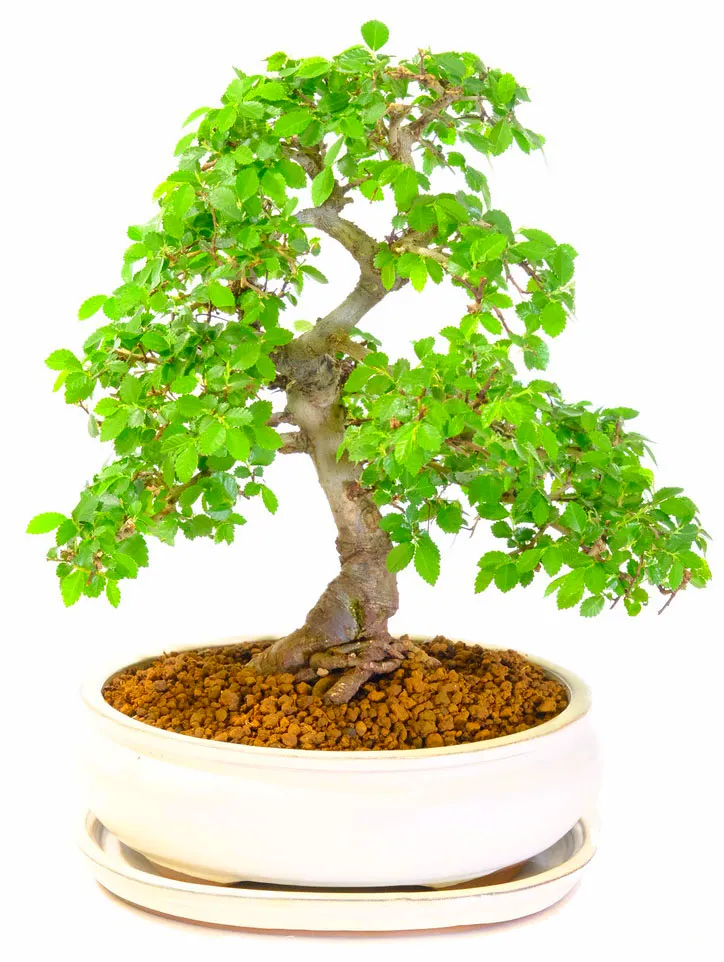
Chinese Elm Premium Quality Indoor Bonsai
What Makes a Proper Bonsai Pot?
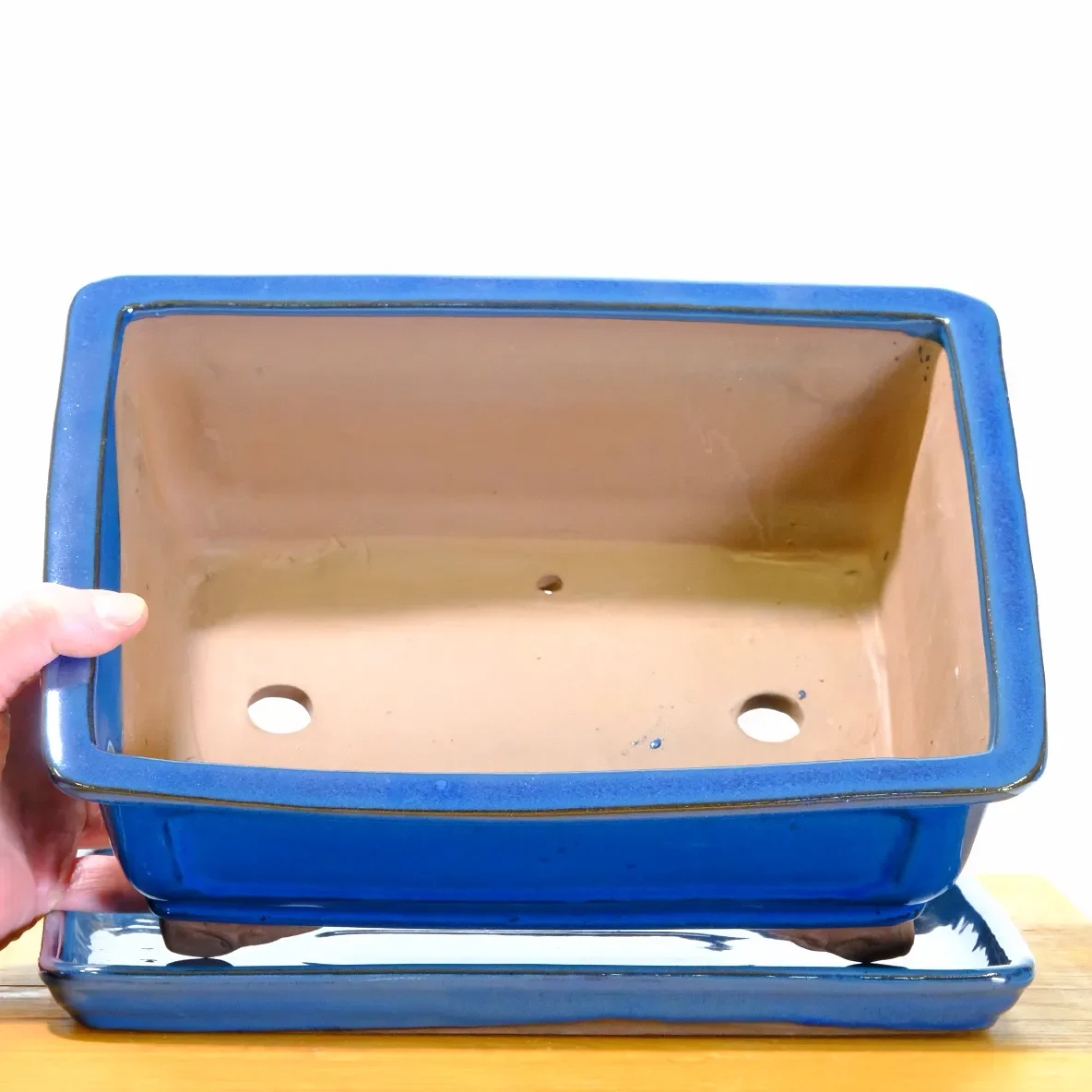
A true bonsai pot is not just decorative — it is a functional horticultural tool.
Most of the bonsai pots we supply at Bonsai Direct are:
- Made from ceramic
- Designed with drainage holes
- Paired (for indoor use) with drip trays (often known as humidity trays)
This isn’t accidental — it’s based on decades of growing experience and traditional bonsai practice.
Why Drainage Holes Are Essential
Drainage holes are the single most important feature of any bonsai pot.
They allow:
- Excess water to freely escape
- Oxygen to reach the root system
- Soil structure to remain healthy and aerated
Without proper drainage, water accumulates in the soil, leading to:
- Root rot
- Fungal problems
- Oxygen deprivation
- Eventual tree decline
Overwatering is the most common cause of bonsai failure — and poor drainage is usually the root cause.
Indoor Bonsai Pots and Drip Trays
For indoor bonsai, best practice is to use a drip tray which sits beneath the pot.
How They Work
When you water your bonsai:
- Water flows through the soil
- Excess drains out of the pot
- A small amount collects in the tray beneath
This setup provides two important benefits:
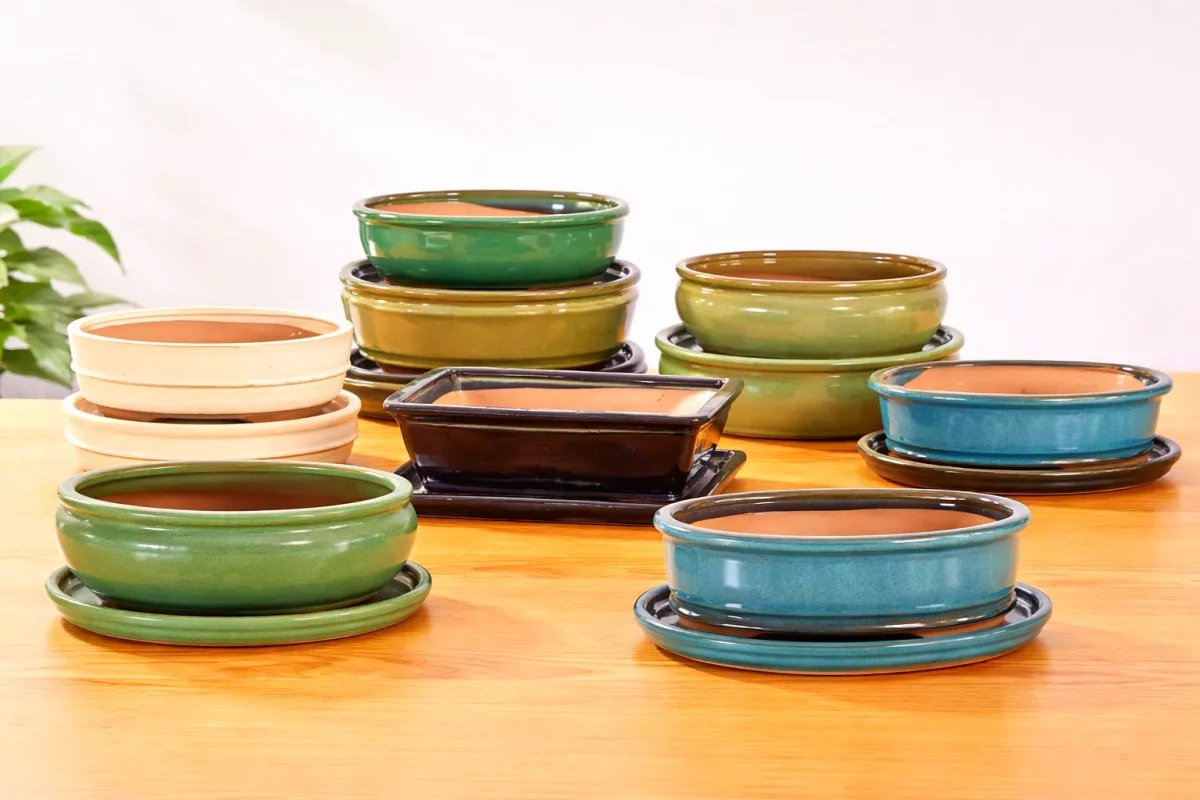
Assorted bonsai pots & matching humidity trays suitable for potting indoor bonsai species.
1. Protects Your Surfaces
The tray prevents water from damaging furniture or windowsills.
2. Improves Humidity
Bonsai drip trays are shallow by design. Any water collected will gradually evaporate, increasing humidity around the tree.
This is particularly beneficial in winter when:
- Central heating dries the air
- Indoor humidity drops significantly
That small amount of evaporating water helps create a microclimate around your bonsai.
Why the Tray Must Be Shallow
This is critical.
Because the tray is shallow:
- The bonsai pot never sits in standing water
- Roots remain well-aerated
- The risk of root rot is avoided
This balance — drainage with slight humidity — is exactly what indoor bonsai need.
Outdoor Bonsai Pots
Outdoor bonsai are much simpler in this regard.
They do not require drip trays because:
- Excess water can drain naturally away
- Rainfall is part of their natural environment
- Air circulation is higher
For outdoor trees, free drainage is still essential, but there’s no need to retain water beneath the pot.
The Problem with Pot Covers
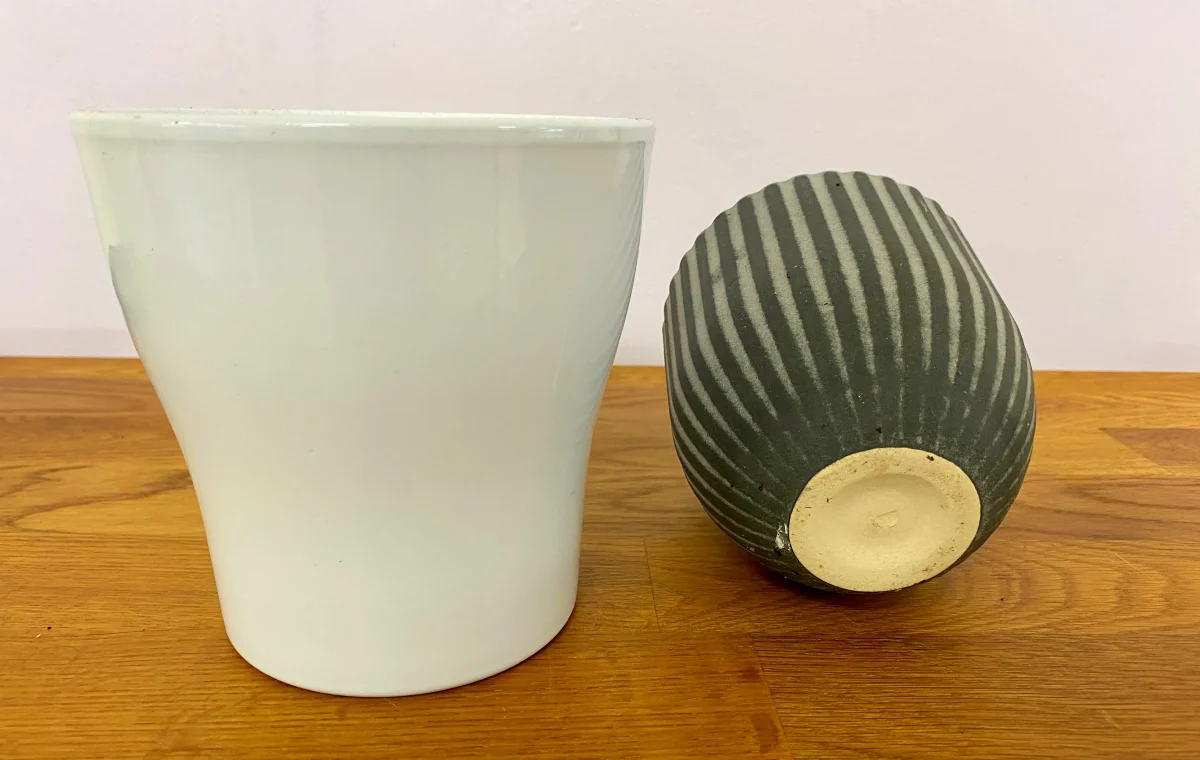
Many retailers sell bonsai using a different system:
- The tree is planted in a plastic pot with drainage holes
- That pot is placed inside a decorative pot cover
- The outer pot has no drainage holes
While this may look attractive, it is poor practice.
Why Pot Covers Are Detrimental
When you water a bonsai in a pot cover:
- Water drains from the inner plastic pot
- It collects in the bottom of the outer pot
- There is nowhere for that water to go
This creates a serious issue: The bonsai ends up sitting in water for prolonged periods
Over time, this leads to:
- Root rot
- Constantly waterlogged soil
- Lack of oxygen to roots
- Rapid decline in tree health
In many cases, the damage is not immediately visible — but it is already happening below the surface.
Why Pot Covers Are So Common
The answer is simple: cost.
- Plastic pots are cheap to produce
- Decorative pot covers are inexpensive
- This combination reduces production costs significantly
By contrast:
- Handmade ceramic bonsai pots
- Separate drip trays
- Proper planting and preparation
…require more skill, time, and expense.
But from a horticultural standpoint, there is no comparison.
Ceramic Bonsai Pots: The Superior Choice
Traditional bonsai pots are ceramic for good reason:
- They are porous enough to support healthy root systems
- They provide weight and stability
- They age beautifully over time
- They reflect centuries of bonsai cultivation practice
When paired with proper drainage and a shallow drip tray, they create the ideal growing environment.
Our Approach at Bonsai Direct
At Bonsai Direct, we do not supply pot covers.
Every bonsai we sell is:
- Planted in a freely draining ceramic bonsai pot
- Designed for long-term health, not short-term display
- Prepared using methods refined over 40 years of commercial growing
This is because we prioritise one thing above all: The health and longevity of your bonsai tree
Final Thoughts
A bonsai pot is far more than a container — it is a critical part of the tree’s ecosystem.
To summarise:
- Always choose bonsai pots with drainage holes
- Use shallow drip trays for indoor bonsai
- Avoid pot covers that trap water
- Prioritise function over appearance
If you get the pot right, you remove one of the biggest risks in bonsai care.
And in my experience, that makes all the difference.
Lloyd Noall
Bonsai Direct
Over 40 years of commercial bonsai growing experience


0 replies