

What is the Rule for Bonsai Pots? 🌿
Choosing the right bonsai pot is more than a matter of style. It’s about finding the perfect balance between function and aesthetics. The pot frames your tree, complements its features, and supports its health. While there is no single absolute rule, bonsai enthusiasts generally follow a set of guidelines to create harmony between the tree and its container.
At its core, the rule is simple: the bonsai pot should enhance the tree’s beauty without overpowering it. That means paying attention to the pot’s size, depth, shape, and colour in relation to the bonsai’s trunk, canopy, and overall style.
How to Size a Bonsai Pot Correctly
The classic guideline for choosing the length of a bonsai pot is:
- For most upright trees: The pot’s length should be roughly two-thirds the height of the tree.
- For wider, spreading trees: The pot length should be about two-thirds the width of the tree’s spread.
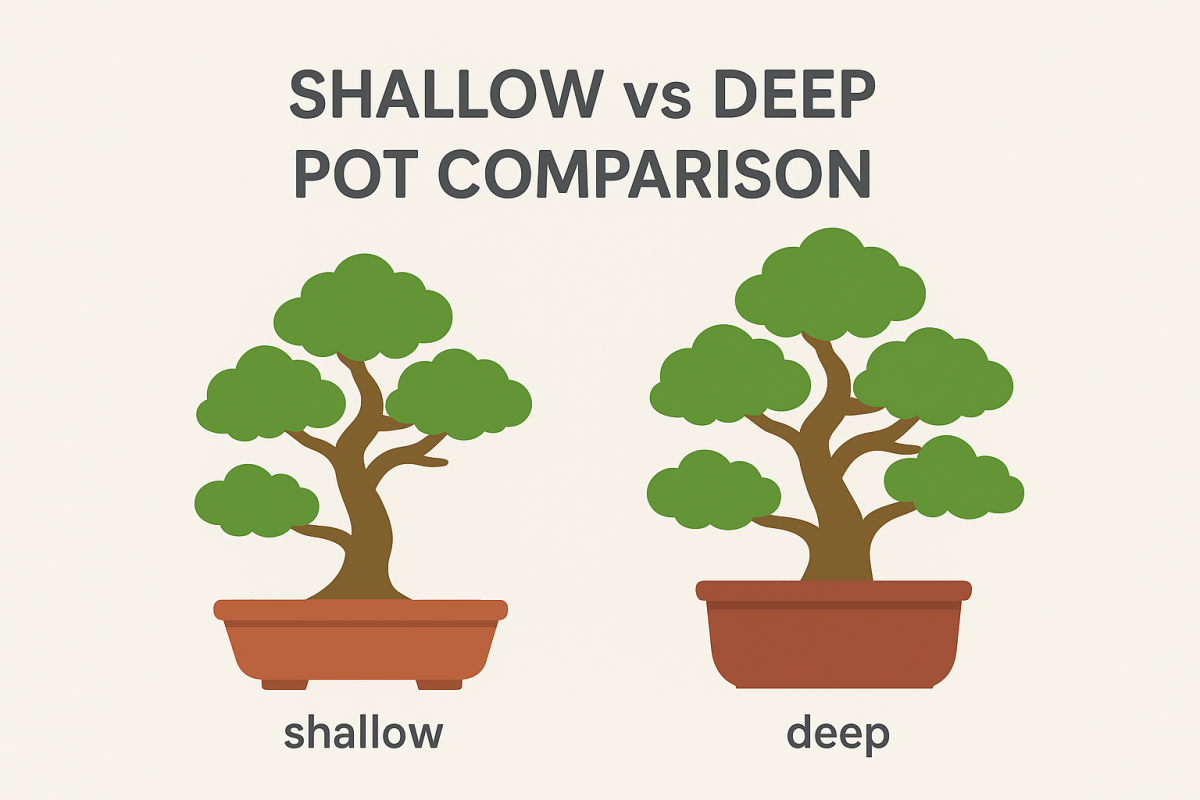
For depth, a common rule is that the pot should be approximately the same depth as the diameter of the trunk just above the soil line. However, this does not take into account that deeper pots make the bonsai easier to care for. A deeper pot has a larger root ball which allows the bonsai to grow more quickly and has the added benefit of holding more water. Thus, a deeper bonsai pot will not dry out as quickly as a shallower one of the same length and breadth.
Of course, these are starting points. A dramatic cascade style might need a deeper, taller pot to anchor its weight. While a delicate flowering bonsai could suit a slightly shallower, softer design.
Should Bonsai Pots Be Deep or Shallow?
Bonsai pots are traditionally more shallow than regular plant pots. This encourages a finer root system and helps maintain the miniature scale. Ceramic bonsai pots also add to the visual elegance. However, not all bonsai should live in shallow pots. The right depth depends on your tree’s needs:
- Shallow pots are ideal for established bonsai with strong, healthy root systems. They keep proportions balanced and showcase the surface roots (nebari).
- Deeper pots may be needed for younger trees in training, newly collected material, or species that need extra root protection and moisture retention. They also work for tall cascade and semi-cascade styles, where stability is key.
In short, your bonsai pot should be as shallow as possible for aesthetics while still being deep enough to support the tree’s health.
Matching Pot Shape and Style to the Bonsai
- Oval or rectangular pots suit upright, informal upright, broom style and slanting styles.
- Taller cascade pots are designed for dramatic downward-growing trees.
For colour, earthy tones are common for conifers, while glazed, colourful pots often enhance flowering or fruiting bonsai. Always aim for a complementary balance between pot and foliage.
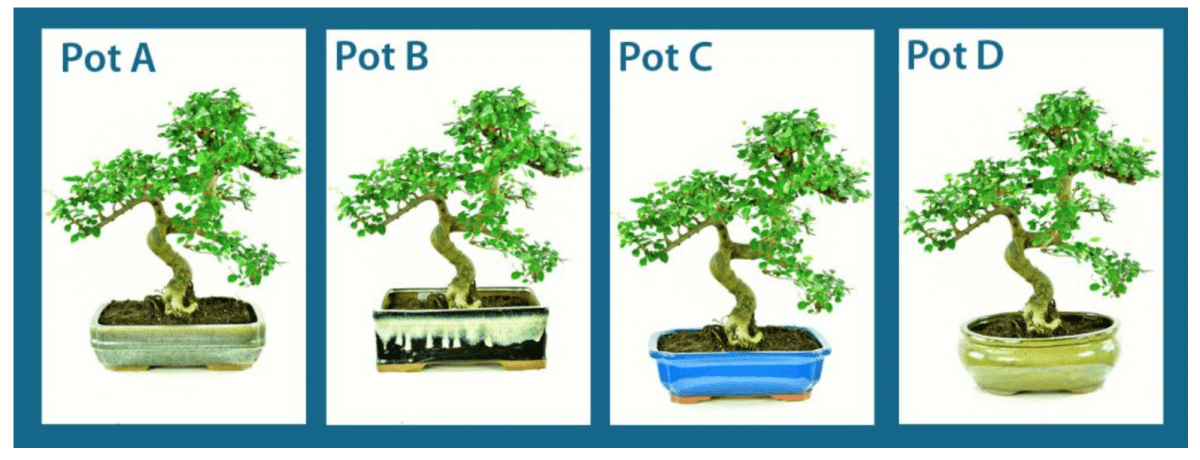
In 2019 we added a post entitled How do I repot and root prune my bonsai tree? The image below is taken from this article and shows the same bonsai tree (Chinese Elm) potted into 4 different ceramic pots. I hope this gives you a idea of how the pot choice can influence the appearance of the bonsai tree.
Final Thought
The rule for bonsai pots comes down to proportion, harmony, and the health of your tree. While most bonsai look best in shallow containers, deeper pots have their place for certain styles and growth stages. If in doubt, start with the traditional sizing rules, then adjust for the character of your individual bonsai.
🪴 Key Tip: When repotting into a new pot, remember to prioritise root health over aesthetics. It’s better to choose a slightly deeper pot for a year or two than to stress your bonsai for the sake of style.



0 replies