


Watering is one of the most important skills in bonsai care—and also one of the most misunderstood. Too much water can cause just as many problems as too little, and for many beginners, knowing when to water feels like guesswork. This is where moisture metres often enter the conversation. But are they genuinely useful when growing bonsai trees, or do they create a false sense of confidence?
At Bonsai Direct, we’re frequently asked whether moisture metres are worth using. The honest answer is this: they can be a helpful aid, particularly for beginners, but they should never replace learning how your bonsai species, soil, and environment behave.
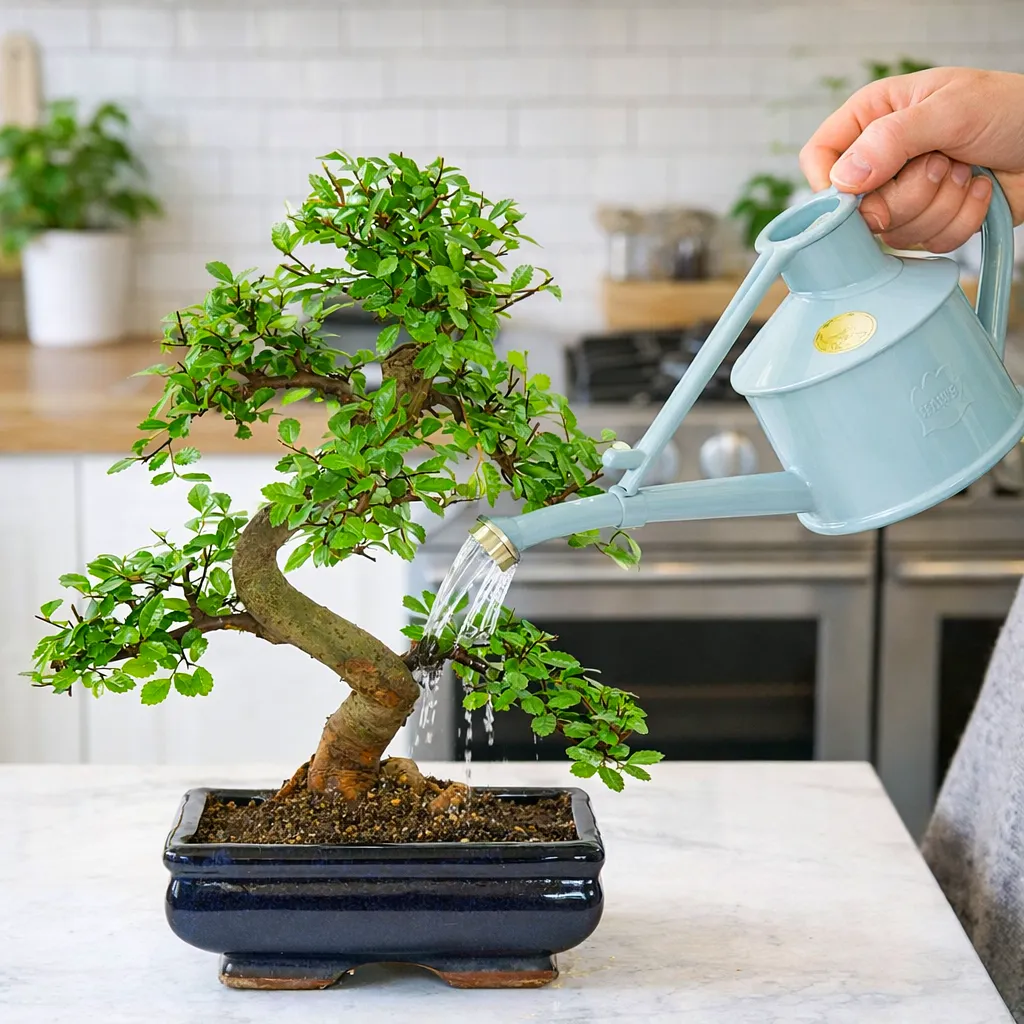
How Experienced Bonsai Growers Know When to Water
Experienced growers rarely rely on tools alone. Instead, they understand their trees. Over time, you learn how different species respond to moisture, how fast various soils dry, and how seasonal changes affect watering needs. Many experienced growers can tell when a bonsai needs water simply by lifting the pot, touching the soil, or observing subtle changes in foliage.
However, this confidence comes with experience. If you are new to bonsai, it can be difficult to judge moisture accurately, and this is where a moisture metre can provide reassurance while you learn.
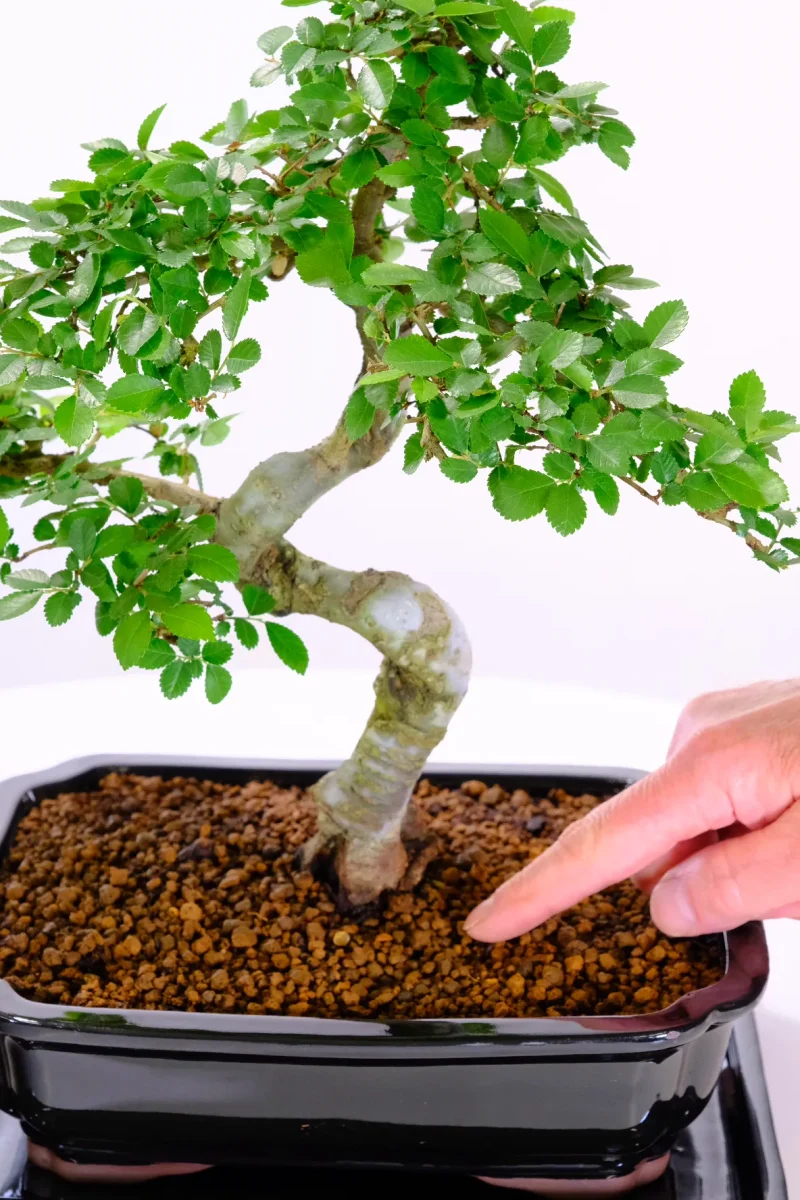
The Finger Test – A Time-Trusted Bonsai Method
One of the most reliable and widely used techniques is the finger test. Gently press your finger into the soil surface rather than just touching the top.
A useful way to visualise this is to imagine placing a piece of kitchen towel on the soil surface and pressing your fingers down. If moisture does not wick into the towel, then it is time to water your bonsai.
Even when the surface feels only barely damp, the soil beneath is often still moist. This is exactly what you want. It means the roots are not sitting in soaking wet compost all the time, while still having access to the moisture they need. Constantly wet soil reduces oxygen around the roots and is one of the most common causes of bonsai decline.
Why Soil Type Changes Everything
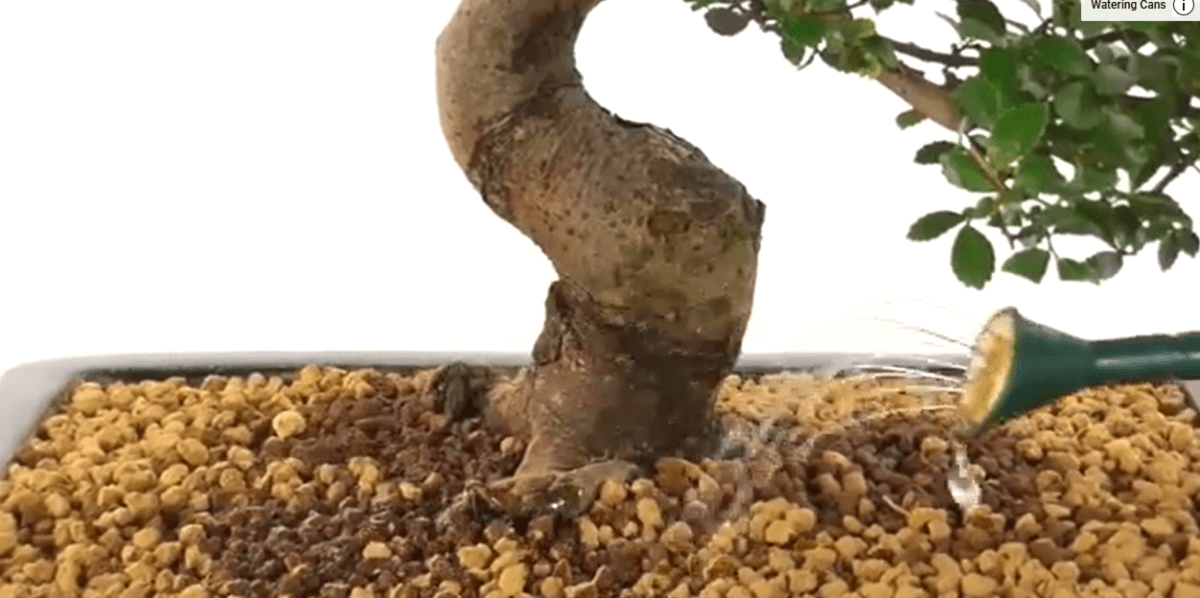
Soil choice plays a huge role in watering frequency. Different bonsai soils dry at different rates and give different visual cues.
Fine-rooted species such as Fukien Tea (Carmona microphylla) and Serissa (Tree of a Thousand Stars) prefer to dry slightly between waterings. They strongly dislike being constantly wet and are particularly prone to root problems if overwatered.
For example, Japanese Akadama changes colour as it dries, turning from a darker tone to a lighter beige. This colour shift is an excellent indicator and often removes the need for tools once you become familiar with it.
Free-draining bonsai soils dry from the top down. Therefore, surface dryness does not automatically mean the root ball is dry. Understanding this prevents overwatering, especially in indoor environments.
Species Preferences – Not All Bonsai Want the Same Moisture
This is where many mistakes occur. Moisture metres can be misleading if used without understanding species-specific needs.
By contrast, Dwarf Jade (Portulacaria afra) is a succulent species. It can dry out far more than most bonsai before needing water. In fact, overwatering jade bonsai is one of the most common beginner errors.
Species such as Chinese Elm (Ulmus parvifolia) prefer more consistent moisture. They perform best when the soil remains lightly damp but never saturated.
Outdoor bonsai also vary. Junipers and pines prefer slightly drier conditions and very free-draining soil, while native deciduous species, such as oak, require heavier watering during the growing season when in full leaf.
Because of this variation, understanding your bonsai species is just as important as measuring moisture.
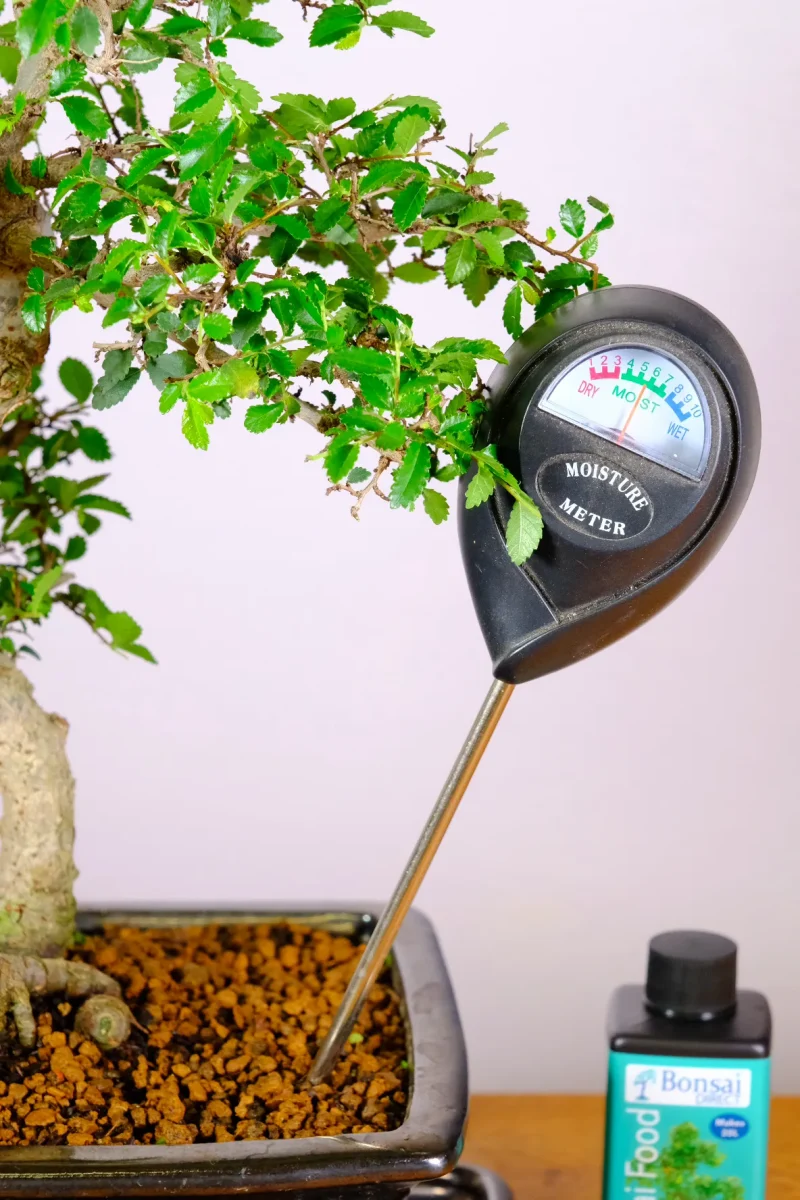
What Moisture Level Should a Bonsai Tree Be On?
A common question is: what reading should a moisture metre show before watering?
As general guidance, most bonsai trees should be watered when the moisture metre reads around level 3 on a standard scale. At this point, the soil at root-ball level is no longer wet but still retains enough moisture to support healthy roots.
To use a moisture metre correctly, insert the probe down to root level, not just the surface soil. Take the reading, then decide whether to water based on the species you are growing. Even for experienced growers, this can act as a useful cross-check, particularly during seasonal changes or when learning a new bonsai variety.
How Moisture Metres Actually Work
Most moisture metres use metal probes to measure electrical conductivity in the soil. Wet soil conducts electricity more easily than dry soil, and the metre converts this into a readable scale.
They are affordable, easy to use, and require no batteries. For beginners, they can reduce anxiety and prevent overwatering while confidence develops. However, they only measure moisture at the probe’s location and cannot account for root distribution, soil layering, or species preference.
For this reason, they should be used as guidance rather than instruction.
Putting Moisture Metres to the Test
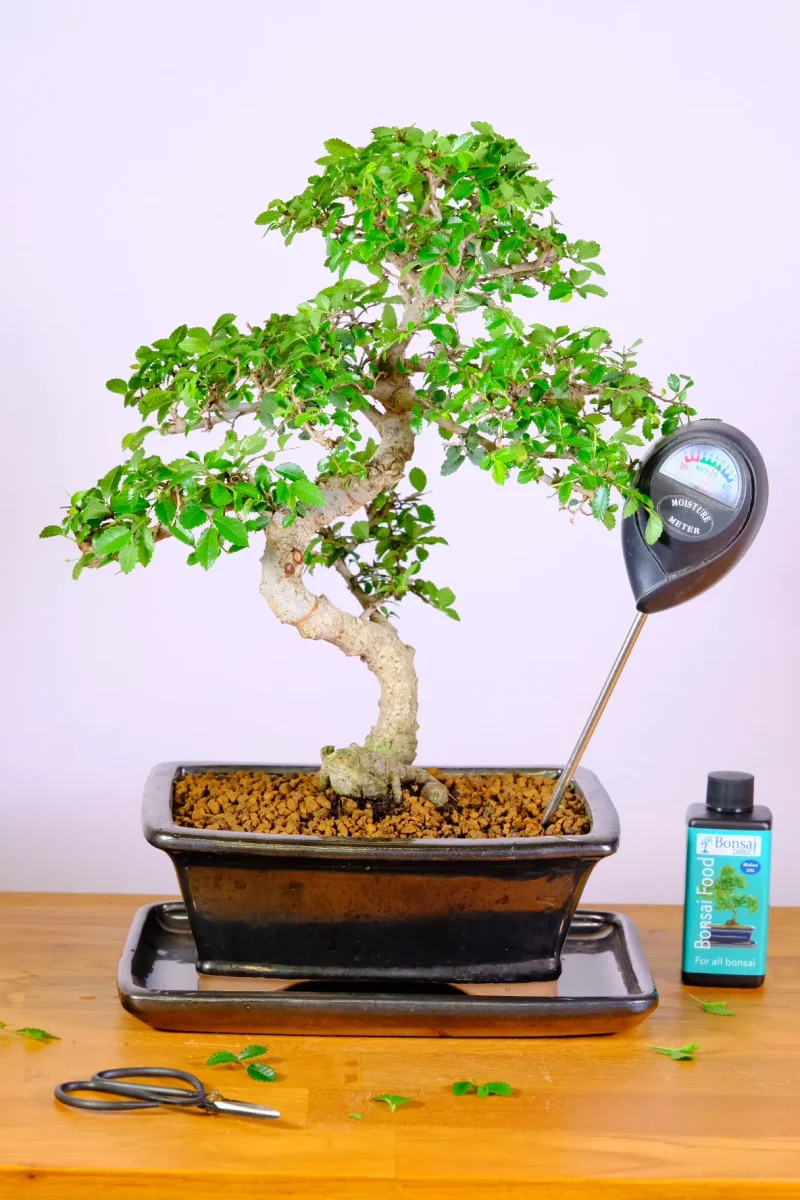
To explore this further, Lloyd Noall, bonsai master at Bonsai Direct, has decided to put moisture metres to the test over several months.
The trial will compare moisture metre readings with traditional methods across a range of species with very different requirements, including:
- Chinese Elm (Ulmus parvifolia)
- Fukien Tea Tree (Carmona microphylla)
- Rose Apple Myrtle (Syzygium buxifolium)
- Chinese Juniper (Juniperus chinensis)
By tracking readings at root level and observing plant health, growth, and response, this test aims to answer a key question: is a moisture metre genuinely useful when growing bonsai trees, or does experience remain the most reliable guide?
Our Findings
After several months of testing across a range of bonsai species, we found that moisture metres can be a useful and reliable guide when used correctly. In most cases, the readings gave a good indication of moisture levels at root depth, especially when the probe was inserted properly into the soil rather than just the surface.
We observed that the ideal moisture range for the majority of bonsai sits within the “moist” section of the scale, typically around levels 5–6. This level provides a healthy balance. The roots receive enough water to stay hydrated, while still allowing oxygen to circulate through the soil. As a result, trees maintained steady growth and showed no signs of stress when kept within this range.
Watering was most effective when carried out just as the reading began to approach the “dry” zone. At this point, the soil had started to lose moisture but had not fully dried out. This approach helped prevent overwatering, which is one of the most common issues in bonsai care. At the same time, it ensured the roots never became completely dry, which can also cause damage.
However, the trial also confirmed an important limitation. Moisture metres should not be relied upon as the only method of judging when to water. While they provide helpful guidance, they cannot account for differences in species, soil type, pot size, or environmental conditions. For example, some species prefer slightly drier conditions, while others require more consistent moisture.
Because of this, personal judgement remains essential. The most successful results came from combining metre readings with traditional methods such as checking the soil by touch, observing the tree, and understanding how each species behaves.
Overall, moisture metres proved to be a valuable support tool, particularly for beginners. However, they work best when used alongside experience, not as a replacement for it.
Final Thoughts
Moisture metres are not a shortcut to good bonsai care. However, they can be a valuable learning tool, particularly for beginners or those growing unfamiliar species. Used alongside observation, touch, and species knowledge, they help remove guesswork without replacing understanding.
Ultimately, bonsai care is about awareness. The goal is not to follow a number on a dial, but to learn how your tree behaves. Over time, your hands and eyes will become more reliable than any tool—and that is when bonsai growing becomes truly rewarding.


Paul christie –
A great and interesting article! I used to use moisture meters when I first got my bonsai tree! But now I have many I can tell which bonsai needs watering or any other needs without the moisture meter! Each bonsai has its own character and some are a bit sassy! But you get to know each one like your own child! Thank you for this informative article!