

Bonsai wiring is one of the most valuable techniques for shaping and styling your tree — but knowing how long to leave bonsai wire on is just as important as applying it in the first place. Leave it too long and you risk ugly wire scars; remove it too soon and the branches may spring right back to their original position.
The exact timing isn’t the same for every tree. It depends on the species, time of year, growth rate, and several other important factors. With the right approach, you can keep your bonsai looking beautiful while avoiding permanent damage.
Factors That Affect How Long to Leave Bonsai Wire On
Several things influence how long you should keep bonsai wire in place:
- Species of bonsai – Fast growers like Chinese Elm or Ficus may only need a few weeks, while slow growers such as junipers or pines can need several months.
- Time of year – In spring and summer, branches thicken quickly, meaning you’ll need to check your wiring more often. During dormancy, wiring can stay in place for longer.
- Age of the tree – Younger branches are more pliable and set faster, while older, woodier branches need more time.
- Thickness of the branch – Thicker branches generally require longer wiring periods to hold their shape.
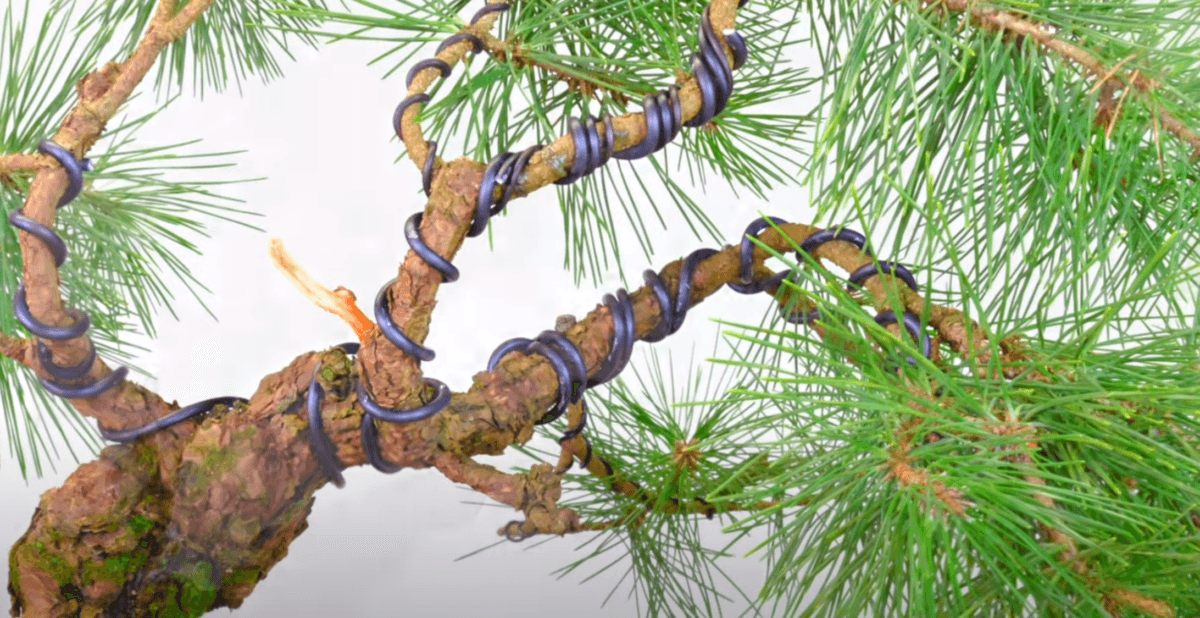
Anodised aluminium wire on a black pine bonsai tree
Additional Considerations for Bonsai Wire Timing
Beyond the basics, there are other subtler influences:
- Vigour and health – A strong, healthy tree will grow more quickly, tightening the wire sooner.
- Humidity and climate – Warm, humid environments accelerate growth, while cooler, drier climates slow it down.
- Amount of bend applied – Gentle bends often “set” faster; dramatic shaping takes more time.
- Seasonal sap flow – In spring, swelling can happen quickly; in late summer or autumn, growth slows.
- Tree’s recent history – If the tree was recently pruned, repotted, or stressed, growth may be slower and the wire may need to stay on longer.
These factors mean there’s no fixed number of weeks or months for all bonsai trees — observation is key.
How to Check When Bonsai Wire Should Come Off
The safest way to avoid damage is to check your bonsai wire every couple of weeks during the growing season. Look closely where the wire touches the bark:
- If the wire is starting to bite into the wood or bark, remove it immediately.
- If the branch hasn’t set in place yet, you can always rewire after removal.
Think of it like mending a broken leg — the branch needs time to heal into its new shape, but you wouldn’t leave a cast on forever. If it hasn’t “healed” yet, carefully reapply bonsai wire for another stint.
When removing wire, use proper blunt-ended bonsai wire cutters and cut the wire into sections rather than unwinding it, to avoid damaging the bark.
How to Apply Bonsai Wire (Without Damaging Your Tree)
When wiring, the goal is to place the wire neatly along the branch — not to wind it tightly like a twist-tie. Wrapping too tightly will cause the coil to “tighten” as you go, digging into the bark and risking long-term scarring.
- Choose the right wire thickness – Aim for wire roughly one-third the diameter of the branch.
- Anchor the wire first – Start at the base of the trunk or a sturdy neighbouring branch to give yourself stability.
- Place the wire at a 45° angle – This helps support the branch evenly and looks neat.
- Lay the wire gently – Guide it around the branch without pulling. Each coil should be firm enough to stay in place but loose enough to slide a sheet of paper between the wire and bark.
- Bend the branch gradually – Once wired, use two hands to make gentle, controlled bends. Never twist the branch with the wire itself — the wire is there to hold shape, not to force it.
Remember: Wiring is about guiding growth, not constricting it. If you find yourself “tightening” the coils as you go, stop and reset — better a neat, loose coil than a damaging, tight one.
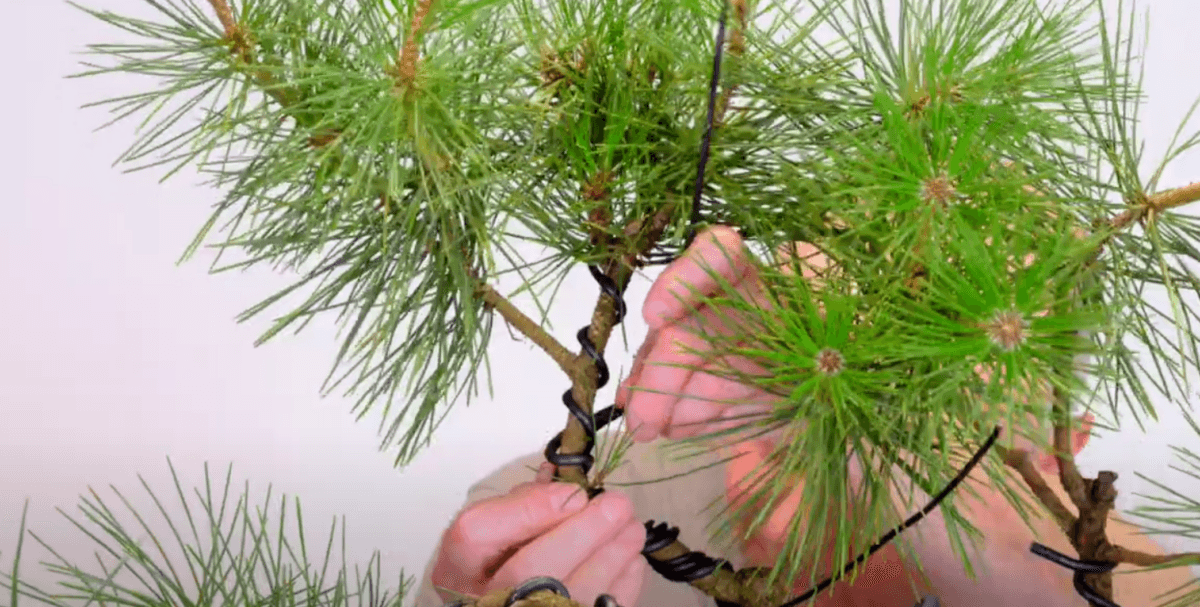
Lloyd placing the wire on the branch of this pine bonsai.
What Kind of Wire Is Used for Bonsai?
Two main types of bonsai wire are used by enthusiasts and professionals alike:
- Anodised Aluminium Wire
- Soft and easy to work with, making it perfect for beginners and for all bonsai species
- Available in a range of thicknesses, from 1mm for delicate twigs to 6mm for thicker branches.
- Simple to remove without causing damage.
- Annealed Copper Wire
- Stronger than aluminium, so you can use a thinner gauge to hold branches in place.
- Preferred for conifers and pines, where strength is essential.
- More difficult to work with and needs careful handling to avoid snapping branches.
Whichever you choose, aim for a wire thickness of about one-third the diameter of the branch for optimal control and safety.
🌿 Expert Comment from Bonsai Artist Lloyd Noall:
“At Bonsai Direct we only use Aluminium wire. It doesn’t rust and is very pliable. Another reason for us using the anodised wire, as opposed to un-anodised wire is that it looks more aesthetically pleasing. It is a neutral brown in colour and is neat in appearance. Annealed copper wire goes green in time and is less flexible and more expensive.“
Final Thoughts on Bonsai Wire Timing
There’s no single answer to how long to leave bonsai wire on, but by understanding your tree’s species, the time of year, and other influencing factors, you’ll be able to train your bonsai successfully without leaving unsightly scars.
Regular checks, gentle handling, and reapplying wire when necessary will ensure your bonsai develops into the work of art you envision — with patience, precision, and care at every step



0 replies