

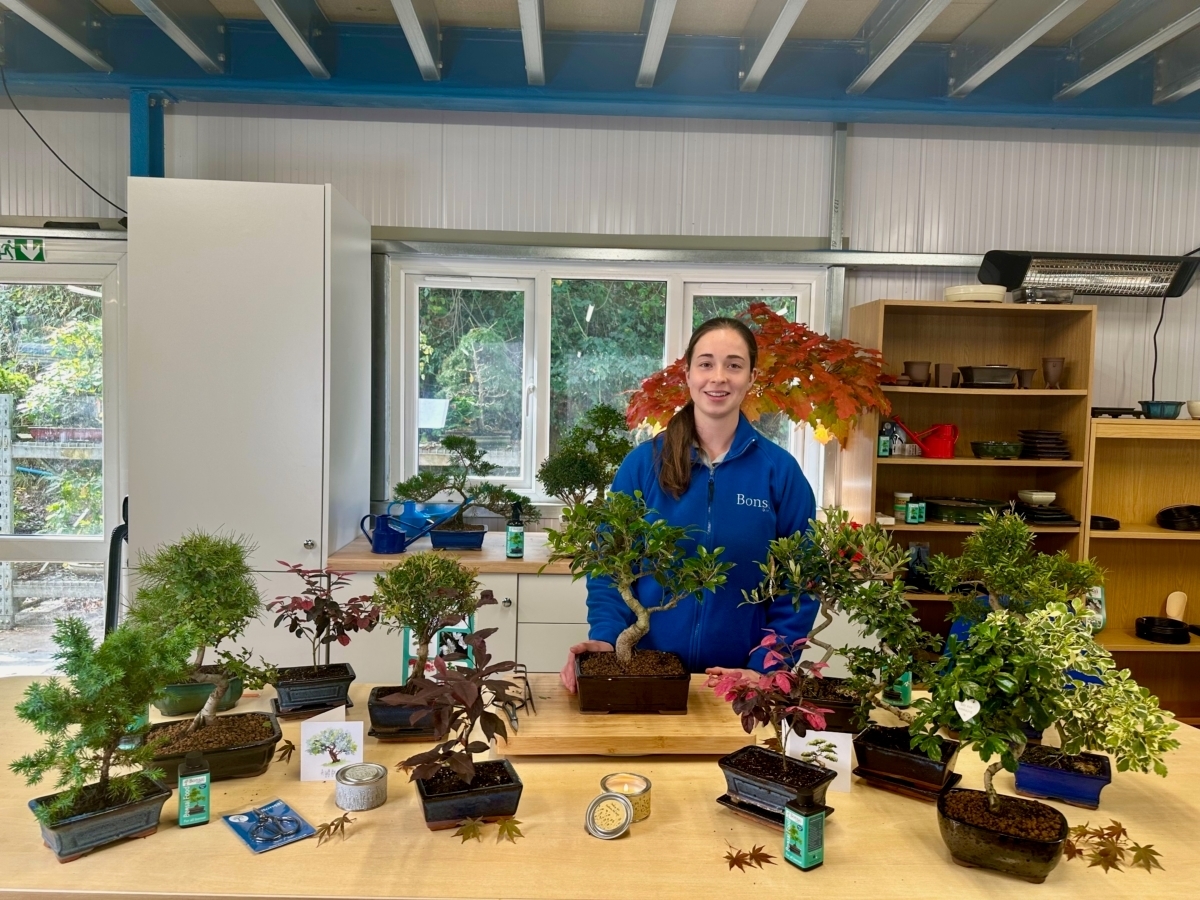
Expert Answers about Frequent Bonsai Questions People Ask from Holly at Bonsai Direct
Bonsai trees are much more than just miniature plants—they’re living works of art that bring beauty, tranquility, and a bit of nature’s magic into your home. If you’re new to bonsai or looking for practical advice to keep your tree thriving, you’re in the right place.
I’m Holly, your indoor bonsai expert at Bonsai Direct, and I’ve gathered the answers to some of the most common questions; the bonsai questions people ask. Whether you’re wondering about the best bonsai for beginners or how to water and position your tree indoors, this guide will help you care for your bonsai with confidence and ease.

Where should I put a bonsai tree in my house?
Choosing the right spot for your bonsai is crucial. Most indoor bonsai trees thrive in bright, indirect sunlight. A south-facing window is often ideal during winter, as it provides plenty of light. I recommend re-positioning your indoor bonsai during summer to a cooler place without harsh direct rays that could dry out the tree. Avoid placing your bonsai near heating vents or drafty windows, as sudden temperature changes can stress the tree.
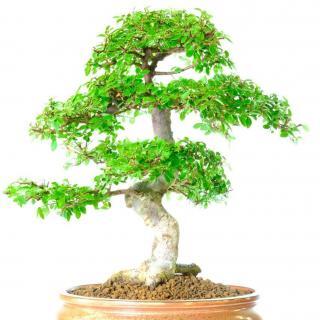
What is the best bonsai tree for beginners? This is the top 5 bonsai questions people ask!
For those new to bonsai, the Chinese Elm is widely considered the best bonsai tree for beginners. It’s resilient, adaptable to indoor conditions, and forgiving when it comes to watering mistakes. Its small leaves and attractive branching make it a joy to shape and style, helping beginners gain confidence in bonsai care. Please read my article – What Is the Best Bonsai Tree for Beginners?
Are bonsai trees low or high maintenance?
Bonsai trees are often perceived as high maintenance, but in reality, they can be easy to care for if you choose the right species suitable for your environment and experience level. They do require regular care, but this is more about a consistent routine than intensive labour, making bonsai care an enjoyable and rewarding activity rather than a chore.
Key points about bonsai care:
- Regular Checking: Bonsai trees need a little daily or every-other-day attention to check soil moisture and overall health. This prevents problems early and keeps your tree thriving.
- Watering: The soil should be kept moist but never waterlogged. Watering frequency varies by species, pot size, and climate, so learning to read when your bonsai needs water is essential. Overwatering is a common mistake, so letting the soil dry slightly between watering is best.
- Pruning: Occasional pruning shapes the bonsai and encourages healthy, dense growth. It’s a creative part of bonsai care that allows you to style your tree and keep it miniature.
- Feeding: During the growing season, regular fertilising with Bonsai Fertiliser helps replenish nutrients lost in the small soil volume. Bonsai soil is limited, so feeding is important for ongoing health.
- Repotting: Every couple of years (frequency depends on species and age), bonsai need repotting to refresh soil and prune roots, preventing the tree from becoming root-bound.
What happens if you just let a bonsai tree grow? What happens if you don’t prune a bonsai?
If you simply allow a bonsai tree to grow without pruning, it will gradually lose its carefully maintained miniature shape and begin to resemble a full-sized tree. This process is driven largely by the action of plant hormones—mainly auxins and cytokinins—which regulate growth and development in the branches and foliage.
The affects of Auxins
Auxins are growth hormones produced primarily at the tips of shoots and young leaves. Their main role is to promote cell elongation, which causes shoots and branches to grow longer. Auxins also create a phenomenon called apical dominance, where the main growing tip suppresses the growth of lateral buds further down the branch. This is why, if you leave the bonsai unpruned, the tree focuses its energy on extending these terminal shoots, causing long, straggly growth that disrupts the compact shape bonsai enthusiasts aim for.
The affects of Cytokinins
When you prune or pinch back the growing tips, you remove these auxin-rich areas. This interruption reduces apical dominance, allowing cytokinins—another class of plant hormones produced mainly in the roots and transported upward—to take a more active role. Cytokinins promote cell division and the activation of dormant lateral buds closer to the trunk or along branches. This leads to back-budding, which produces dense, compact clusters of foliage and encourages the bushier growth essential for the classic bonsai look.
Allowing your bonsai branches to grow out occasionally can be a useful strategy. During this period, the branches lengthen and thicken due to sustained auxin activity and secondary growth processes. After a full growing season, pruning back these extended branches stimulates back-budding through cytokinin action, resulting in stronger, fuller branch structures and lush foliage pads.
In summary, bonsai shaping is about managing the balance between auxin-driven elongation and cytokinin-driven branching. Pruning and wiring are tools that guide the tree’s natural hormonal signals, helping maintain the dense, miniature form that makes bonsai such a captivating art.
Is a bonsai tree good for a bedroom?
Bonsai can be a lovely addition to a bedroom, bringing natural beauty and calm. However, they do need sufficient light, so ensure your bedroom has a bright window or supplement with grow lights. Also, maintain good air circulation and avoid placing the bonsai too close to heating or cooling sources.
Do bonsai like bathrooms?
Bathrooms can be tricky for bonsai trees. While the higher humidity can be beneficial, the lack of natural light usually makes bathrooms less than ideal. Unless your bathroom has a bright window, it’s better to keep your bonsai in a brighter room.
How to tell if a bonsai needs water.
Check the soil regularly; bonsai soil should be kept moist but not waterlogged. When the topsoil feels dry about 1cm down, it’s time to water. Also, watch the leaves—drooping leaves can indicate that the bonsai needs water. Furthermore, soft black tips to the leaves can indicate overwatering. If you are unsure please seek advice.
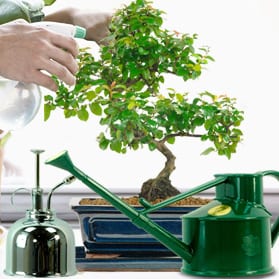
Should I spray my bonsai with water?
Yes, spraying your bonsai with water is beneficial, especially indoors where the air can be dry. Misting helps maintain humidity around the tree and keeps the leaves clean. However, don’t rely solely on misting for watering. I would also advise misting with Bonsai Mist. This helps prevent pest and disease and acts as a foliar feed, providing additional nourishment for your bonsai.
Should I bottom water my bonsai?
Bottom watering is a great technique, especially if the bonsai has become a little too dry. You can place your bonsai pot in a shallow tray of water and let the soil soak it up from the bottom. This method ensures thorough hydration but can result in overwatering if used routinely. Personally, I recommend watering from above ensuring you evenly set the soil with a soft rain spout.
Do bonsai need full sun?
Most bonsai trees prefer bright light, but full direct sun all day can be too intense for some indoor varieties. The Chinese Elm, for example, does well with plenty of indirect sunlight. Some species of outdoor bonsai (pines, junipers and oaks) need bright sun, but indoor bonsai should be shielded from harsh direct rays.
How to care for a bonsai for beginners.
Start with a hardy species like the Chinese Elm. Keep it in a bright spot (but avoid direct harsh sun in mid-summer), water when the soil is just dry on top, mist regularly, and prune gently to maintain its shape. Feeding with a balanced bonsai fertiliser throughout the year and repotting every 2-3 years helps keep your tree healthy and happy.
Are bonsai trees beginner friendly?
Absolutely! While they require some attention and care, bonsai trees like the Chinese Elm are very beginner friendly. With patience and a little practice, anyone can enjoy the art and satisfaction of growing their own bonsai.
If you have a question please ask Holly – Complete the form below.
We also have a huge library of helpful videos on our YouTube channel!

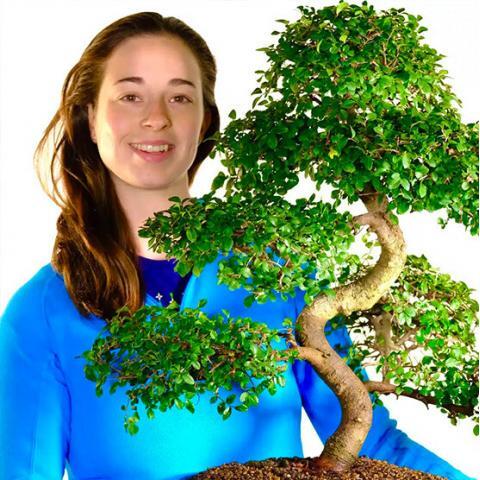
Holly Noall
“I literally grew up with a pair of bonsai scissors in my hand. As Lloyd’s eldest daughter, I’ve had the unique privilege of growing up surrounded by the art of bonsai growing right here on our family nursery. Even though I’m still in my mid-twenties, I already have many years of hands-on bonsai experience behind me.
I’m passionate about the environment and committed to continuing the journey my parents started. Bonsai has been a huge part of my life, and I have a real zeal for growing and nurturing these miniature trees. My knowledge is especially focused on our indoor bonsai range, which I absolutely love working with.
Like my dad, I’m dedicated to growing top-quality bonsai here at our nursery in rural Mid Devon. I enjoy working closely with both the nursery and office teams, and I’m always excited to share my passion and expertise with our community. You’ll often see me in our social media posts, usually with my fluffy little dog, Pogo, who’s become a bit of a mascot around here.”


0 replies