Hardy Flowering Bonsai | Leptospermum scoparium ‘Red Damask’ Manuka Tea Tree
A Distinctive Hardy Flowering Bonsai with Elegant Trunk Movement
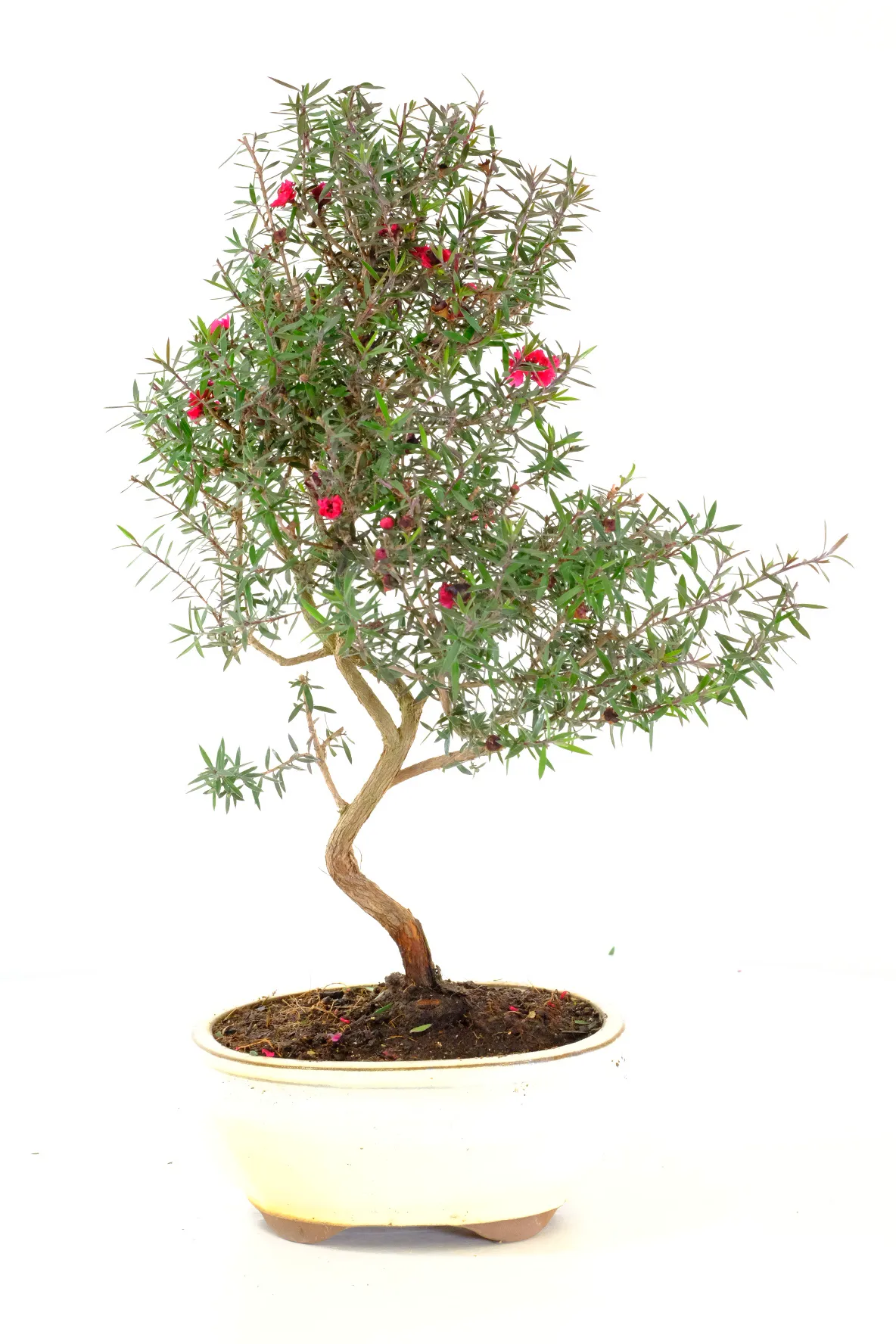
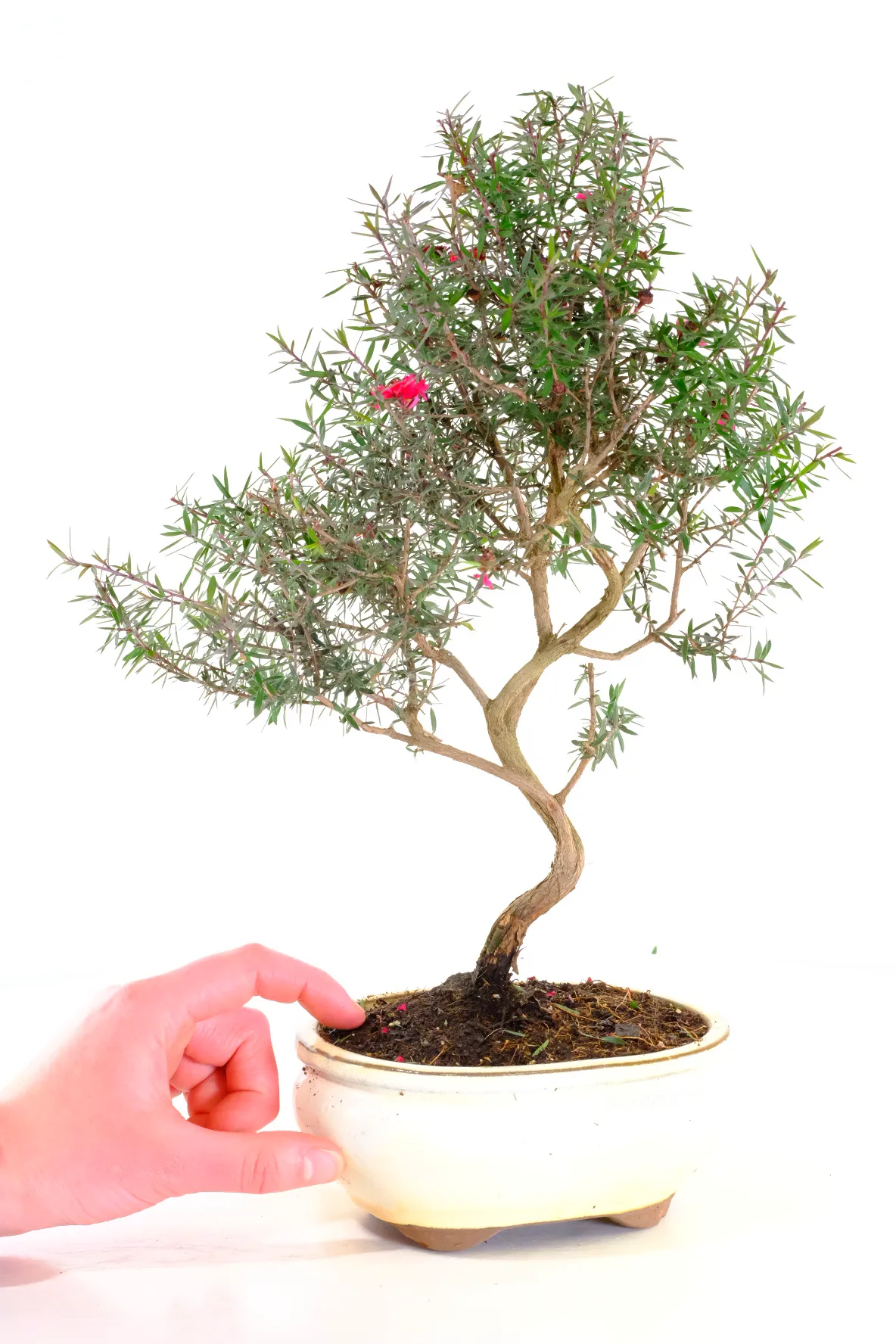
This beautiful Leptospermum scoparium bonsai, often known as the New Zealand Manuka Tea Tree, is a striking hardy flowering bonsai prized for its elegant form and vibrant seasonal display. At around 11 years old and standing close to 40 cm tall, the tree already shows impressive maturity and character.
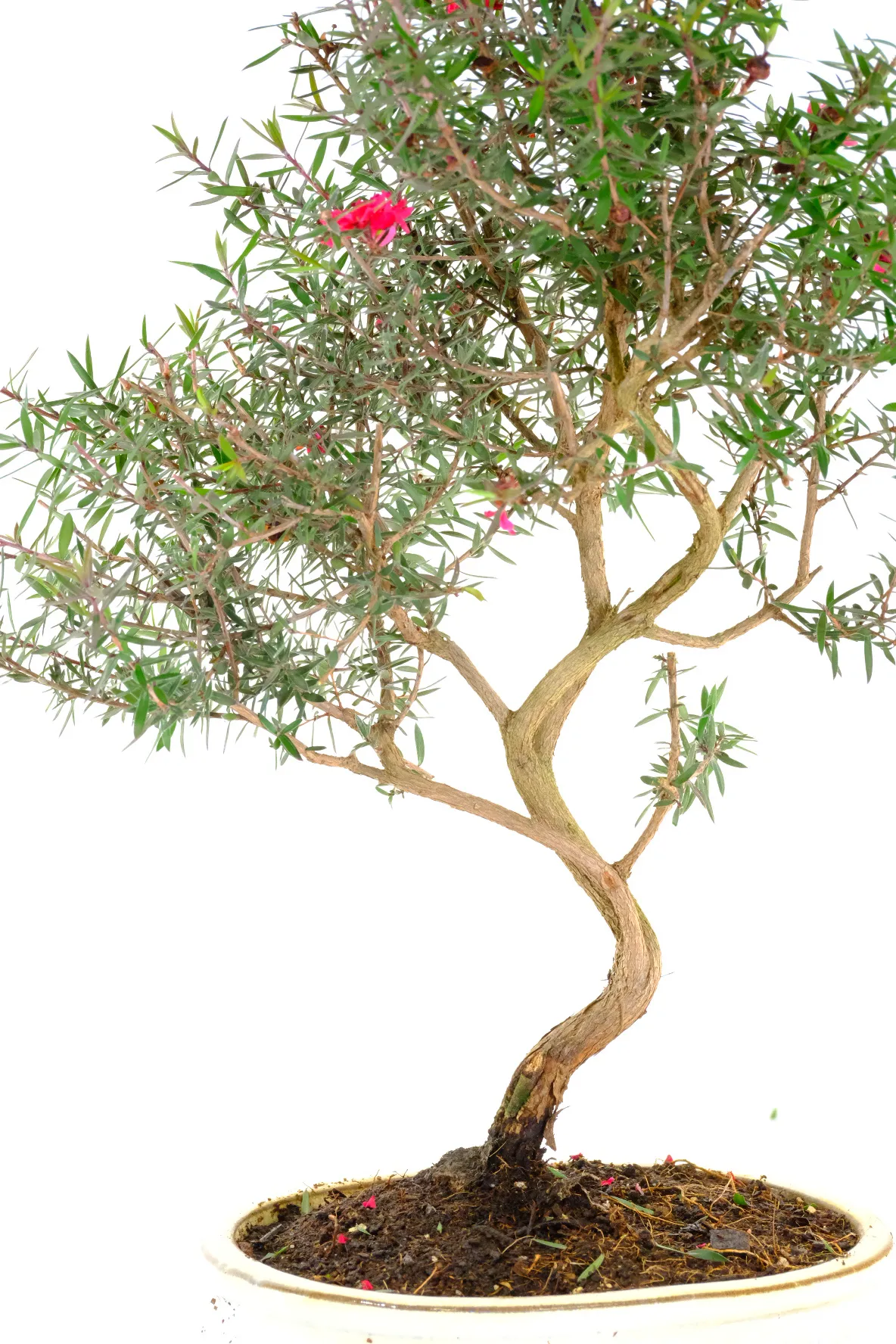
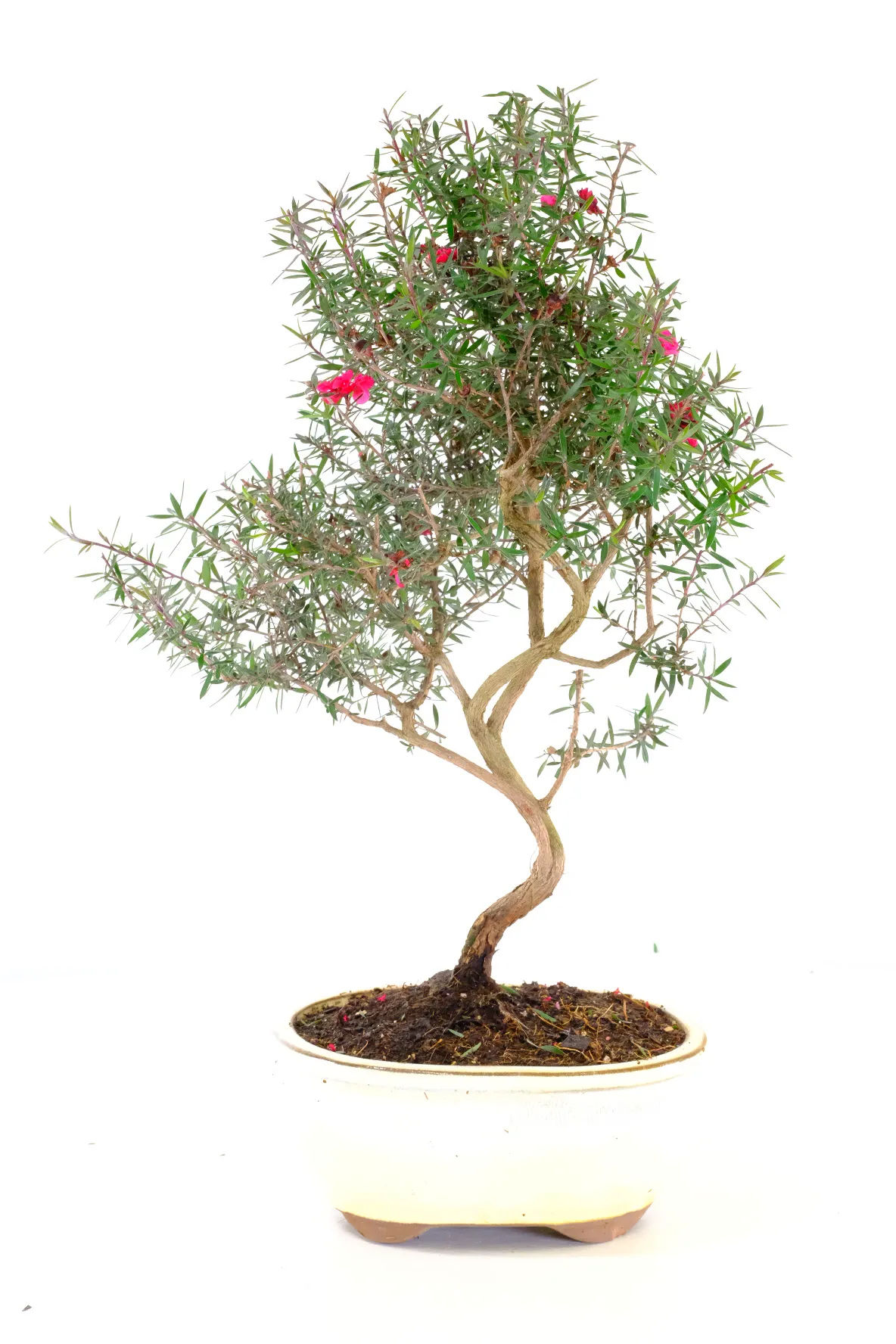
The trunk displays a graceful serpentine movement with multiple natural twists that guide the eye upward through the canopy. This flowing trunk line creates a refined and dynamic silhouette that bonsai enthusiasts greatly admire.
The tree is planted in a cream banded glazed oval ceramic bonsai pot, which enhances the deep green foliage and bright flowers perfectly. The light colour of the pot allows the delicate leaves and vibrant flowers to take centre stage.
When photographed in late April 2026, the branches were already covered in numerous flowers, showcasing a spectacular flowering display.
Fine Evergreen Foliage Perfect for Bonsai
One of the most appealing features of Leptospermum scoparium as a bonsai species is its naturally small foliage. The tree produces narrow, glossy dark green leaves that remain evergreen throughout the year.
Because the leaves are naturally fine and well proportioned, the canopy quickly develops a delicate and refined appearance. In addition, the foliage carries a pleasant aromatic quality, as the leaves contain essential oils long valued for their natural medicinal properties.
A Spectacular Spring Flowering Bonsai
Few hardy flowering bonsai offer such a dramatic seasonal display. During late winter, the branches begin to fill with small rounded buds that appear neatly along each stem.
As spring progresses, these buds open into beautiful waxy flowers. The blooms of ‘Red Damask’ appear in rich cerise-red tones with darker centres, often lining the branches from base to tip. Consequently, the entire tree can transform into a vibrant cloud of colour during the flowering period.
These flowers also attract pollinating insects. Bees visiting the blossoms produce the well-known Manuka honey, which is prized worldwide for its natural antibacterial properties.
Cultural Significance of the Manuka Tea Tree
Leptospermum scoparium holds deep cultural importance in its native regions of Australia and New Zealand. The Māori people have used the plant for generations due to the medicinal qualities found in its leaves and oils.
Historically, the strong timber served practical purposes as well. Craftspeople used the wood for carving and tool handles, while the aromatic sawdust could even be used to smoke meats.
Because of this long history of use, the Manuka Tea Tree symbolises resilience, healing and protection.
Growing a Hardy Flowering Bonsai
This hardy flowering bonsai grows best outdoors in a bright location with full sun or partial sun. The species prefers well-drained soil and benefits from warm, sheltered conditions.
Although reasonably hardy, it should receive some protection during colder winter periods. In cooler climates, placing the bonsai in an unheated greenhouse or conservatory will help protect it from severe frost. The species generally tolerates temperatures down to around –3°C when sheltered.
Because the Manuka Tea Tree naturally grows in coastal regions, it adapts well to sunny patios, gardens and protected outdoor bonsai displays.
A Beautiful Flowering Bonsai with Natural Character
With its twisting serpentine trunk, fine evergreen foliage and vibrant spring blossoms, this Leptospermum scopariumbonsai stands out as a truly rewarding hardy flowering bonsai. Its graceful movement, cultural significance and spectacular flowering display make it a wonderful addition to any outdoor bonsai collection.