Leptospermum scoparium Bonsai | Red Damask New Zealand Manuka Tea Tree
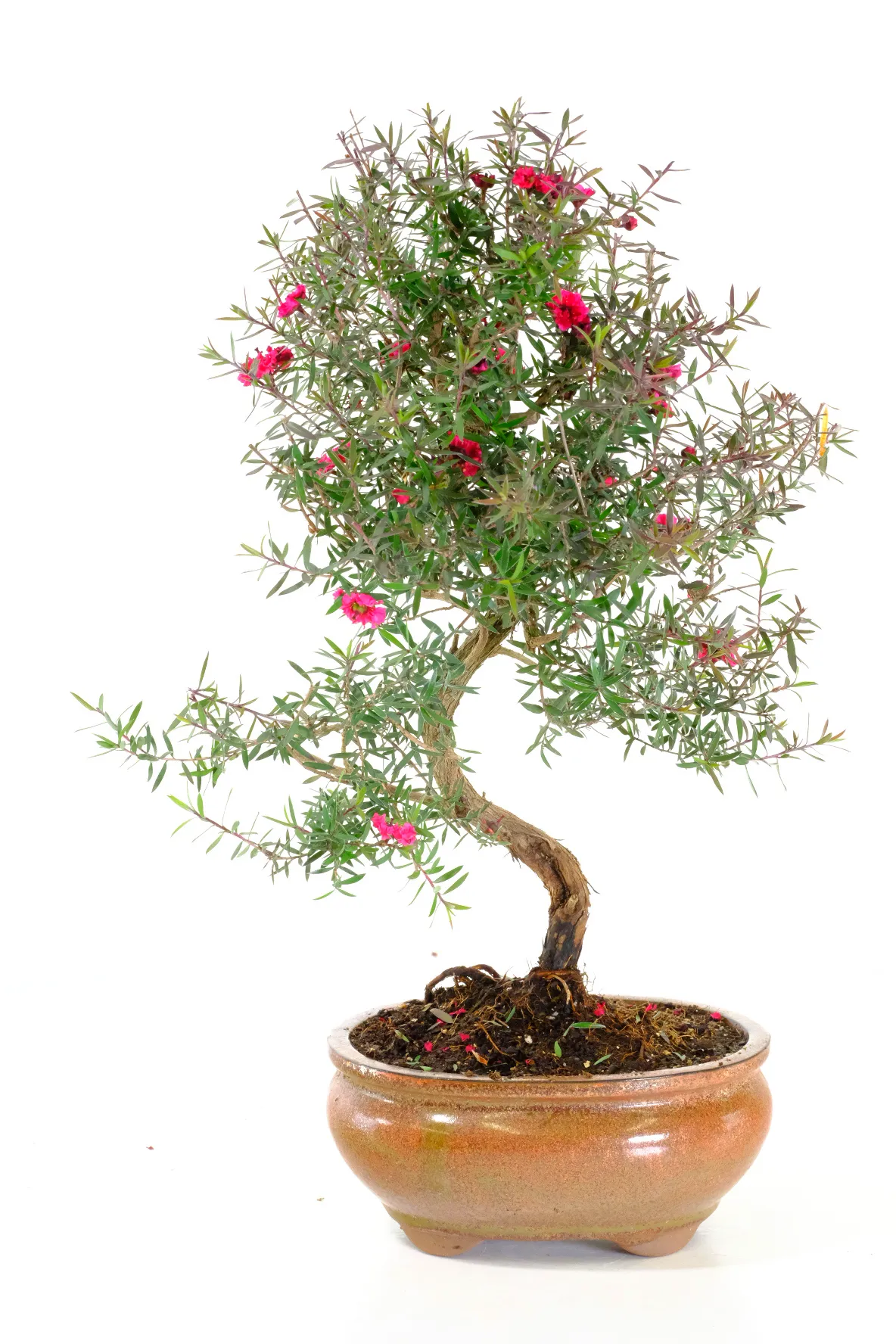
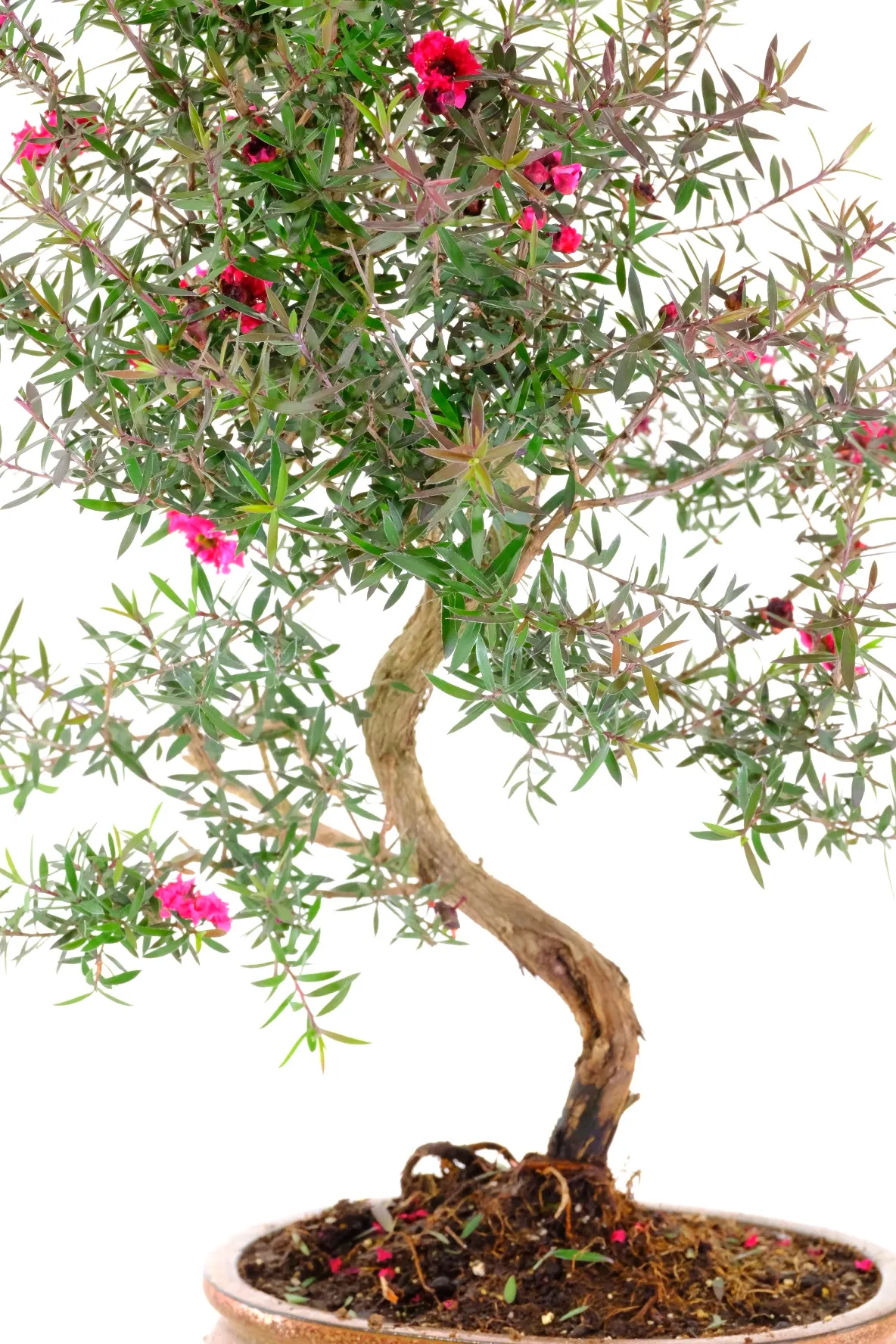
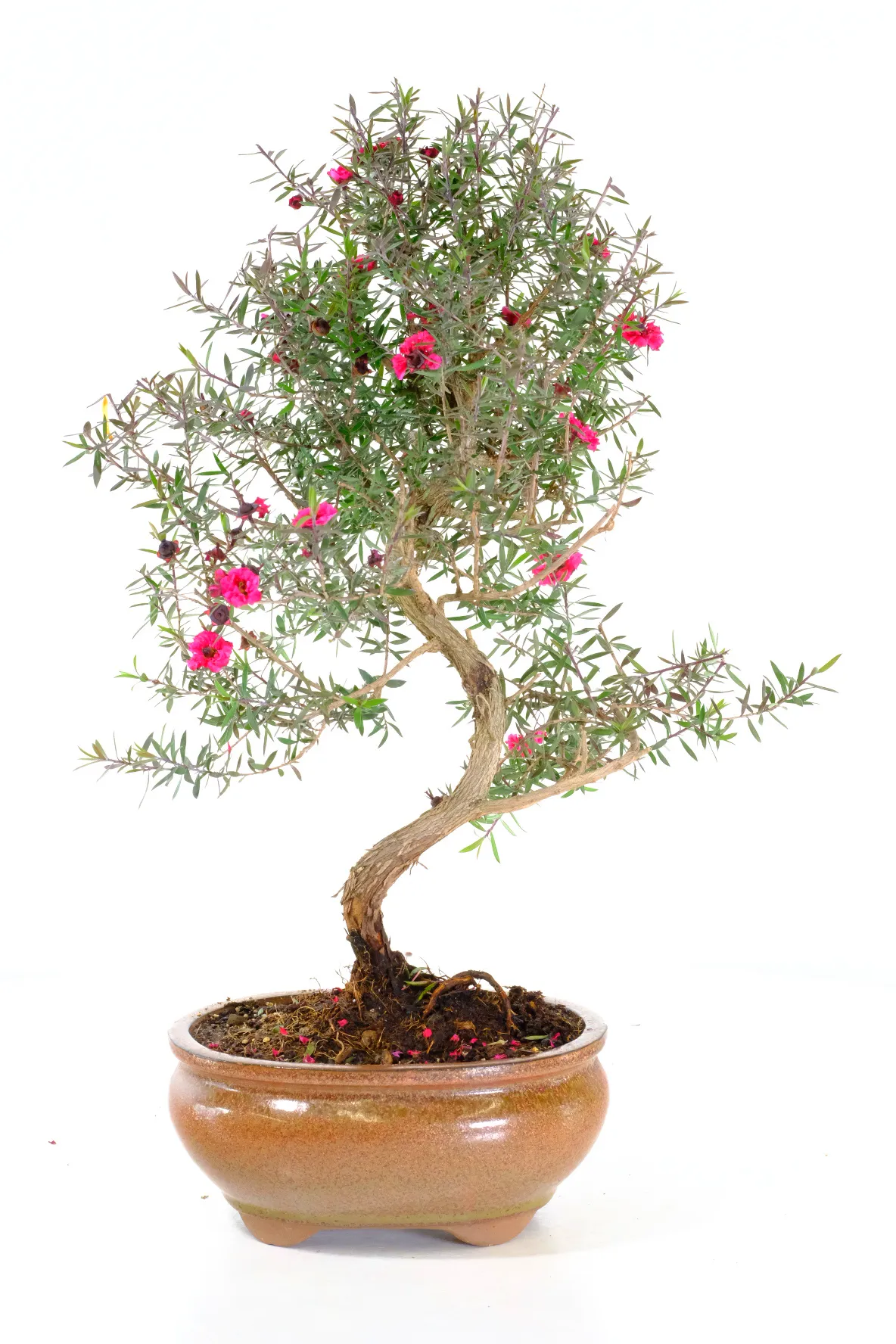
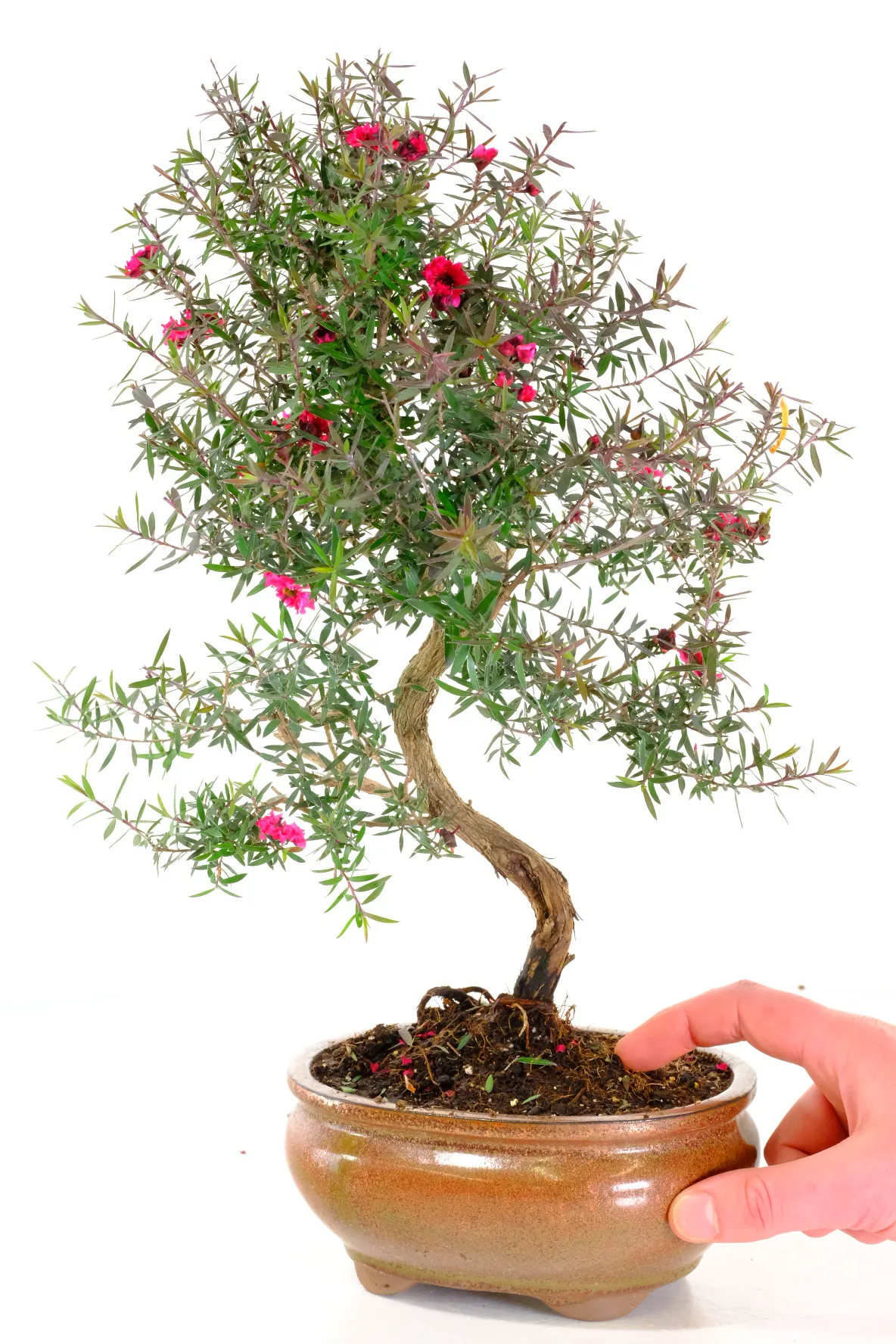
This elegant Leptospermum scoparium bonsai, commonly known as the New Zealand Manuka Tea Tree, is a striking flowering outdoor bonsai admired for its fine foliage and vibrant seasonal blooms. At approximately 12 years old, this refined specimen displays a graceful, naturally twisting trunk that rises through a canopy of abundant, neatly proportioned leaves.
The tree is presented in an oval bronze mottled glazed ceramic bonsai pot. Its warm, earthy tones complement the deep green foliage and vivid flowers, creating a harmonious and refined display.
One of the defining features of a Leptospermum scoparium bonsai is its naturally delicate foliage. The tree produces narrow, dark green leaves that are slightly glossy, aromatic, and perfectly scaled for bonsai. As a result, the canopy appears dense yet refined, giving the tree a soft, elegant finish.
Spectacular Spring and Early Summer Flowers
A Leptospermum scoparium bonsai is known for its impressive flowering display. In late winter, clusters of small buds begin to form along the gently arching branches, sitting neatly along each stem like tiny beads.
As spring moves into early summer, these buds open into waxy, double cerise-red flowers with darker centres. The blossoms often line the branches from base to tip, transforming the tree into a vivid and eye-catching display.
These flowers are also significant beyond their beauty. Bees visiting the blooms produce the well-known Manuka honey, valued worldwide for its natural antibacterial properties.
Distinctive Foliage and Cultural Significance
The foliage of Leptospermum scoparium holds both ornamental and historical importance. Its small leaves contain essential oils that have been used medicinally by the Māori people for generations.
As a member of the myrtle family, the Manuka Tea Tree carries deep cultural value in New Zealand. Traditionally, its wood was used for carving and tool-making, while its sawdust served as a natural smoking material for preserving food.
Because of this, the tree represents both natural beauty and practical significance within its native environment.
Symbolism of the Manuka Tea Tree
The Leptospermum scoparium is widely associated with healing, resilience, and protection. Its link to medicinal oils and Manuka honey reinforces its connection to wellbeing and restoration.
In addition, its ability to thrive in harsh coastal conditions symbolises strength and endurance, making it a powerful and meaningful bonsai.
Growing a Leptospermum scoparium Bonsai
A Leptospermum scoparium bonsai thrives outdoors in a bright position, ideally with full sun to partial shade. It prefers warm conditions and free-draining soil, and does not tolerate waterlogged roots.
During colder months, some protection is beneficial. Placing the tree in an unheated greenhouse or conservatory will help protect it from frost. While it can tolerate temperatures down to around –3°C, it performs best in a sheltered environment.
Originating from Australia and New Zealand, this species naturally thrives in sunny, coastal climates. As a result, it adapts well to bright gardens, patios, and protected outdoor bonsai displays.
A Beautiful and Refined Flowering Bonsai
With its elegant trunk movement, fine foliage, and striking red blossoms, this 12-year-old Leptospermum scoparium bonsai offers exceptional seasonal interest. Its combination of cultural heritage, natural resilience, and vibrant flowering display makes it one of the most rewarding and distinctive outdoor bonsai species to grow.