


Complete Guide to Juniper Bonsai
The Timeless Beauty of Chinese Juniper (Juniperus chinensis)
Few bonsai species capture the imagination quite like the Chinese Juniper, Juniperus chinensis. Hardy, evergreen, elegant, and incredibly versatile, it has long been regarded as one of the finest outdoor bonsai species in the world. Whether displayed in a dramatic windswept composition, cascade and semi-cascade or a refined informal upright style, the juniper possesses a natural sense of age, movement, and quiet strength that perfectly embodies the spirit of bonsai.
For many enthusiasts, the Chinese Juniper was their first introduction to bonsai. Its fame exploded worldwide through The Karate Kid movies, where Mr. Miyagi carefully pruned and shaped his iconic bonsai trees with calm precision and wisdom. Those scenes introduced millions of people to the meditative beauty of bonsai cultivation, and the Chinese Juniper became forever associated with patience, balance, and harmony.
Today, it remains one of the most popular bonsai trees for both beginners and advanced artists alike — not only because it is resilient and forgiving, but because it develops extraordinary character over time.
Why Juniper Bonsai Are So Loved
The Chinese Juniper has all the qualities bonsai artists seek:
- Naturally aged appearance
- Beautiful textured bark
- Elegant flowing movement
- Dense evergreen foliage
- Flexibility for wiring and styling
- Excellent resilience outdoors
- Ability to tolerate heavy shaping
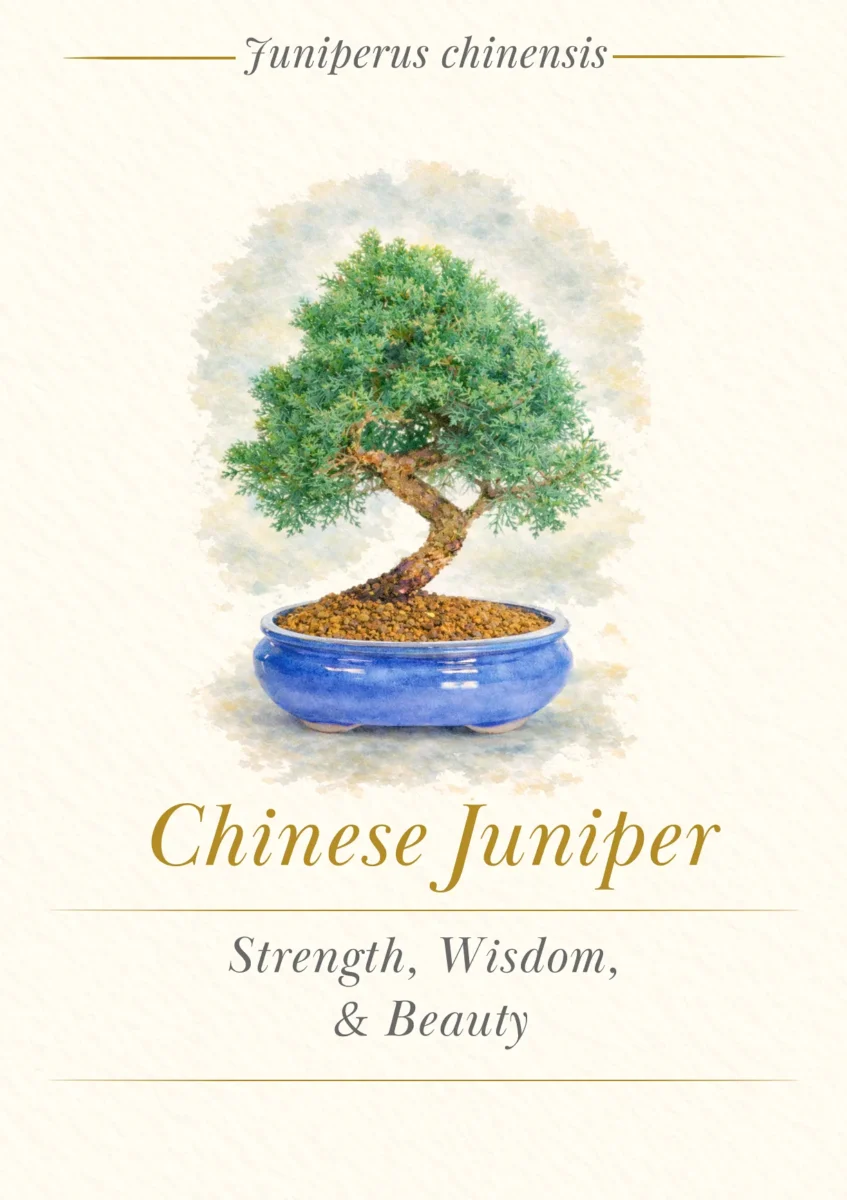
Its reddish-brown bark develops stunning texture and fissures with age, giving even relatively young trees an ancient appearance. The foliage is equally beautiful — rich emerald green with subtle blue-green or silvery tones that shimmer in sunlight.
Junipers also possess an unmistakably wild character. In nature they cling to cliffsides, rocky mountains, and exposed coastal landscapes where wind, snow, and harsh weather sculpt them into twisted living sculptures. Bonsai artists recreate this same drama in miniature form.
Junipers symbolise harmony, peace, strength, wisdom, and resilience — qualities reflected in their ability to endure difficult conditions while maintaining grace and beauty.
Juvenile and Mature Foliage
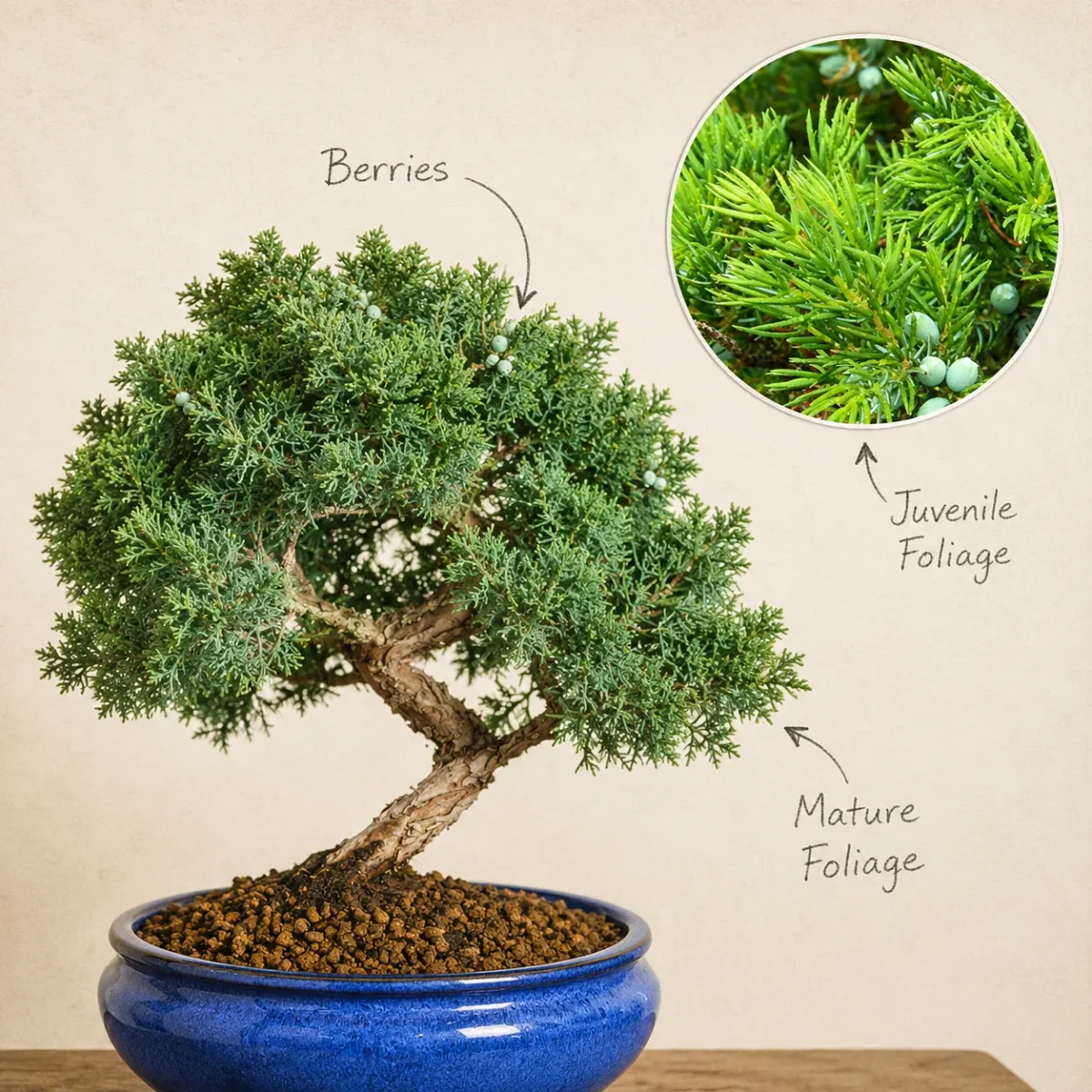
One particularly fascinating feature of the Chinese Juniper is its ability to produce two distinct types of foliage throughout its life.
Juvenile foliage appears sharp, spiky, and needle-like. It often develops on young plants, vigorous growth, or stressed branches and has a slightly wild, untamed appearance. This prickly foliage is usually lighter green and feels noticeably sharp to the touch.
As the tree matures and becomes more refined, it gradually produces mature foliage, which is softer, tighter, and scale-like in appearance. This mature foliage forms the dense, elegant foliage pads so highly prized in bonsai design. The soft sprays of emerald green growth create a far more aged and sophisticated appearance.
Experienced bonsai growers generally aim to encourage mature foliage because it gives the tree a cleaner, more refined silhouette. Good cultivation practices such as correct watering, careful feeding, proper sunlight, and consistent pruning all help promote mature scale foliage over juvenile growth.
Interestingly, heavy pruning, stress, or overly aggressive work can sometimes cause a mature juniper to revert temporarily back to juvenile foliage. This is perfectly normal and usually settles again as the tree regains strength and balance.
The Fruits of the Juniper Bonsai
One of the most fascinating features of junipers is their fruit.
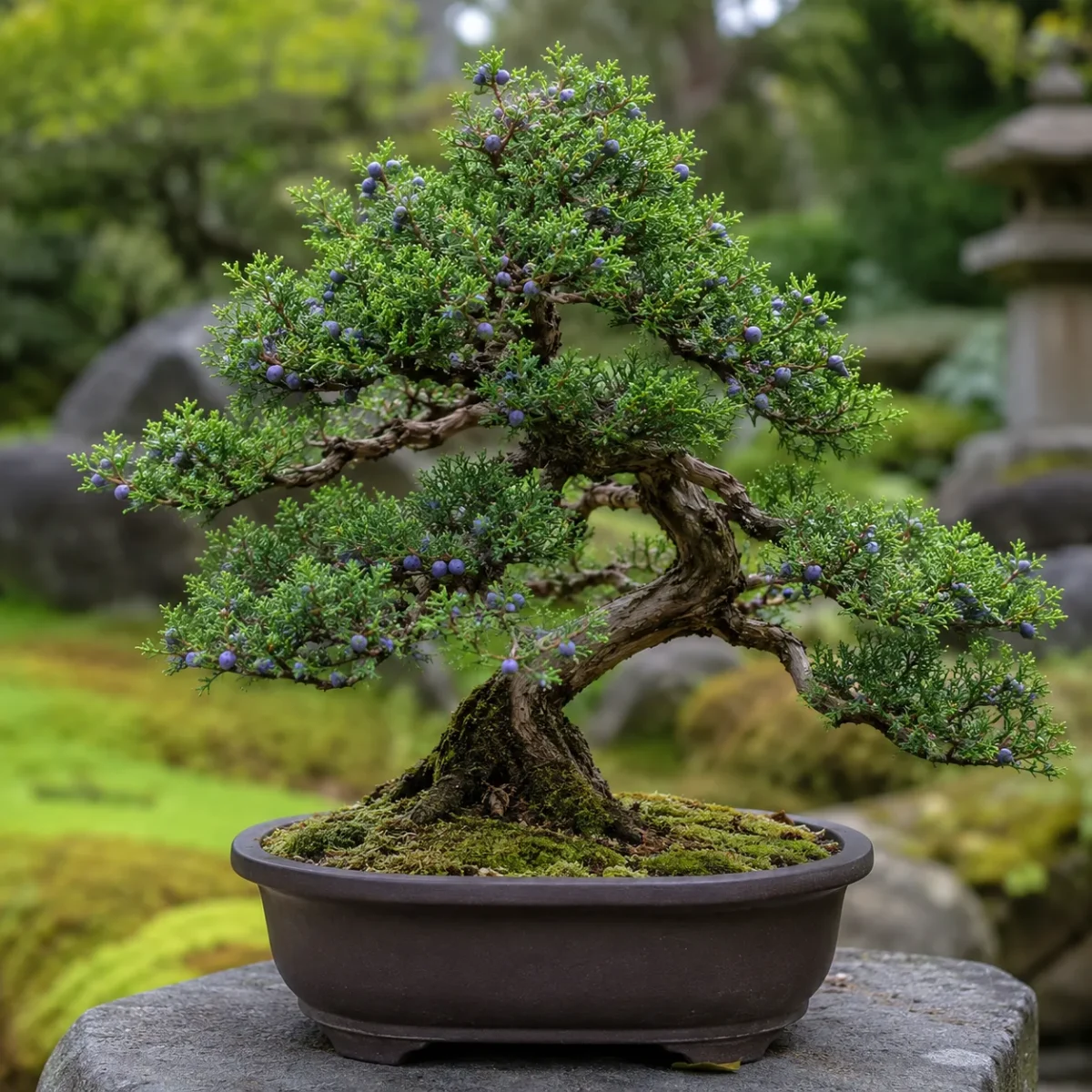
Technically, junipers do not produce true berries but rather fleshy seed cones commonly referred to as “juniper berries.” These small fruits begin green and gradually mature into dusty blue, purple-black, or deep indigo tones covered with a silvery bloom.
Against the emerald foliage, they are exceptionally attractive.
The berries have been valued for centuries for culinary, medicinal, and aromatic uses. They are famously used to flavour gin and have long been associated with cleansing and purification traditions.
On a bonsai, mature berries add another layer of realism and seasonal interest, giving the tree the appearance of a miniature ancient conifer growing in the wild.
A Bonsai Full of Character
Junipers are beloved because they age beautifully.
Over time, the trunk thickens and develops dramatic taper. The bark peels and flakes into rugged reddish strips. Deadwood features naturally emerge and can be artistically enhanced to create the illusion of great age.
This is one of the reasons junipers dominate professional bonsai exhibitions around the world.
Unlike many species, junipers also respond exceptionally well to jin and shari deadwood techniques:
- Jin — stripped dead branches bleached by sun and weather
- Shari — areas of exposed deadwood running along the trunk
These techniques create the appearance of a tree that has survived centuries of storms and hardship.
The contrast between vibrant green foliage and bleached deadwood is one of the defining aesthetics of classic juniper bonsai.
Popular Bonsai Styles for Junipers
The Chinese Juniper is incredibly versatile and can be styled into almost every traditional bonsai form.
Popular styles include:
- Informal upright
- Windswept (Fukinagashi)
- Cascade (Kengai)
- Semi-cascade
- Slanting
- Twin trunk
- Literati
- Forest planting
The windswept style is especially effective because junipers naturally evoke rugged mountain environments and harsh coastal conditions.
Their supple young branches make them ideal candidates for dramatic curves and flowing movement created through wiring.
Outdoor Trees — Never Indoor Trees
One of the biggest misconceptions about juniper bonsai is that they are indoor plants.
They are not.
Junipers are true outdoor trees and require natural seasonal changes to remain healthy. They need fresh air, direct sunlight, temperature variation, rain, and winter dormancy.
Keeping a juniper indoors long-term will eventually weaken and kill the tree, even with grow lights.
They thrive best outdoors in:
- Sunny patios
- Gardens
- Balconies
- Courtyards
A juniper bonsai should ideally receive at least several hours of direct sunlight every day.
Watering Juniper Bonsai Properly
Correct watering is essential.
Junipers prefer well-drained soil and absolutely dislike sitting wet around the roots. Constant soggy compost can quickly lead to root rot.
At the same time, they should never be allowed to dry out completely.
The ideal approach is:
- Water thoroughly
- Allow the soil surface to begin drying slightly
- Water again before the root ball becomes fully dry
In hot summer weather this may mean watering daily. During winter, watering requirements reduce significantly.
Good bonsai soil is crucial:
- Free draining
- Open textured
- Airy around the roots
Many enthusiasts use mixes containing:
- Akadama
- Pumice
- Lava rock
- Grit
The goal is oxygen around the roots while still retaining enough moisture for healthy growth.
Feeding and Fertilising
Junipers are vigorous growers and benefit greatly from regular feeding.
The best practice is to feed weekly from spring through to autumn using a liquid bonsai fertiliser. A slow-release fertiliser can also work very well as an alternative.
Feeding encourages:
- Dense foliage pads
- Vigorous root growth
- Strong colour
- Faster branch development
Avoid heavy feeding during winter dormancy.
Nitrogen-rich fertilisers in spring can help stimulate strong early-season growth, while balanced feeds later in the season support overall health and refinement.
Pruning and Pinching
One of the joys of growing juniper bonsai is refining the foliage pads.
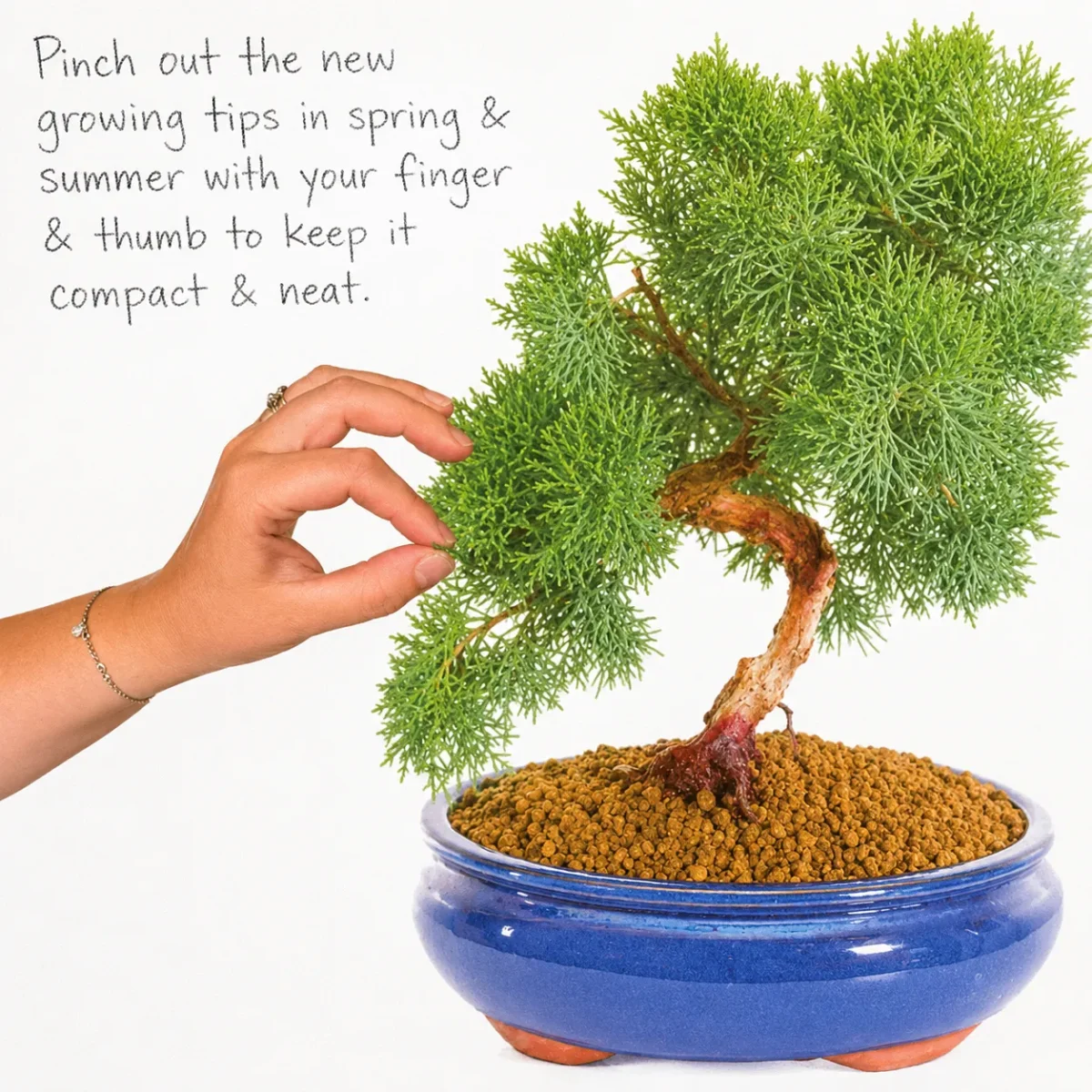
Rather than cutting new growth heavily with scissors, experienced growers often pinch out fresh shoots using finger and thumb. This helps maintain compact foliage and avoids unsightly browning at cut tips.
Pinching encourages:
- Dense foliage
- Fine ramification
- Compact growth pads
- Better silhouette definition
The process is wonderfully tactile and meditative.
You gently remove the extending soft tips while preserving the overall shape of the foliage cloud.
Importantly, junipers do not reliably back-bud on completely bare wood, so foliage should always remain on branches you wish to keep alive.
Wiring and Styling
Junipers are among the finest species for wiring.
Young branches are flexible and can be bent into elegant flowing curves that remain expressive for decades. This ability makes them ideal for creating dramatic movement and artistic character.
When wiring:
- Wrap the wire at roughly 45 degrees
- Use appropriate thickness wire
- Support branches while bending
- Work slowly and gradually
One of the most important aspects of wiring junipers is monitoring the wire carefully.
Because junipers can thicken surprisingly quickly during the growing season, wire may begin biting into the bark if left too long. While minor scarring can sometimes enhance an aged appearance, deep cuts can permanently damage the branch.
Check wired branches regularly.
If the wire begins cutting in:
- Remove it immediately
- Allow the branch to recover
- Reapply wire if additional shaping is needed
This process is entirely normal in bonsai development.
Often branches require multiple rounds of wiring over months or years to fully set into the desired position.
The beauty of juniper bonsai lies in this gradual refinement — shaping living material over time into something that feels ancient, balanced, and natural.
Repotting
Young junipers generally benefit from repotting every 3–5 years.
Older refined specimens may go much longer.
Repotting should usually occur in early spring just before vigorous growth begins.
When repotting:
- Reduce roots conservatively
- Retain some old soil around roots
- Ensure excellent drainage
- Avoid over-pruning roots
Junipers dislike aggressive root disturbance.
After repotting:
- Protect from extreme heat
- Reduce fertilising temporarily
- Maintain even moisture
Winter Care
Chinese Junipers are extremely hardy and tolerate cold weather very well.
However, bonsai roots are more exposed than garden trees because they are confined within shallow containers.
In severe freezes:
- Move trees into a sheltered cold frame
- Place against a house wall
- Protect from icy winds
The key is protecting the root system while still allowing the tree to experience winter dormancy. Bonsai root balls which become frozen for a length of time can dehydrate.
Fragrance and Atmosphere
Another often overlooked quality of junipers is their scent.
Gently crush the foliage between your fingers and a fresh, resinous aroma is released — clean, woody, crisp, and invigorating.
It evokes:
- Mountain forests
- Fresh rain
- Pine-covered hillsides
- Ancient wilderness
Many bonsai enthusiasts find caring for junipers deeply calming because of this sensory connection with nature.
Longevity and Legacy
With proper care, a juniper bonsai can live for generations.
Some specimens are passed down through families as living heirlooms, becoming more beautiful with every decade.
Perhaps this is why the species carries such powerful symbolism:
- endurance
- patience
- resilience
- harmony
- wisdom
A good juniper bonsai is never truly finished.
It evolves continuously, season after season, year after year — shaped slowly by both nature and the hands of the artist.
And that is precisely what makes it so captivating.

Related Content
Easiest Bonsai To Keep Alive
Looking for the easiest bonsai to keep alive? Discover the best beginner-friendly indoor and outdoor bonsai trees, including Chinese Elm, Dwarf Jade, Chinese Juniper, and Pine bonsai. Learn…
Read More
Best Bonsai Tree Gifts for Men
Looking for the perfect gift for him? Discover the best bonsai trees for men, including the symbolic Chinese Elm, Dwarf Jade and Juniper bonsai. Explore thoughtful personalised bonsai…
Read More
Lloyd Noall – Founder of Bonsai Direct
In this personal article, bonsai master Lloyd Noall shares his favourite bonsai species after nearly 40 years in the art of bonsai. From majestic oak bonsai and colourful…
Read More
Are Bonsai Trees Hard to Take Care Of?
Find out why bonsai trees are actually easy to keep, and which varieties are best for beginners. Discover why bonsai trees developed a reputation for being difficult to…
Read More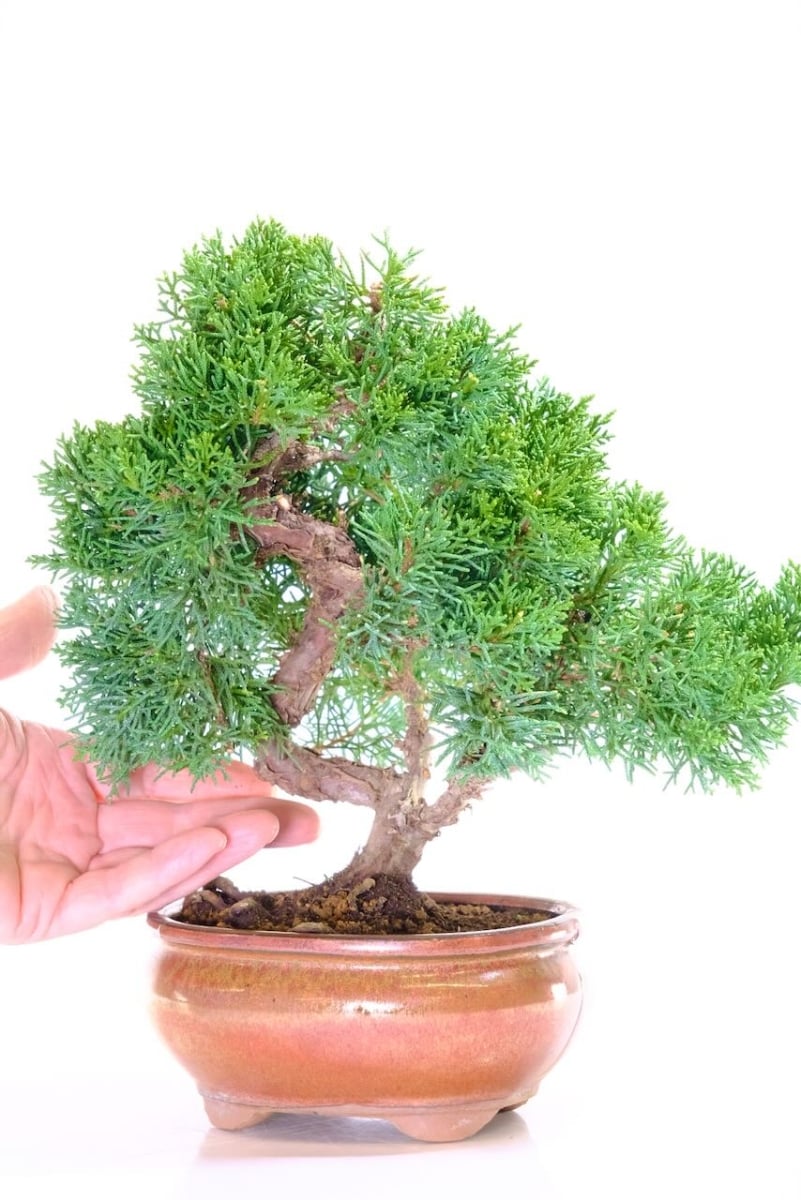
Why Wisteria and Weeping Willow Can Be Poor Bonsai Choices (and What to Buy Instead)
Learn why wisteria and weeping willow aren't as great for bonsai as you might think. Discover what varieties of bonsai to consider instead.
Read More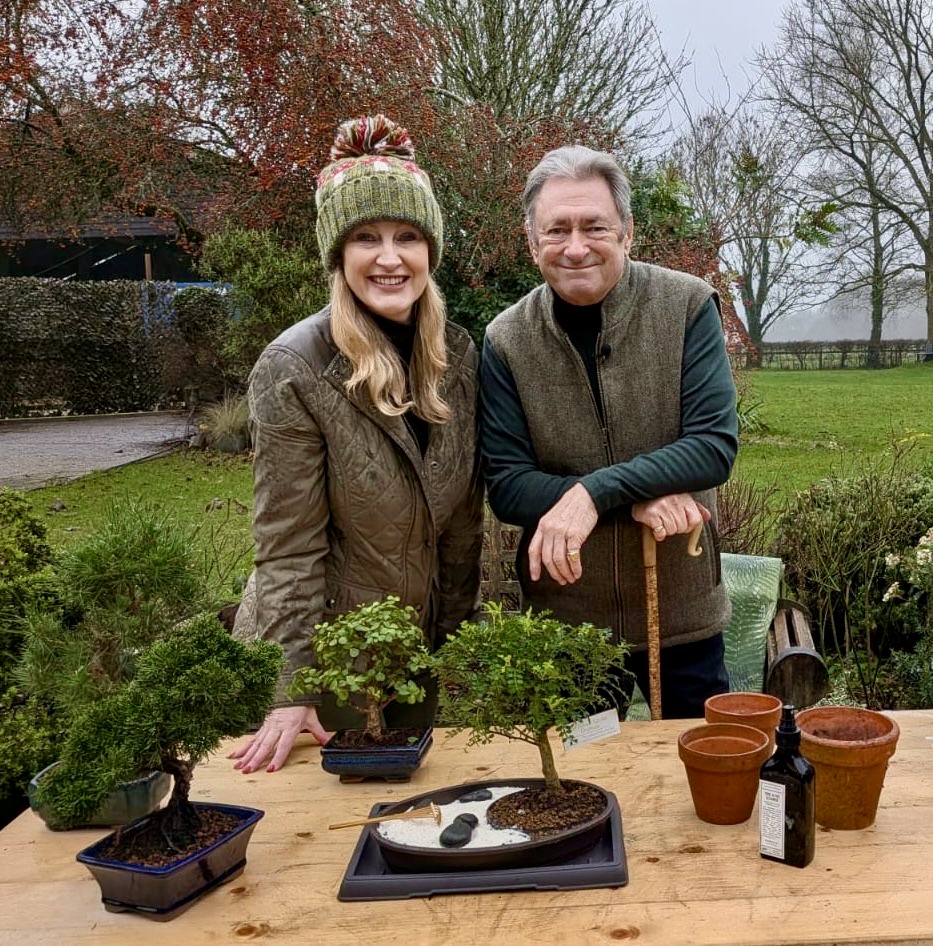
Bonsai Takes Centre Stage on Love Your Weekend with Camilla Bassett-Smith and Alan Titchmarsh
Bonsai Direct trees featured on the latest episode of Love Your Weekend. Discover the magic of bonsai trees, focussing on four beautiful beginners varieties.
Read More
Cat’s Bonsai Journey
Discover Cat’s inspiring bonsai journey — from beginner challenges to rediscovering calm, creativity, and community through bonsai. Learn why bonsai can support mental wellbeing, accessibility, and meaningful connection.
Read More
Bonsai Seeds and Seedlings: What You Need to Know Before You Start
Learn why bonsai seeds are not usually the best way to grow a bonsai tree. Instead, consider a seedling that already has an established root system.
Read More