

Few bonsai species possess the rugged character and timeless beauty of the Cork Oak Bonsai. Scientifically known as Quercus suber, this magnificent evergreen oak develops one of the most distinctive trunks in the tree world. Its deeply fissured cork bark, naturally aged appearance and compact evergreen foliage create the impression of an ancient woodland giant in miniature.
Native to the western Mediterranean, particularly Portugal, Spain, southern France and parts of North Africa, the Cork Oak has evolved to survive harsh summers, strong winds and even wildfires. Over centuries it has become famous not only for its extraordinary bark, but also for producing the cork used in wine bottles, flooring and countless sustainable products.
As a bonsai, Quercus suber offers something truly special. Even relatively young specimens develop impressive texture and character, while older trees can resemble centuries-old oaks found growing on rugged Mediterranean hillsides. Combined with its evergreen foliage and excellent hardiness, it is one of the most rewarding outdoor bonsai species available.
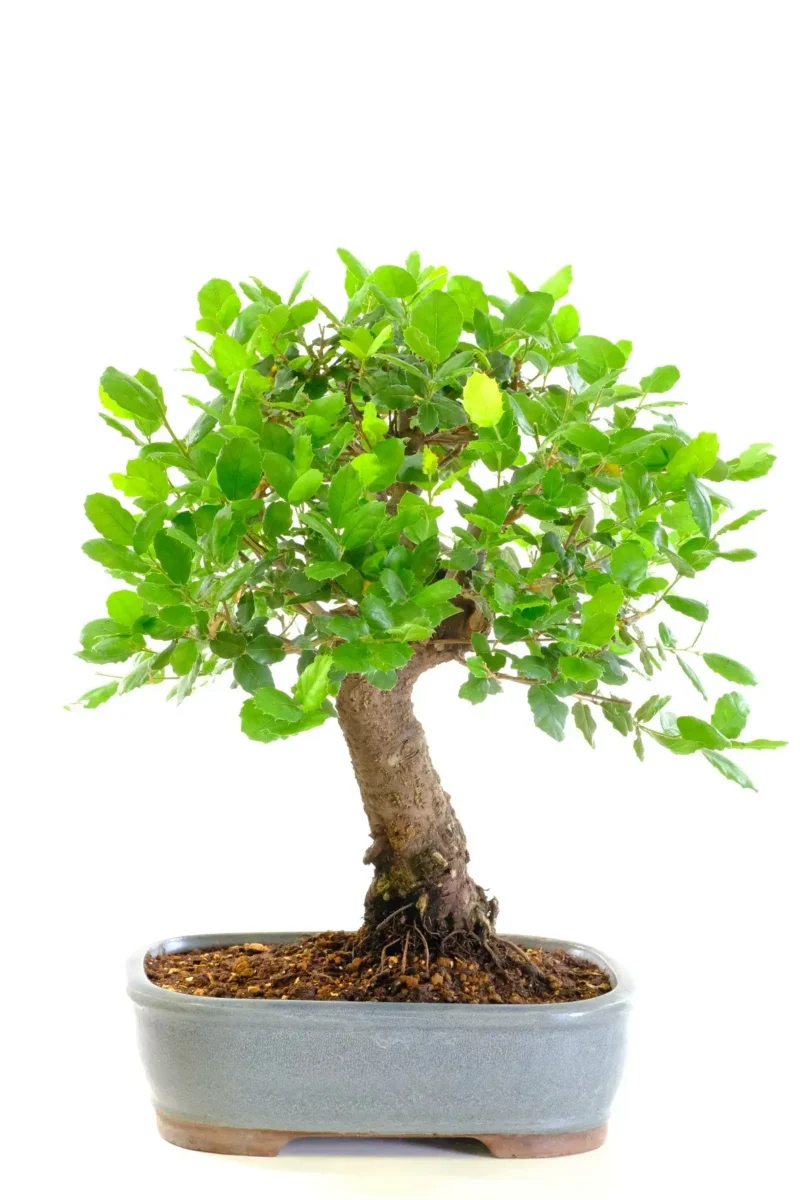
Cork Bark Oak – Quercus suber
Why Cork Oak Makes Such an Exceptional Bonsai
Many oak species produce beautiful bonsai, but Cork Oak possesses qualities that set it apart.
Unlike deciduous oaks, Quercus suber remains evergreen throughout the year. Its attractive canopy stays green even during winter, providing year-round interest in the garden.
Perhaps its greatest feature is its remarkable bark. As the tree matures, the trunk produces thick layers of soft cork that crack into dramatic ridges and plates. This deeply textured bark gives even younger bonsai an appearance of incredible age and maturity.
The species also responds well to pruning. New shoots readily emerge after trimming, allowing growers to build dense ramification and refined branch structures over time.
Its naturally small leaves, rugged trunk, impressive bark and slow, controlled growth combine to create an ideal bonsai specimen capable of improving for decades.
Beautiful Evergreen Leaves
The leaves of Quercus suber are one of its most understated but attractive features.
Each leaf measures approximately 2–5 cm long and has an oval to elongated shape with gently serrated margins. Young foliage emerges soft, fresh green before gradually deepening into a rich glossy dark green.
Turn a leaf over and you’ll discover a completely different appearance. The underside carries a soft grey-white felted coating that reflects sunlight and reduces moisture loss during hot Mediterranean summers.
This subtle contrast creates wonderful movement as breezes turn the leaves, revealing flashes of silver beneath the canopy.
Because the leaves are naturally quite compact, Cork Oak bonsai maintain convincing proportions without requiring excessive defoliation or manipulation.
The dense evergreen foliage also provides year-round colour, unlike deciduous oaks that stand bare throughout winter.
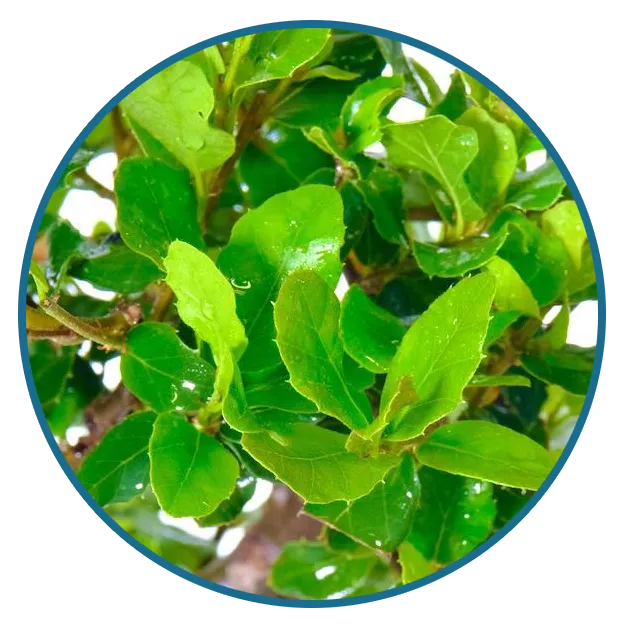
Leaves of Cork Bark Oak –
Quercus suber
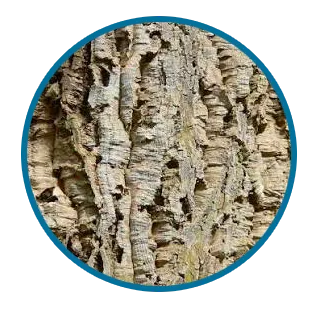
Showing the fissures of the mature cork bark oak
The Remarkable Cork Bark
The bark is undoubtedly the defining feature of this remarkable species.
Rather than forming hard wood externally like most trees, Cork Oak develops a thick layer of living cork cells. These cells create a lightweight but incredibly durable protective coating around the trunk and branches.
As the tree ages, the bark becomes increasingly rugged, deeply cracked and sculptural. Thick ridges twist around the trunk, creating dramatic texture that immediately suggests great age.
One extraordinary characteristic is that this cork layer can regenerate after harvesting. In commercial cork forests, mature trees are carefully stripped every nine to twelve years without harming the living tree beneath. Fresh cork slowly grows back, making cork one of the world’s most sustainable natural materials.
For bonsai enthusiasts, this cork bark is priceless. It gives the illusion of a centuries-old oak despite the tree being much younger.
Delicate Flowers with an Important Purpose
Although Cork Oak bonsai are primarily grown for their bark and structure, they also produce subtle seasonal flowers.
During spring, male flowers appear as elegant yellow-green catkins hanging beneath the branches. Each catkin contains hundreds of tiny pollen-producing flowers that sway gently in the breeze.
Female flowers are much smaller and far less noticeable. They emerge individually or in small clusters near the tips of young shoots.
The tree relies entirely upon wind pollination, with pollen carried naturally between trees.
While the flowers are not showy, they mark the beginning of another fascinating stage in the tree’s annual cycle.
Characterful Acorns
Following successful pollination, Cork Oaks gradually produce attractive acorns.
These typically mature during autumn and measure between 2–4 cm long. Each sits inside a beautifully textured cup covered with overlapping scales.
The glossy brown nuts contrast wonderfully against the evergreen foliage and rugged bark.
Acorns are rich in symbolism across many cultures. They represent fertility, new beginnings, prosperity and future potential because every mighty oak begins life as a single small seed.
On mature bonsai, the appearance of acorns adds another layer of authenticity that makes the tree resemble a full-sized woodland giant in miniature.
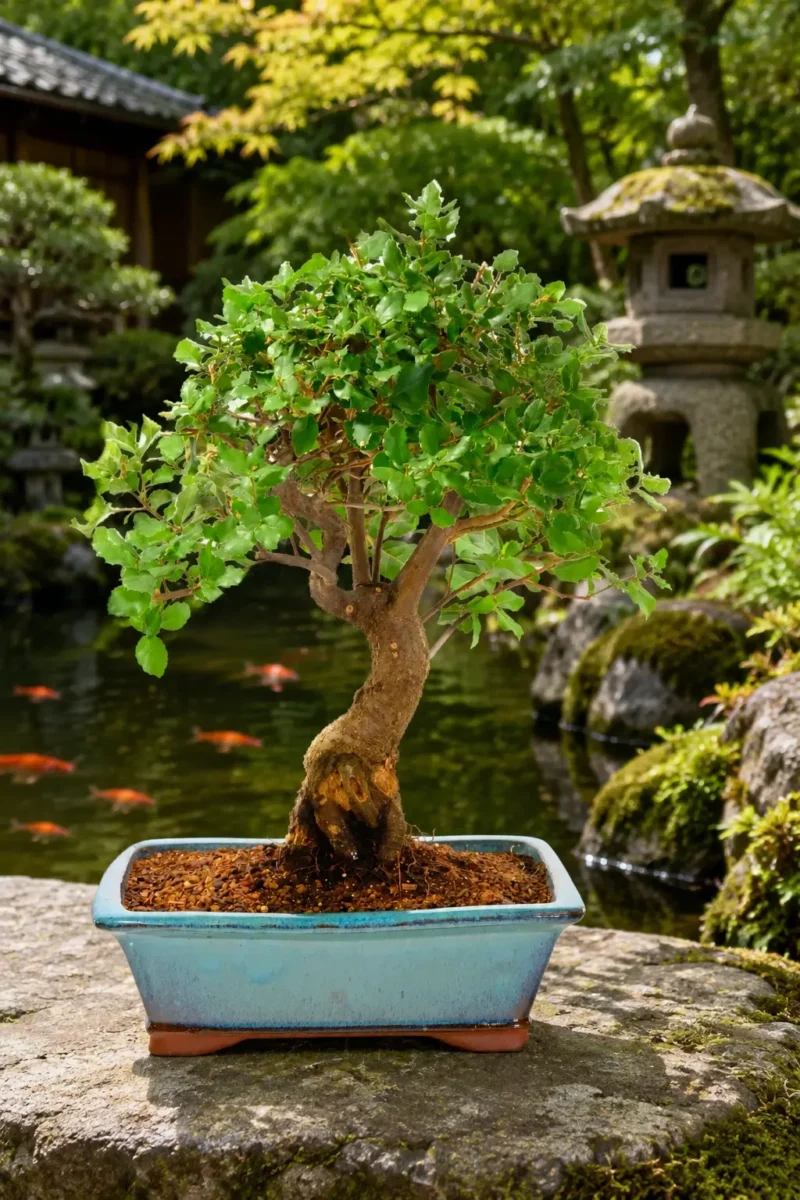
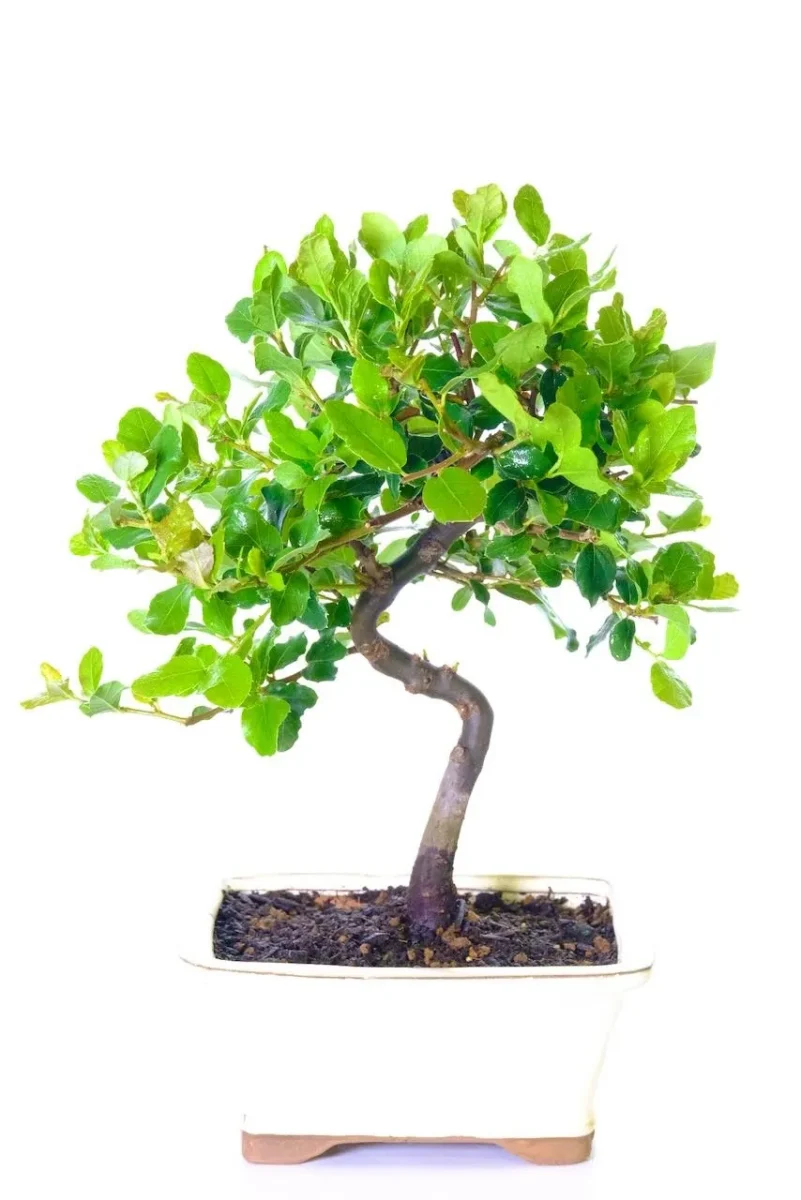
Cork Bark Oak Bonsai from Bonsai Direct
An Evergreen Bonsai That Thrives Outdoors
Cork Oak Bonsai is a hardy outdoor species that enjoys fresh air and changing seasons.
Unlike indoor bonsai, it should be grown outside throughout the year where it experiences natural sunlight, rainfall and seasonal temperature changes.
It thrives in full sun and appreciates good airflow. During particularly dry periods it benefits from regular watering, although established trees cope well with occasional drought thanks to their Mediterranean heritage.
The species tolerates frost surprisingly well once established, although young trees and freshly repotted specimens benefit from protection during prolonged severe freezes.
Its evergreen foliage means there is always something attractive to admire, regardless of the season.
Symbolism of the Cork Oak
For thousands of years, oak trees have symbolised some of humanity’s most admired qualities.
Strength.
Wisdom.
Endurance.
Stability.
Resilience.
The Cork Oak embodies these meanings perfectly. It withstands drought, wind, poor soils and even wildfire, continuing to grow where many other trees would fail.
Its acorns add another layer of symbolism, representing fertility, hope, growth and new beginnings. Tiny seeds eventually become enormous trees capable of living for centuries.
Many people choose a Cork Oak bonsai to celebrate milestones, retirements, new homes or major life achievements because it serves as a lasting reminder that great things develop patiently over time.
Why Bonsai Enthusiasts Love Quercus suber
Experienced growers often describe Cork Oak as one of the most satisfying species to develop.
Every year the bark becomes more dramatic.
The trunk gains additional character.
Branches mature into increasingly refined silhouettes.
Unlike species prized mainly for flowers or autumn colour, Cork Oak continues improving visually throughout its entire lifetime.
Older specimens possess extraordinary presence that few other bonsai can equal.
It is a tree that genuinely rewards patience.
12 Fascinating Facts About Cork Oak Bonsai
- Cork Oak is the only tree whose bark can be commercially harvested without cutting the tree down.
- A healthy tree can produce cork for well over 150 years.
- The first cork harvest usually takes around 25 years before the bark is thick enough.
- Portugal produces over half of the world’s cork supply.
- The bark protects the tree from intense Mediterranean wildfires.
- Cork is naturally waterproof, lightweight and highly insulating.
- Some Cork Oak trees are more than 250 years old.
- Every wine cork begins as the bark of a living Cork Oak.
- The tree remains evergreen, unlike many other oak species.
- Mature bonsai may eventually produce fully formed acorns.
- Cork bark becomes increasingly dramatic every single year, making older bonsai especially valuable.
- Every Cork Oak bonsai develops its own completely unique bark pattern, meaning no two trees ever look alike.
Frequently Asked Questions
Is Cork Oak Bonsai suitable for beginners?
Yes. While it grows more slowly than some species, it is robust, forgiving and naturally hardy, making it an excellent choice for anyone wanting an outdoor bonsai with lasting character.
Is Quercus suber evergreen?
Yes. Cork Oak retains its leaves throughout the year, providing constant colour and interest.
Can Cork Oak Bonsai produce acorns?
Yes. Mature, healthy specimens can produce flowers followed by acorns, especially when grown outdoors in favourable conditions.
Why is the bark so thick?
The thick cork layer evolved as protection against heat, drought and wildfire. It also gives the tree its unique aged appearance.
Where should I keep my Cork Oak Bonsai?
Always outdoors in a sunny position with good airflow. Like all hardy outdoor bonsai, it benefits from experiencing the natural seasons.
A Living Symbol of Strength and Longevity
Few bonsai combine rugged beauty, fascinating history and enduring symbolism as successfully as the Cork Oak Bonsai. From its beautifully textured cork bark and evergreen canopy to its delicate spring catkins and symbolic autumn acorns, every part of Quercus suber tells the story of resilience and longevity.
Its naturally aged appearance, compact foliage and ability to develop extraordinary character over time make it one of the finest evergreen outdoor bonsai species. Whether you’re starting your bonsai journey or expanding an established collection, a Cork Oak Bonsai offers something increasingly rare in today’s fast-paced world—a living tree that becomes more beautiful, more valuable and more meaningful with every passing year.



0 replies