


Japanese Maple Bonsai (Acer palmatum): The Complete Care Guide
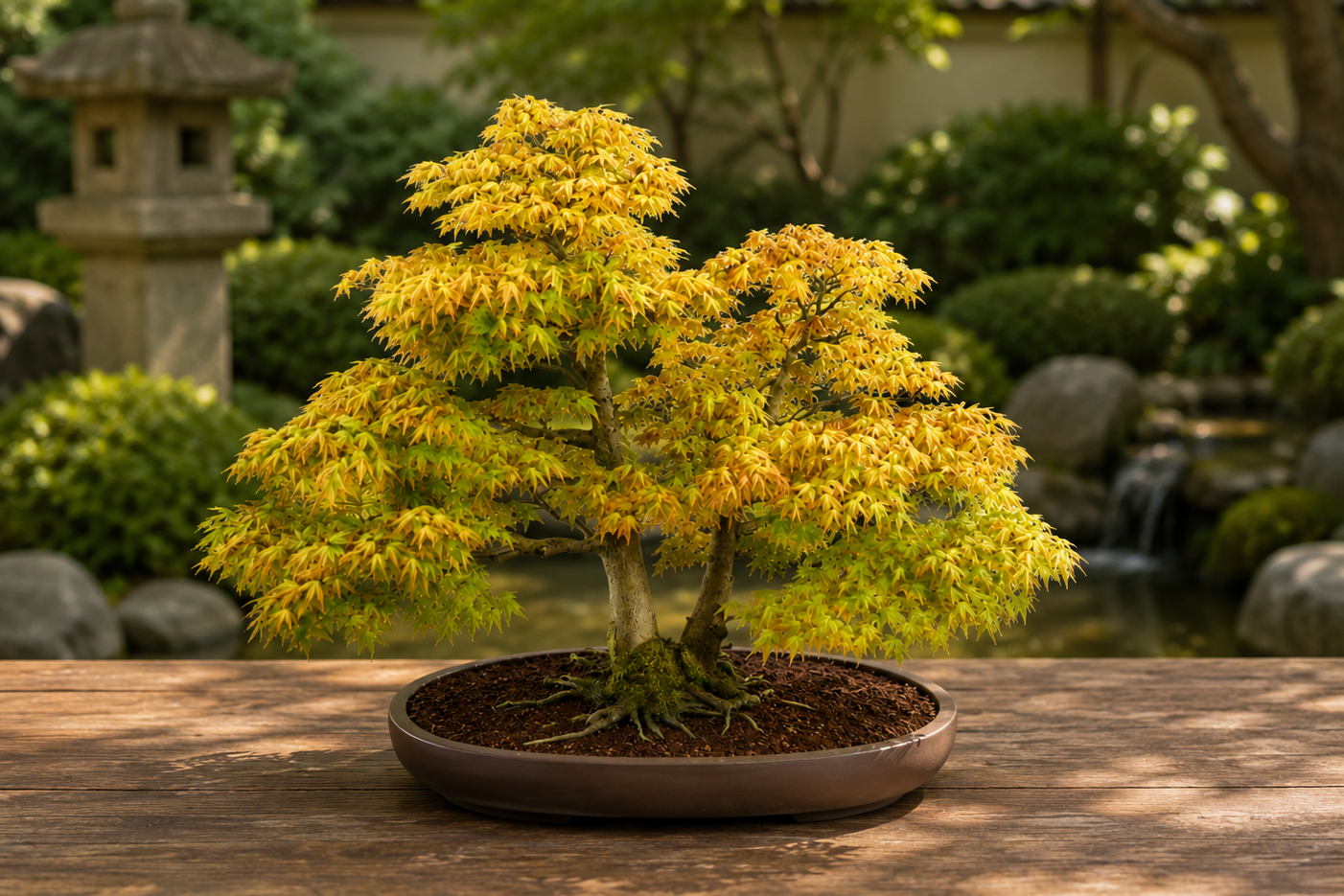
Few trees are as admired as the Japanese Maple (Acer palmatum). Renowned for its delicate leaves, graceful branching and spectacular autumn colour, it has become one of the most sought-after species for bonsai enthusiasts. Whether you’re considering buying your first Japanese Maple bonsai or already own one, understanding its care requirements will help it thrive for many years.
In this guide, we’ll explain what makes Japanese Maple bonsai so special, whether they can be grown indoors, how to care for them throughout the seasons and why they remain one of the most rewarding outdoor bonsai trees.
Can You Bonsai a Japanese Maple?
Absolutely. In fact, the Japanese Maple is one of the most popular and beautiful species used for bonsai.
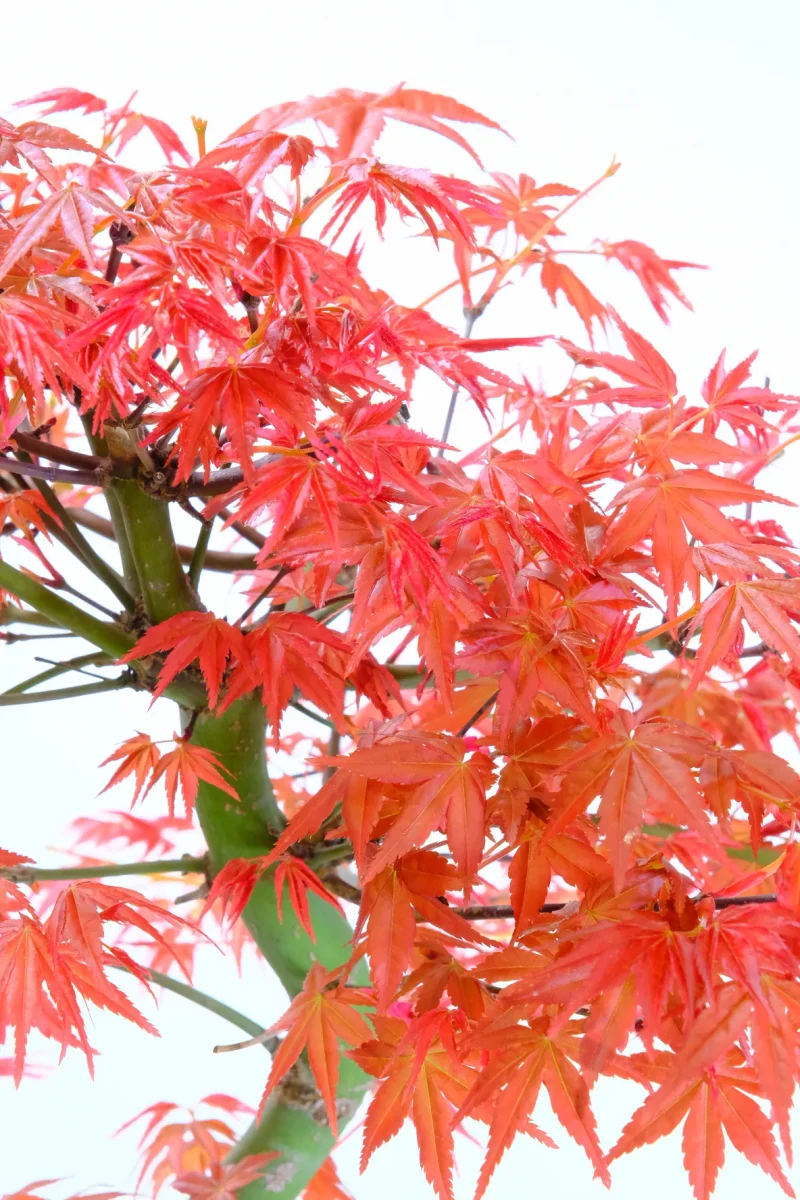
Its naturally elegant shape, fine branching and stunning seasonal colour make it perfectly suited to bonsai cultivation. Over time, careful pruning and training create the character and balance that make mature Japanese Maple bonsai so highly prized.
There are many different varieties of Acer palmatum, each offering unique leaf colours, shapes and growth habits. Some produce vibrant green foliage throughout spring and summer before turning brilliant shades of orange, crimson and scarlet in autumn, while others emerge with striking red or purple leaves.
Are Japanese Maple Bonsai Suitable for Beginners?
Japanese Maples are often recommended for enthusiasts who have mastered the basics of bonsai care.
While they are not difficult to grow, they do appreciate consistent watering, protection from extreme conditions and careful pruning to maintain their beautiful shape.
If you’re looking for your very first bonsai and worry about remembering to water, you may find a more forgiving species such as the Portulacaria afra (Money Tree) easier to begin with. However, for gardeners prepared to spend a little time learning their tree’s needs, Japanese Maples are incredibly rewarding.
Can a Japanese Maple Bonsai Be Kept Indoors?
This is one of the questions we’re asked most often.
The answer is no. Japanese Maple bonsai are outdoor trees and should be grown outside throughout the year.
Like all temperate trees, they rely on the changing seasons to regulate their natural growth cycle. They need cool winter temperatures to enter dormancy before producing healthy new growth in spring.
Keeping a Japanese Maple indoors for long periods deprives it of the seasonal changes it depends on and will usually weaken the tree over time.
If you’re looking for a bonsai to grow permanently indoors, it’s better to choose a species that naturally thrives in warmer conditions.
Where Should I Position My Japanese Maple Bonsai?
Japanese Maples enjoy a bright position outdoors where they receive plenty of natural light.
Morning sunshine with some protection from the hottest afternoon sun is often ideal, particularly during periods of very hot weather when delicate leaves can become scorched.
Good air circulation also helps keep the tree healthy and reduces the risk of fungal problems.
Watering Your Japanese Maple Bonsai
Japanese Maples like consistently moist soil, but they should never be left sitting in water.
Rather than watering to a timetable, check the soil regularly. During warm summer weather your tree may need watering every day, while in cooler months watering is much less frequent.
Using a watering can, water thoroughly until water runs freely from the drainage holes, then allow the soil surface to begin drying before watering again.
Because Japanese Maples have fine roots, allowing the soil to dry out completely can quickly stress the tree, particularly during hot or windy weather.
Feeding Your Japanese Maple
Regular feeding throughout the growing season encourages healthy growth, strong roots and vibrant foliage.
A balanced bonsai fertiliser applied according to the growing season will help maintain the tree’s health while supporting the development of fine branching and good autumn colour.
Pruning and Shaping
One of the great pleasures of owning a Japanese Maple bonsai is developing its elegant branch structure over time.
Routine pruning encourages ramification (the development of fine branches), helping to create the refined appearance associated with mature bonsai.
Larger structural pruning is usually carried out during the tree’s dormant period, while lighter trimming helps maintain shape during the growing season.
As every tree develops differently, pruning should always be guided by the individual tree rather than following a strict formula.
Seasonal Care
Spring
Fresh leaves emerge in beautiful shades of green, red or bronze depending on the variety. Growth begins rapidly, making this an important time to monitor watering and feeding.
Summer
Check your tree daily during warm weather. Japanese Maples appreciate consistent moisture and some protection from intense afternoon sunshine during heatwaves. Feed once a week with our bonsai fertiliser.
Autumn
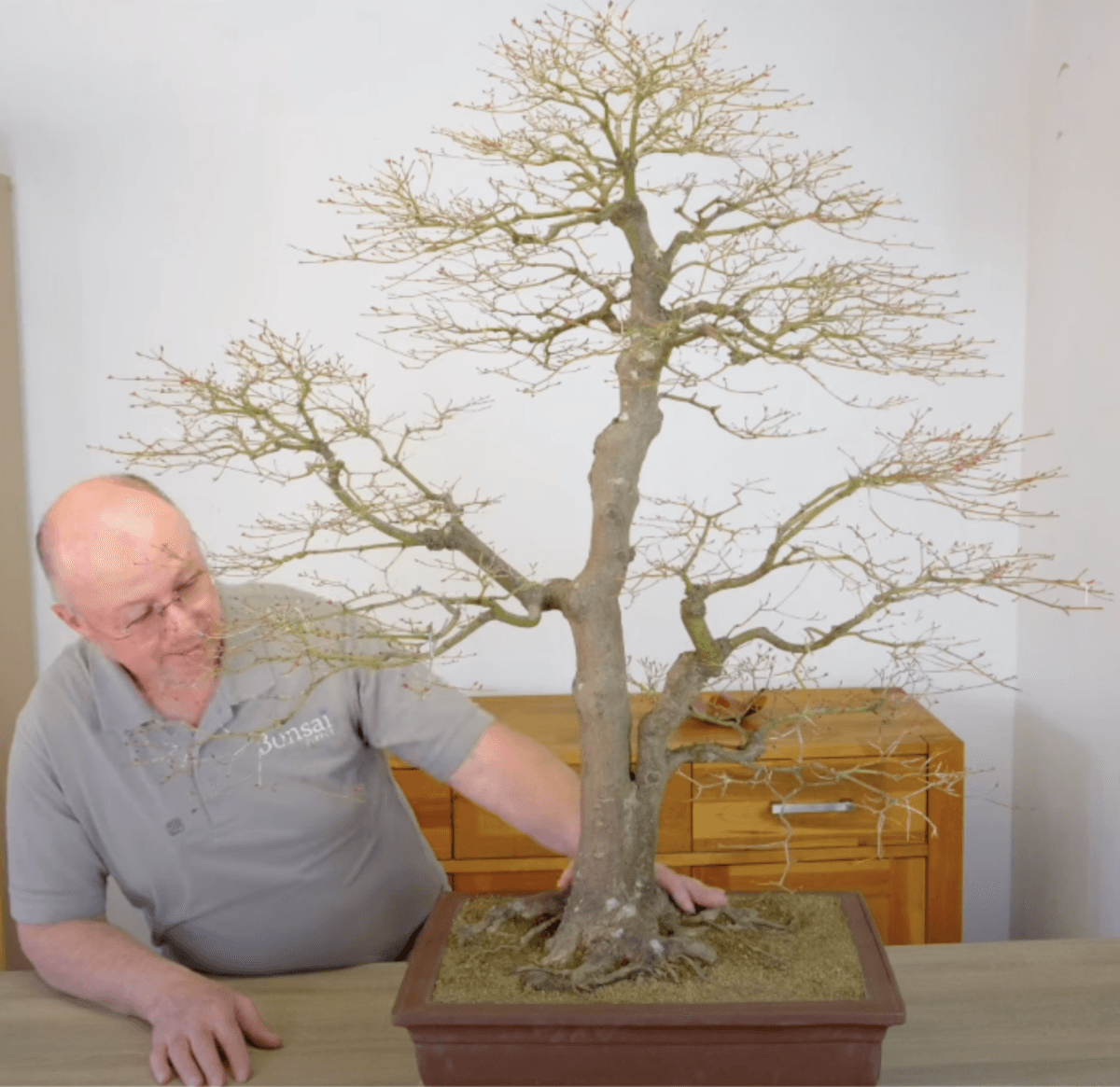
This is when Japanese Maples truly shine. Their spectacular display of reds, oranges and golds makes them one of the highlights of any bonsai collection.
As temperatures fall, reduce feeding and continue watering as needed.
Winter
Japanese Maples are fully hardy outdoor trees and should remain outside during winter dormancy. Protecting the roots from prolonged freezing conditions is beneficial, particularly for smaller bonsai pots.
Common Questions About Japanese Maple Bonsai
Why are my Japanese Maple leaves turning brown?
Brown leaf edges are often caused by strong winds, hot afternoon sun or the tree drying out between waterings. Consistent watering and choosing a suitable position usually help prevent this.
Can I grow a Japanese Maple bonsai from seed?
Yes, although growing from seed requires patience. Most bonsai enthusiasts choose an established tree, allowing them to enjoy shaping and developing it much sooner.
How fast does a Japanese Maple bonsai grow?
Growth varies depending on the variety, age of the tree and growing conditions. With good care, Japanese Maples steadily develop into increasingly beautiful bonsai over many years.
Why Choose a Japanese Maple Bonsai?
Japanese Maple bonsai are admired for their graceful form, changing seasonal colour and timeless elegance. They reward careful attention with year-round interest and become more beautiful as they mature.
While they require outdoor growing conditions and regular care, they remain one of the most iconic and rewarding bonsai species available.
If you’re looking for a bonsai that offers spectacular autumn colour, delicate foliage and endless opportunities for artistic development, it’s hard to find a better choice than the Japanese Maple.
Ready To Own One?
Buy a beautiful Japanese Maple bonsai tree today with fast, free delivery. Choose you nominated day delivery at the checkout. We dispatch all of our bonsai trees from our family-run Devon nursery, where each tree is grown and cared for by experts. All orders for bonsai include free care instructions, so if you are looking for a Japanese Maple Bonsai for sale, you have come to the right place.
Related Content
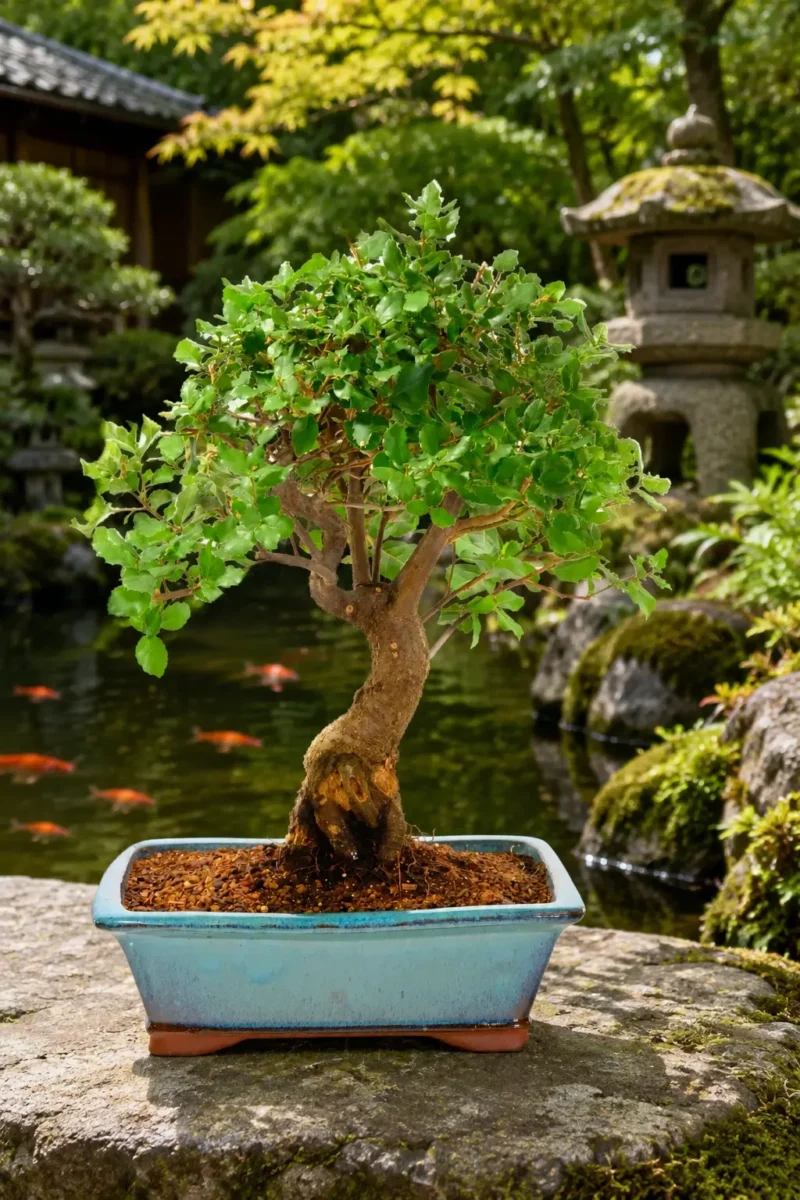
Cork Oak Bonsai (Quercus suber) – The Evergreen Bonsai with Remarkable Cork Bark
Discover why the Cork Oak Bonsai (Quercus suber) is one of the world's most remarkable evergreen bonsai trees. Famous for its extraordinary cork bark, rugged character, evergreen foliage…
Read More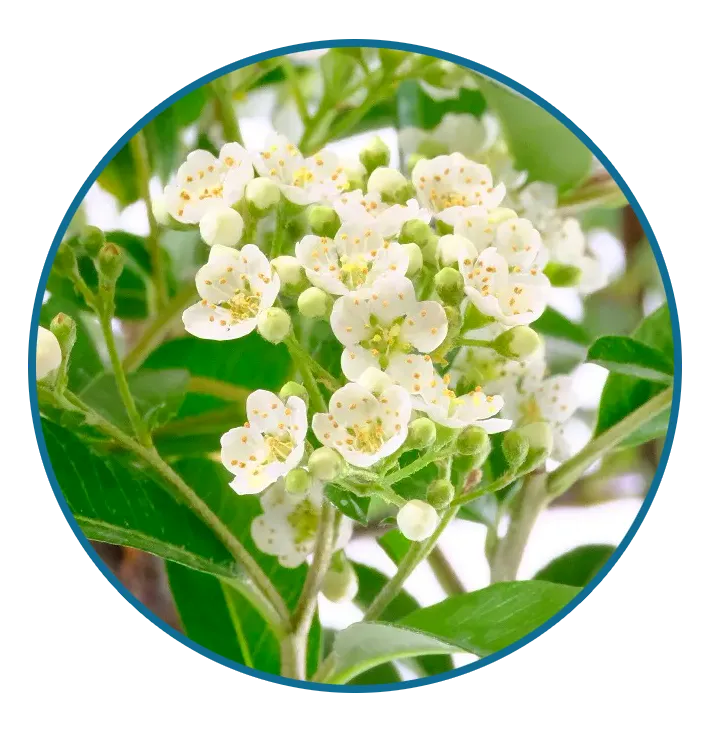
Pyracantha Bonsai Trees – The Spectacular Firethorn Bonsai with Flowers, Berries and Year-Round Interest
Discover why the Pyracantha Bonsai Tree (Firethorn) is one of the most spectacular outdoor bonsai species. With masses of spring flowers, vibrant autumn berries, evergreen foliage and year-round…
Read More
Pomegranate Bonsai Trees (Punica granatum) – Ancient Beauty, Fiery Flowers and a Living Connection to the Mediterranean
Discover why the Pomegranate Bonsai Tree (Punica granatum) is one of the most rewarding flowering bonsai species. With vibrant orange-red flowers, fascinating fruits, attractive bark and rich Mediterranean…
Read More
Leptospermum scoparium Bonsai: The New Zealand Manuka Tea Tree Guide
The Manuka Tea Tree Bonsai Few flowering bonsai species combine elegance, cultural significance, and seasonal beauty quite like Leptospermum scoparium. Commonly known as the New Zealand Manuka Tea…
Read More
Fast Growing Bonsai Trees – The Best Bonsai Species for Quick Growth
Discover the best fast growing bonsai trees, including Chinese Elm, Chinese Sweet Plum, Cherry and Maple bonsai varieties. Learn which bonsai species develop quickly and are ideal for…
Read More
Easiest Bonsai To Keep Alive
Looking for the easiest bonsai to keep alive? Discover the best beginner-friendly indoor and outdoor bonsai trees, including Chinese Elm, Dwarf Jade, Chinese Juniper, and Pine bonsai. Learn…
Read More
Can Any Tree Be a Bonsai?
Can any tree become a bonsai? While many species can be trained, not all are suited to the art. Learn which trees work best and how to choose…
Read More
Displaying Outdoor Bonsai Indoors
Discover how to safely display an outdoor bonsai indoors, why you shouldn't keep them inside for s long period of time, and why you shouldn't bring them in…
Read More
Hi do you have in stock for a christmas present a outside acer bonsai and if so price please.
Hi,
I am really sorry, but we have sold out of Acers for this season. We will probably have them back in next Spring at the earliest.
I apologise for any inconvenience.
Best Wishes,
Olea