

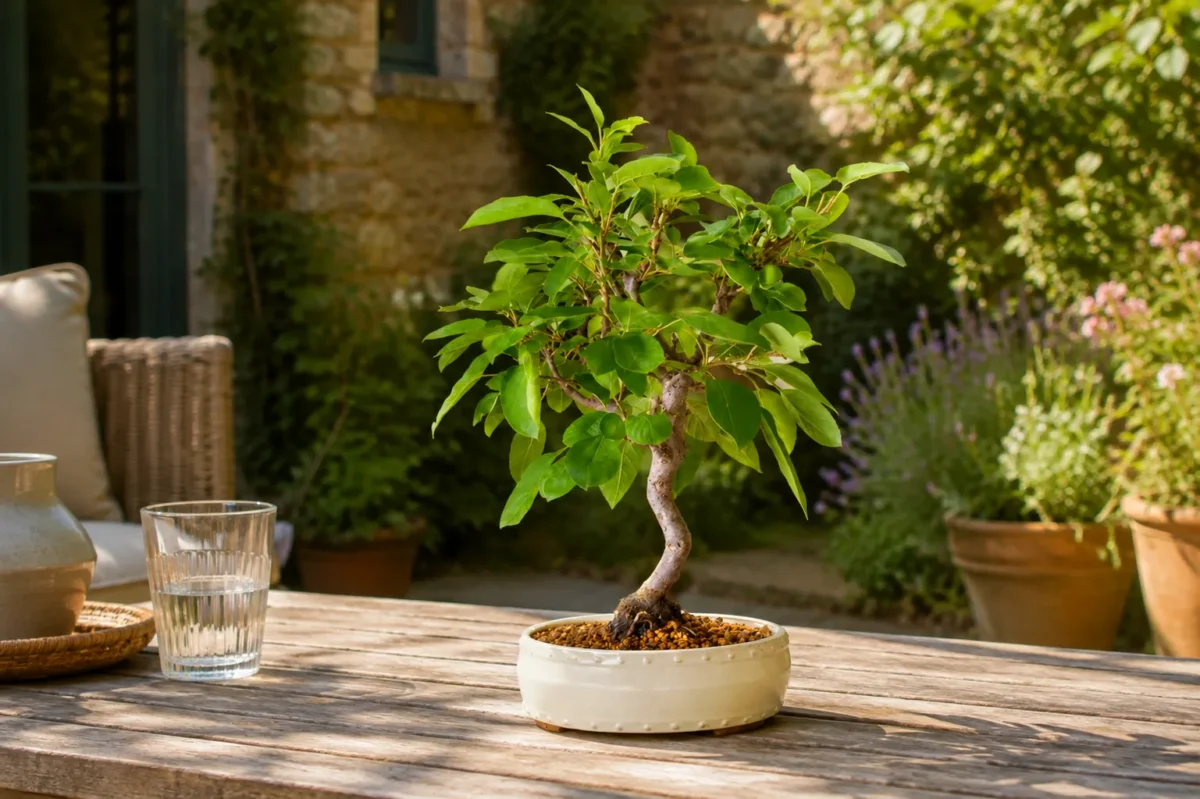
Few bonsai species can rival the year-round appeal of the Crab Apple Bonsai. Known botanically as Malus sylvestris, the European Crab Apple offers something special during every season. Delicate spring blossom, fresh green foliage, colourful autumn fruit and attractive winter branch structure combine to create one of the most rewarding hardy outdoor bonsai species available.
For many enthusiasts, a Crab Apple Bonsai represents everything bonsai should be. It changes constantly throughout the year, rewards good care with spectacular displays and connects us closely to the natural seasons. Whether you are a beginner or an experienced collector, few species provide such a complete bonsai experience.
What is a Crab Apple Bonsai?
The European Crab Apple (Malus sylvestris) is the wild ancestor of many cultivated apple varieties grown throughout Europe today. Long before modern orchards existed, wild crab apples grew naturally in woodlands, hedgerows and open countryside.
This fascinating tree has been part of the European landscape for thousands of years. Archaeological evidence suggests people were collecting crab apples long before cultivated apples became widespread.
As a bonsai, Malus sylvestris offers all the charm of a mature apple tree condensed into miniature form. It develops attractive bark, fine branching, beautiful flowers and colourful fruits while remaining perfectly suited to bonsai cultivation.
The Meaning of Crab Apple Bonsai Trees
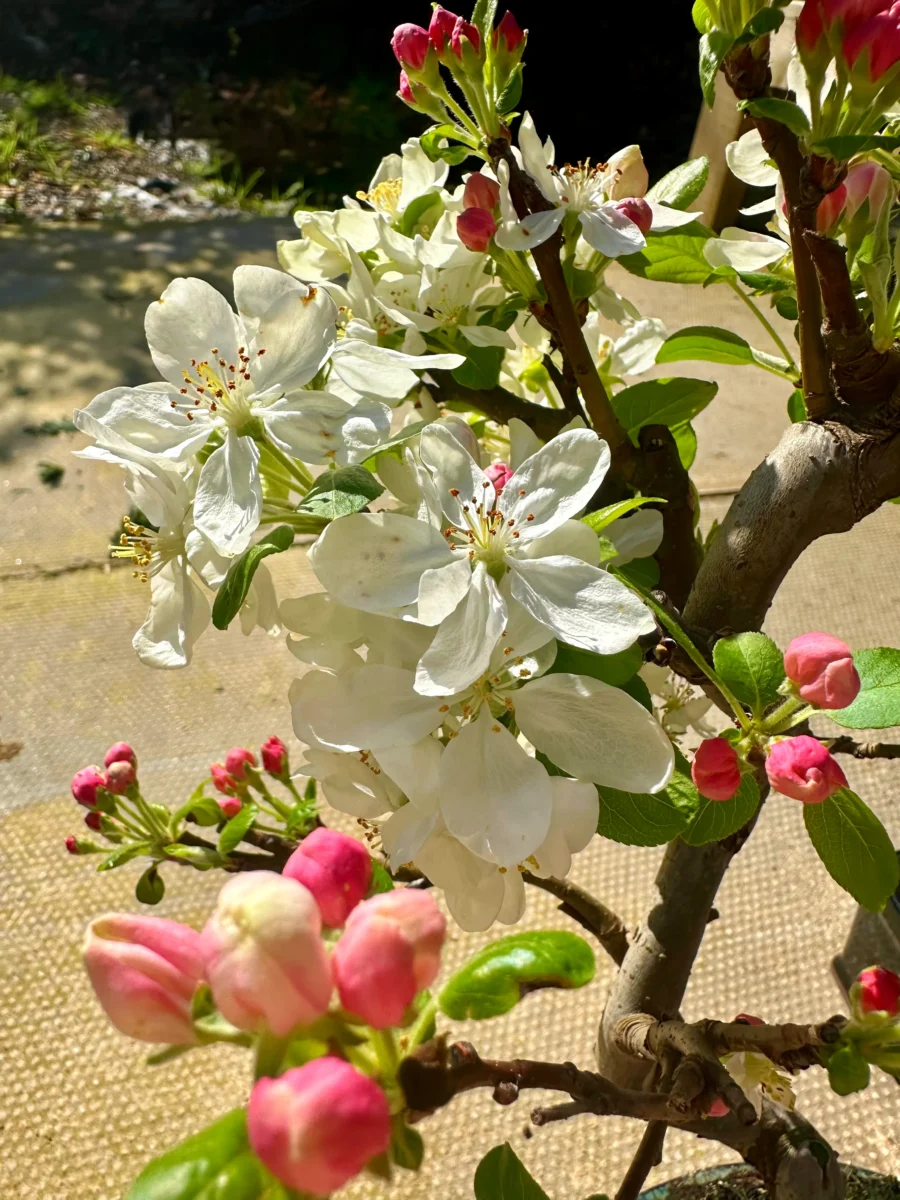
Crab Apple Bonsai trees symbolise abundance, renewal, fertility, happiness and the rewards of patience.
The tree’s annual cycle perfectly reflects these themes. Each spring brings fresh blossom and new beginnings. Summer sees vigorous growth and development. Autumn rewards the tree with colourful fruit, while winter provides a period of rest before the cycle begins again.
This symbolism makes Crab Apple Bonsai a meaningful gift for new homes, weddings, anniversaries, retirements and life milestones.
Many people also associate apple trees with knowledge, wisdom and prosperity due to their importance throughout history and folklore.
Spectacular Spring Blossom
Spring is arguably the most magical season for a Crab Apple Bonsai.
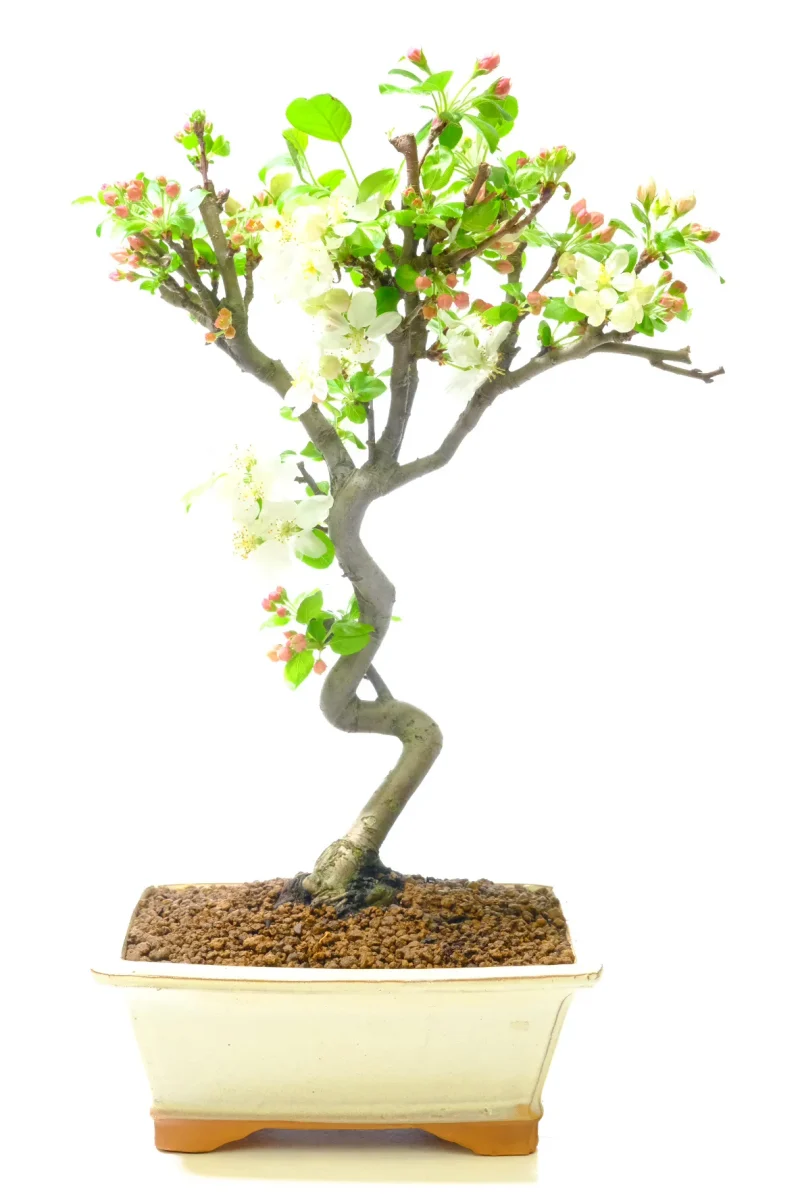
As temperatures rise, the tree awakens from dormancy and produces masses of flower buds along its branches. These buds often begin as rich pink or crimson before gradually opening into delicate flowers.
Depending on the variety and individual tree, the blossoms may appear in shades of:
- White
- Soft pink
- Deep pink
- Rose pink
The flowers cover the branches in extraordinary numbers, often appearing before the foliage has fully emerged.
When viewed in full bloom, a mature Crab Apple Bonsai resembles a miniature flowering orchard tree. The display is often breathtaking.
In addition to their beauty, the flowers attract pollinating insects, helping support local wildlife and adding another dimension to the bonsai experience.
Fresh Green Summer Foliage
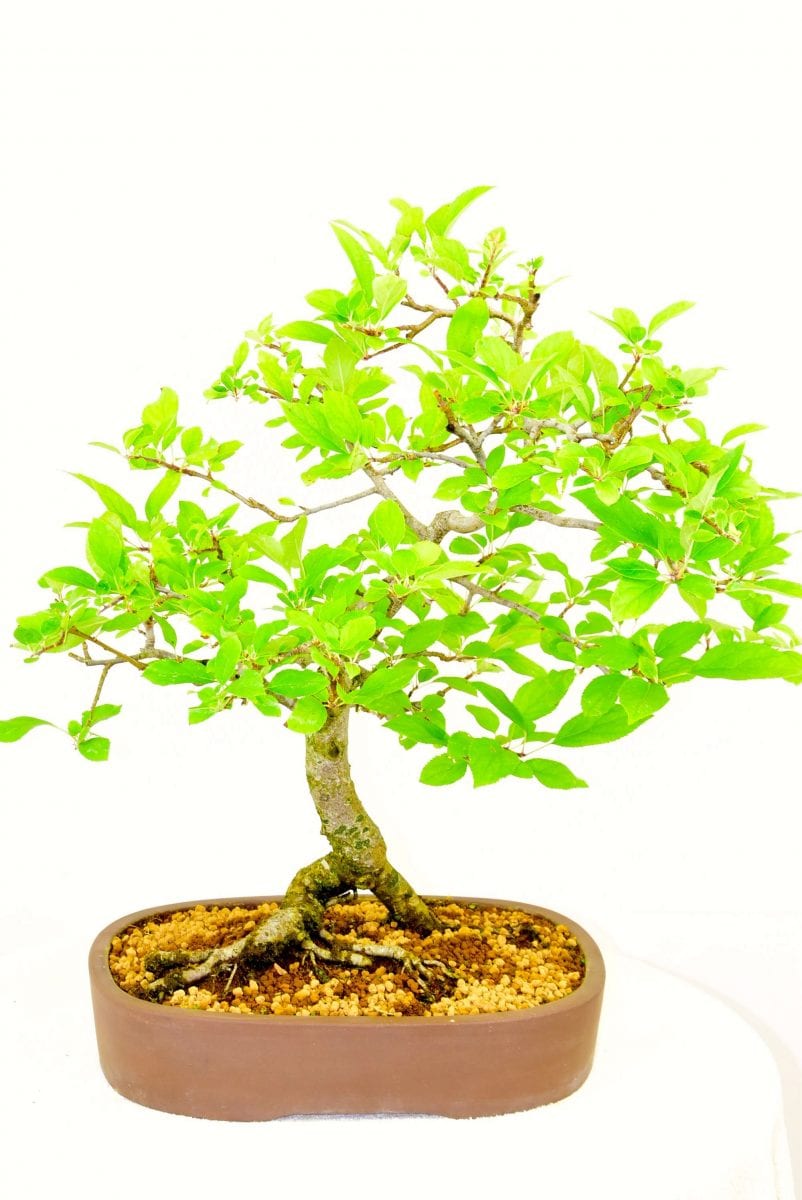
Following the blossom display, fresh green leaves emerge across the canopy.
The foliage is attractive and finely proportioned, creating a dense canopy that enhances the illusion of a mature tree in miniature form.
Throughout summer, the leaves provide structure and balance while the developing fruit slowly begins to form.
Healthy Crab Apple Bonsai often display vibrant growth during this period, making summer an excellent time to appreciate their overall shape and branch structure.
Colourful Autumn Fruits
For many enthusiasts, autumn is the season when Crab Apple Bonsai truly shines.
Following successful pollination, tiny fruits begin to mature across the branches. These miniature apples often appear in shades of:
- Bright red
- Deep crimson
- Orange-red
- Golden yellow
The fruit can remain on the tree for many weeks, sometimes well into winter.
The visual effect is extraordinary. Tiny apples hang from carefully refined branches, creating a display rarely matched by any other bonsai species.
Many collectors consider fruiting Crab Apple Bonsai among the most beautiful bonsai trees of all.
Winter Elegance
Even after the leaves have fallen, the Crab Apple Bonsai continues to impress.
Winter reveals the intricate branch structure developed over years of careful pruning and training. Every branch becomes visible, showcasing the artistry behind the bonsai.
The bare silhouette often possesses a natural elegance that many enthusiasts appreciate just as much as the flowering or fruiting displays.
A well-developed Crab Apple Bonsai genuinely offers four seasons of interest.
Why Crab Apple Bonsai Are So Rewarding
Few species offer as much variety throughout the year.
A single Crab Apple Bonsai provides:
- Spring blossom
- Summer foliage
- Autumn fruit
- Winter branch structure
This constant seasonal change means the tree never feels static. It evolves continuously and rewards close observation.
Many bonsai species excel in one particular season. Crab Apples excel in all four.
Interesting Facts About European Crab Apples
The European Crab Apple is full of fascinating history and botanical significance.
It Helped Create Modern Apples
Malus sylvestris is one of the ancestors of many cultivated apple varieties grown around the world today.
Without wild crab apples, many of the apples we enjoy eating today would never have existed.
Ancient Woodland Heritage
Crab apples have grown across Europe for thousands of years and are considered an important native woodland species.
Tiny Fruits, Big Importance
Although crab apples are usually too tart to eat raw, wildlife loves them. Birds, mammals and insects all benefit from these valuable fruits.
Apples and Bonsai Share Similar Principles
Orchard growers and bonsai artists both focus on pruning, structure, flowering and fruit production. This makes Crab Apple Bonsai particularly satisfying to cultivate.
Every Year Is Different
No two flowering seasons are ever identical. Weather conditions, pollination and growing conditions influence the intensity of flowering and fruiting each year.
This unpredictability makes every season exciting.
Positioning Your Crab Apple Bonsai
Crab Apple Bonsai are hardy outdoor bonsai and should remain outdoors throughout the year.
For best results:
- Position in full sun.
- Provide at least six hours of direct sunlight daily.
- Ensure good air circulation.
- Protect from extreme waterlogging.
- Allow exposure to natural seasonal changes.
Unlike indoor bonsai, Crab Apple Bonsai require winter dormancy. This rest period helps maintain long-term health and supports future flowering and fruiting.
How to Care for a Crab Apple Bonsai
Fortunately, Crab Apple Bonsai are relatively easy to care for.
Watering
Water thoroughly whenever the soil begins to dry. During warm weather, daily watering may be necessary.
Feeding
Apply bonsai fertiliser weekly throughout spring and summer to support healthy growth, flowering and fruit development.
Pruning
Regular pruning encourages dense branching and helps maintain the tree’s shape.
Repotting
Repot every two to three years during early spring before new growth begins.
Winter Care
The tree should remain outdoors during winter. Protect the pot from prolonged freezing where necessary, but allow the tree to experience natural seasonal conditions.
Why Beginners Love Crab Apple Bonsai
Many flowering and fruiting bonsai species can be challenging. Crab Apple Bonsai strike a wonderful balance between beauty and practicality.
They are:
- Hardy
- Reliable
- Vigorous
- Easy to maintain
- Spectacular in flower
- Beautiful in fruit
For beginners looking to experience flowering and fruiting bonsai for the first time, few species offer such rewarding results.
Why We Love Crab Apple Bonsai at Bonsai Direct
At Bonsai Direct, Crab Apple Bonsai remain among our favourite hardy outdoor species.
They embody everything we love about bonsai: seasonal change, natural beauty, refinement and long-term reward. From the first flower buds of spring to the final fruits of autumn, these remarkable trees provide endless interest and enjoyment.
If you are looking for a bonsai that celebrates the changing seasons and delivers beauty throughout the year, the Crab Apple Bonsai may be the perfect choice.
It is not simply a bonsai tree. It is a miniature orchard, a wildlife-friendly garden feature and a living work of art all in one.



0 replies